

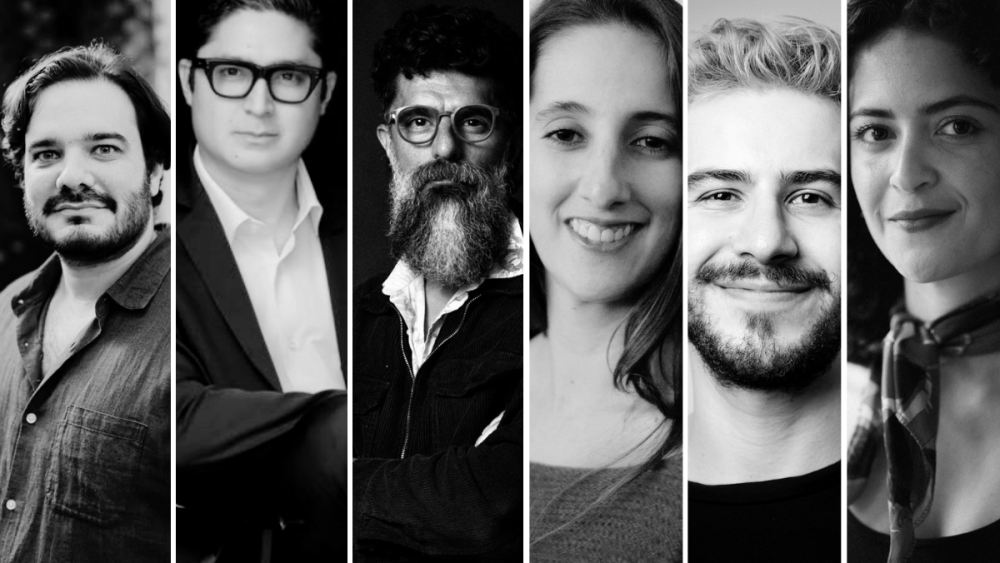
It took a long time, but Costa Rica is finally able to secure Oscar-nominated bottom talent sound and music editor Felipe Pacheco, who was recognized for his sound editing work on Ryan Coogler’s multi-Oscar-winning Sinners.
Based in Los Angeles, he moved there after earning a degree in film music from the prestigious Berklee College of Music. His extraordinary credits include Christopher Nolan’s IMAX 70mm blockbuster The Odyssey, the Oscar-winning Oppenheimer, Star Wars: The Mandalorian and Grogu, and Coogler’s Black Panther: Wakanda Forever. In television, he worked on Ben Stiller’s Severance, for which he was nominated for an Emmy Award.
Through much of it, he has worked closely with Academy Award-winning composer Ludwig Göransson. I first came on board when I needed a Spanish-speaking music editor for the many Spanish-language songs on Black Panther: Wakanda Forever. His trial by fire began when Göransson asked him to join “Oppenheimer”. “I finished ‘Black Panther’ on Friday, and over the weekend I got a call from Ludwig saying, ‘We need you for ‘Oppenheimer’ on Monday.” I was expecting to join a team of music editors, but instead I suddenly found myself working alongside Nolan and learning his process on the fly. It was scary, especially as a young Costa Rican, but maybe not knowing what I didn’t know worked in my favor. Everything went well and that’s why I was invited back to his next work. ”
His next film was The Odyssey, and Nolan said he wanted to avoid the traditional orchestral sound often associated with historical epics. Instead, he asked Göransson to create a score that would be a modern retelling of the ancient story, fusing ancient Greek instruments with modern elements such as synthesizers. It was a huge creative challenge for the music team. Without the emotional power of strings or brass, they had to reinvent the way music conveyed intimacy and scale, using flutes, percussion, and constant experimentation. “It was an absolute nightmare…but it was amazingly successful.”
“Working on ‘Sinners’ was fun. There was a lot of on-set performance, so they brought me in from the pre-production stage. The whole music team worked with the actors, teaching them how to play the instruments and singing, and teaching them all the songs,” he said, adding that it was a very collaborative job with a lot of overlap in the music, dialogue, and sound mixing departments.
He worked closely with the production sound team to capture all performances on set, avoiding re-recording. “We didn’t want it to feel like a music video.”
Here are five other under-tier Costa Rican talents to keep an eye on, whose hard work and dedication to their craft could reap the ultimate reward in the future.
Jose “Cisco” Arce, Colorist
Arce has served as a colorist on a wide range of feature films, documentaries, episodic series, and commercials through his production company, Mycello Prods. He also works as a filmmaker and cinematographer. His position as a freelancer gives him the freedom to work in places as far away as Estonia, Saudi Arabia and Japan.
His main job, he explains, is to balance the images so that they all have a consistent exposure and fix any problems that may have occurred during the shoot. “Then I create the final look of the film. For example, a horror film can have a darker, more desaturated palette, while a comedy will have a brighter, more vibrant atmosphere.”
His long list of credits includes the Saudi fiction series “Kahilan,” the Netflix Kuwait series “The Exchange,” the Japanese short “Together Alone,” and the Estonian short “Aurora Laul.”
But one of his most satisfying jobs was closer to home, working on the Honduran film “Eva,” directed by William Reyes. “I joined late in the project and worked closely with the director and cinematographer to shape the film’s visual progression. We designed a clear emotional arc: a warm and natural beginning, a darker, grayer middle as the story unfolds, and a final act that returns to a more hopeful reality. It worked out very well for the film and was well received,” he says.
Arce is currently working on a Columbia feature that, while not yet officially announced, is expected to be announced next week as part of the Toronto International Film Festival lineup.
Mauricio Esquivel, Production Designer
Esquivel really wants to act, but in the meantime he has been a highly sought-after production designer, art producer and editor, whose credits include the Cannes Directors’ Fortnight title “Clara Sola” and the multiple award-winning Locarno “A It includes some of the most acclaimed films released in Costa Rica and the region, including “I Have Electric Dreams,” Berlin Panorama Audience Award winner “Memories of a Burning Body,” and, most recently, Neto Villalobos’ “I Have Electric Dreams.” Monster. ”
He holds a degree in directing from Veritas University and has written and directed two short stories: “Refugio” and “Pasajera.”
“Each project has been challenging in a different way. ‘I Have Electric Dreams’ was my first time leading the art department on a feature film, so stepping into that role was a big challenge. But ‘Love is the… “Monster” was probably the most demanding because we were filming in a harsh production environment six hours away from San Jose and only had a four-week shoot time.”The film also had a complex dystopian, otherworldly aesthetic and required a lot of conceptual work. ”
On the other hand, he is actively pursuing acting and is currently undergoing training in the Meisner technique. “While acting and directing are essentially what I enjoy the most, I consider all roles to be part of the same creative process. Sometimes production design choices can achieve things that you can’t achieve with close-ups or dialogue. For example, if you want the audience to feel that a character is in love, changing their costumes from white to red might convey the story more effectively.When I’m conceiving a movie, I tend to think about it that way, regardless of the role I’m playing.”
Nayuribe Montero, Sound Designer
Based in Mexico, Montero has worked as a sound designer and production sound mixer for the past 10 years. She studied film sound at the prestigious International Film and Television School in Cuba and received a master’s degree in communications from the University of Costa Rica. Her works include “It Will Be a Night in Caracas” (Venice and TIFF), “Aurora” (Rotterdam), and “The Moon Will Contain Us” (Locarno), produced by Edgar Ramirez.
Of all the photos she’s worked on recently, “Nights in Caracas” was probably the most difficult, she says. “Although the film was set in Venezuela, we were filming in Mexico, which posed many challenges. Many of the extras were unable to use their own voices because their accents didn’t match. So we worked a lot in post-production to create an authentic Venezuelan atmosphere. Many sounds had to be rebuilt with dubbing and additional recordings. We also captured and collected a lot of environmental sounds to complete the world. It was a constant process of rebuilding and creativity, both in production and in post, especially in the scenes with so many extras and large crowds.
Being a dancer greatly influenced her interest in filmmaking. “I started making video dance pieces in film school and became interested in documentaries, so I’ve been exploring the intersection of both. I’m currently working on a documentary video dance project that combines these two worlds. I’m more attracted to short films at the moment, but I don’t know if I’m ready to take on a feature film yet,” she says.
“I also learned that movement is not just choreography. Thanks to Professor Silvina Sperling, an Argentinian biodanza teacher, I was able to understand movement as a form of expression and how the body communicates itself. That is what I am focusing on now: exploring body language and the expressive power of the body, rather than just filming dance.”
Kim Picado, Casting Director
Over the course of her 15-year career, Picado has expanded her roles from casting director to acting coach and, most recently, intimacy coordinator. Her approach is also influenced by her training in nonviolent communication.
She has worked as a casting director and acting coach for top films in Costa Rica and other countries, including Mother Animal Forever (Cannes 2026, Un Certain Regard), I Have Electric Dreams (Locarno 2022), and How to Light the Night If It Doesn’t Burn (San Sebastian).
She led the casting of the acclaimed “Clara Sola,” which won the Dames Award for Best Casting Director at the Turin Film Festival.
“When I started working in commercial casting, I realized there was a gap between the language of audiovisual performance and the way actors were trained. Once I understood both worlds, I began to create a process that brought them together. It became a personal mission, especially at a time when many directors preferred to work only with non-professional actors.”
“During the filmmaking process, I created my own role. I accompanied the actors and director from the beginning of casting, through rehearsals and on to the set. I support the director and actors throughout the process, especially in complex scenes. It’s almost like an assistant director’s role, where I focus only on acting,” she added.
Making “I Have Electric Dreams” required working with children and a combination of professional and novice actors, and I learned that every film and every cast requires a unique approach. “Each process must be designed individually, paying close attention to the actors’ needs and communication. This is closely related to my work in nonviolent communication.”
She is currently working on Quemada, directed by Ardelia Maurel, and attending an acting workshop in Ecuador led by Salahi Echeverría.
Esteban Quesada, line producer
During his more than 17-year career in the industry, Mr. Quesada has worked in Europe, Latin America, the United States, and South Africa. His credits range from E! Entertainment TV’s “Keeping Up with the Kardashians” to the original hit series “Paddington Bear.”
He has also made more than ten documentaries on a variety of subjects, and won the Best Documentary Award at the Chelsea Film Festival in New York for his documentary Joaquín Batica.
Quesada’s most recent line producing gig was on Emmy Award-winning documentarian Abigail Fuller’s debut feature, “Hope,” co-starring “Breaking Bad” creator and producer Mark Johnson.
“This was Mark Johnson’s first time working in Costa Rica. He told me that he had been interested in filming in Costa Rica for years, but had never come up with the right project. The shoot lasted eight weeks, starting with four weeks in the remote town of Pacaya in Cartago, and then in San José, with support from the Costa Rican government, filming inside the National Theater. We also shot at several beaches and waterfalls in Guanacaste, showcasing a wide range of locations around the country.”
Most importantly, several important creative roles, such as costumes and makeup, were led by Costa Rican experts. “This gives our local team even more creative voice and allows us to produce work that more closely reflects Costa Rican culture.” The crew grew to approximately 150 to 200 people, with experts from Costa Rica, the United States, and Mexico.
He points out that for line producers, budgeting is an important part of the process. “You have to calculate the domestic production costs, take into account exchange rate fluctuations between the US dollar and the Costa Rican colon, and take into account the available incentives.”The project applied for Costa Rica’s 11.7% tax incentive, so all financial details had to be carefully considered throughout the planning process.
