

Ted Turner made his mark on the media and entertainment world as a pioneering entrepreneur. Nowhere was his influence greater than in journalism with the launch of CNN. Ted Turner was nothing short of a gift to the journalists who covered his long public life.
Media mogul Turner, who died on May 6 at the age of 87, always had a colorful copy. The cable TV visionary launched the world’s first news-only channel on June 1, 1980, forever changing the rhythm and process of newsgathering. With the flip of a switch, Turner created a 24/7 news cycle. More importantly, his Turner Broadcasting System had the financial strength to keep CNN on the air against all odds, even in the face of huge early losses.
There’s a reason Turner was nicknamed “Mouth of the South.” At the microphone or in front of an audience, at board meetings, press conferences or on the red carpet, Mr. Turner rarely held back.
“We’re going to crush Rupert like a bug,” Turner declared in November 1995, when rumors spread that Rupert Murdoch was planning to launch Fox News as a cable channel to rival CNN. Disney, which was in the process of acquiring ABC, was also enthusiastic about starting a news network.
“Rupert can overplay the news. Disney can overplay the cartoons. We’ll whip their asses,” Turner defiantly told the audience at the Western Cable Show in Anaheim, California.
I remember the roar in the crowd when Turner delivered that zinger. I also remember fighting hard to get the chance to cover Turner’s appearance. At that time, there was no more charming and charismatic CEO in all of America.
At the time, Turner was in the process of selling Turner Broadcast Systems to Time Warner. The deal would change the course of his life, effectively losing control of his hard-earned assets. I often wondered if he regretted it, despite what he had said so many times.
An interview he didn’t do.
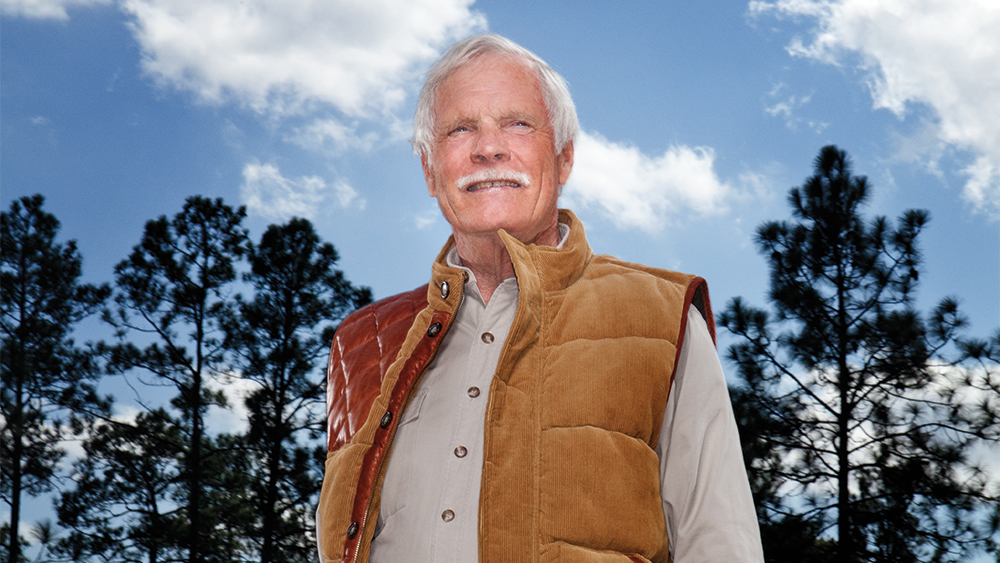
In person, Turner was tall, lanky, and had a loud voice. He was as handsome as a silver fox. He wore a pencil-thin Rhett Butler mustache like a name tag. He had a strange habit of starting sentences by lowering his jaw and making a guttural sound like “daaaaaaa” before the actual words were spoken.
CNN was a world-shaking achievement, and he was justifiably proud of it. From Turner’s home base in Atlanta, his genius was his ability to foresee the coming multichannel revolution in cable TV. He came up with it in the mid-1970s and spent the next decade building a company to capitalize on the opportunity. He turned a little-noticed Atlanta UHF station into TBS, the world’s first “superstation,” investing millions in satellite technology to transmit TBS signals to cable operators across the country.
Turner bought the prestigious MGM/United Artists Studios in 1986 and tried unsuccessfully to buy CBS. When Turner ran into financial troubles, he was forced to sell MGM/UA back to Kirk Kerkorian. But Mr. Turner retained MGM’s most valuable asset: its vast library of movies and television shows. The MGM Library helped launch TNT, Turner Classic Movies, Cartoon Network, and more.
When cable television eventually became accepted by Hollywood and Wall Street, Turner boasted that he was the first to get there. In the early 1990s, Turner Broadcasting produced a poster featuring the leader strumming an acoustic guitar with the tagline, “When Cable Was Cool, It Was Cable” (a play on Barbara Mandrell’s 1981 hit song, “When Country Wasn’t Cool, It Was Country”). I wish I still had it.
In 2019, I conducted Turner’s final media interview for a Variety magazine cover story, coinciding with the 25th anniversary of the classic Turner film. we talked on the phone. A once talkative executive needed the help of a trusted assistant to fully express himself while battling the effects of Lewy body dementia. When I asked him to name his proudest accomplishment in business, he paused, unusually, before answering.
“I’ve always subscribed to the idea that real success in business requires calculated risks,” Turner said. “Once you have considered the possibilities, you have to make the final decision. This is what I have done with some of my biggest business decisions, including the creation of CNN. The ultimate success I have experienced with the purchases of MGM Library, TCM, CNN, TBS and other networks is all the vindication I needed.”
