

On today’s episode of the “Daily Variety” podcast, we get a perspective on Variety’s plans for its TV Week celebration in a conversation with Variety’s Emily Longeretta. And today, some 87 years ago, Vintage Variety takes a look back at the memorable launch of television in the United States on the opening day of the 1939 New York World’s Fair.
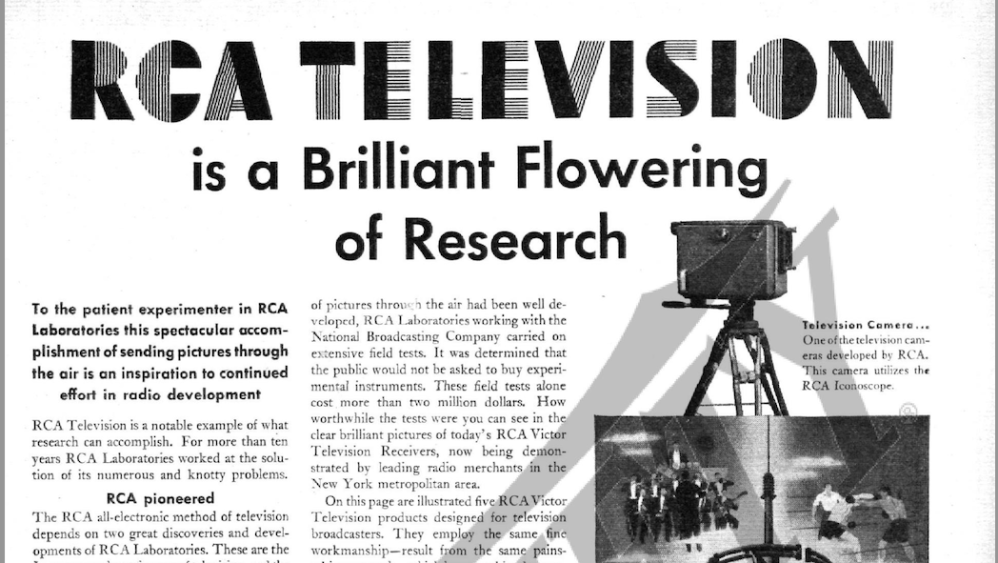
Happy anniversary, TV. April 30, 1939, the opening day of the landmark New York World’s Fair, is generally considered the start date of commercial television in the United States. RCA and NBC boss David Sarnoff flipped the switch, and NBC broadcast three and a half hours of live material from the vast World’s Fair grounds in Queens’ Flushing Meadows neighborhood. (Currently home to the Queens Museum of Art.)
This was also the day that NBC began broadcasting its first regular television program from a giant antenna on the roof of the Empire State Building. The original reach of NBC’s television signal was approximately 85 miles in all directions from the Midtown landmark.

Variety magazine ad from June 14, 1939
variety
Until Hitler invaded Poland on September 1, 1939, and World War II broke out in Europe, television was vibrant and ready to go. Shortly thereafter, all of the engineering and technical effort that had gone into developing television since the mid-1920s was repurposed for military purposes in support of the war effort. The birth of this medium had to wait until 1946 before television became affordable to the average consumer (in the United States).
A look back at Variety’s pages confirms that the New York World’s Fair was a Super Bowl-level marketing platform for the nation’s biggest brands, including media. RCA already owned NBC, the most powerful radio network in the country. RCA leader David Sarnoff pushed for the launch of television by sheer force of will, as RCA would profit from television sales and NBC would clean up after it as the pioneer of regular programming. Initially, television programs were not broadcast 24/7. It was a patchwork quilt that lasted an hour here and two hours there, some during the day and some in the evening.
“The World’s Fair was RCA’s introduction to television to the public. They had been working on television back in the ’20s. David Sarnoff thought television was too expensive and complicated to introduce to the public, so he waited until 1939,” says Steve McEvoy, founder of the Museum of Early Television, based in Hilliard, Ohio. “By 1939, he felt they were finally a reality, and the World’s Fair was the perfect place to introduce it.”
In addition to looking back at past milestones in the medium, this episode looks ahead to Variety’s upcoming celebration of all things television and the Emmy Awards ceremony next week in a series of events called Television Week. From the long-running “Night in the Writers Room” event to an afternoon tea celebrating female directors, next week will be a busy week for Variety’s television team.
“FYC season is very crowded. There are vast vistas and there are a lot of TVs. It’s no secret, that means there are a lot of events,” says Emily Longeretta, Variety’s features director. “So we decided to host a dynamic, invitation-only event over three consecutive days, spotlighting all the voices making the best television today.”
Variety magazine ad from June 14, 1939
Listen to Daily Variety on iHeartPodcasts, Apple Podcasts, Variety’s YouTube Podcast channel, Amazon Music, Spotify, and other podcast platforms.
