

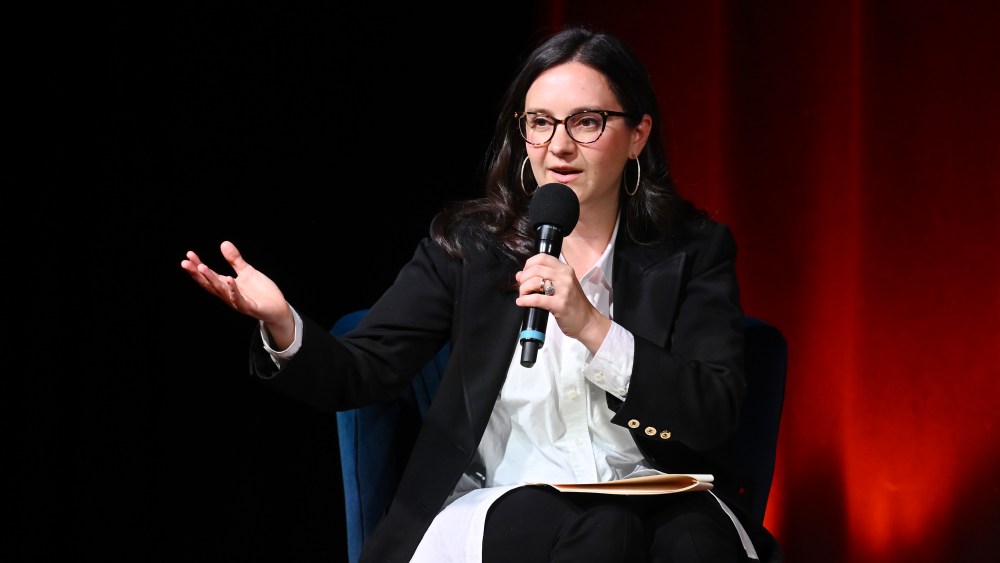
Cecilia Vega, who was fired as a correspondent for CBS News’ “60 Minutes” three months ago as part of a major overhaul, spoke about her experience at the television news magazine under the direction of Bari Weiss.
Vega claimed that the “new administration” at CBS News (referring to Weiss, whom Paramount CEO David Ellison appointed editor-in-chief of the division last fall) asked her to report on events that “never happened” and forced her to include claims in stories that she and her team could not verify.
Vega made the comments Thursday during a discussion with ABC News correspondent John Quiñones at the National Association of Hispanic Journalists Conference & Expo in New Orleans. Her remarks were first reported by Status.
Vega said he was encouraged by CBS News executives to include footage of protesters assaulting people believed to be undercover ICE agents in a report following the January 2026 shooting deaths of Renee Good and Alex Preti in Minnesota. Vega said her team looked for evidence of that, but found no “credible examples” of such an incident.
Vega also said he was asked to include excerpts from Minneapolis Mayor Jacob Frey’s comments at a news conference about wanting police to fight ICE agents who enforce immigration policies. Vega said her team looked at “every frame” of the footage and couldn’t find the moment in question. “That never happened,” Vega said. “I couldn’t find any examples of the mayor making such statements.”
Vega also cited other instances in which CBS News management tried to interfere with her reporting. Vega claimed she was asked why she didn’t interview Vice President J.D. Vance or mention his memoir, “Hillbilly Elegy,” which centers on his upbringing in Ohio, for an article about West Virginians affected by the state’s SNAP benefits cuts.
And for a “60 Minutes” article about President Donald Trump’s war against Iran, Vega said he was asked to start his segment with the words, “Who’s winning the war? Iran is completely losing the war to the United States and Israel.” It felt like an “administrative talking point,” she said.
Vega said the directive was made under the “new administration at CBS News” and did not name Weiss as the person who made the request. She said, “Things started to change when new people started coming to screenings and giving feedback on the work.” “I’ve never felt in my career that those edits and suggestions were misinformed or politically motivated, and that’s the difference,” Vega said.
Reached for comment, a CBS News representative cited a statement issued in May following Vega’s comments after her firing, in which she claimed that “my production team and I have experienced efforts to insert political bias into our stories.” CBS News said in its statement, “While we respect Ms. Vega and her contributions, her claims are not based on fact.”
A spokesperson for the agency also pointed to comments Weiss made in June, saying, “What is called ‘editorial intervention’ is actually the editor-in-chief’s job description.” CBS News also noted that none of the examples cited by Vega were incorporated into broadcast or published reporting.
In a speech at the NAHJ conference, Vega said she remains in the dark about why she was fired from “60 Minutes,” saying, “The reason has not yet been disclosed.”
Vega told Quiñones that she was afraid to talk about leaving 60 Minutes, but added, “I didn’t just lose my job. There’s a lot at stake. Sometimes you have to do things even though you’re scared.”
