

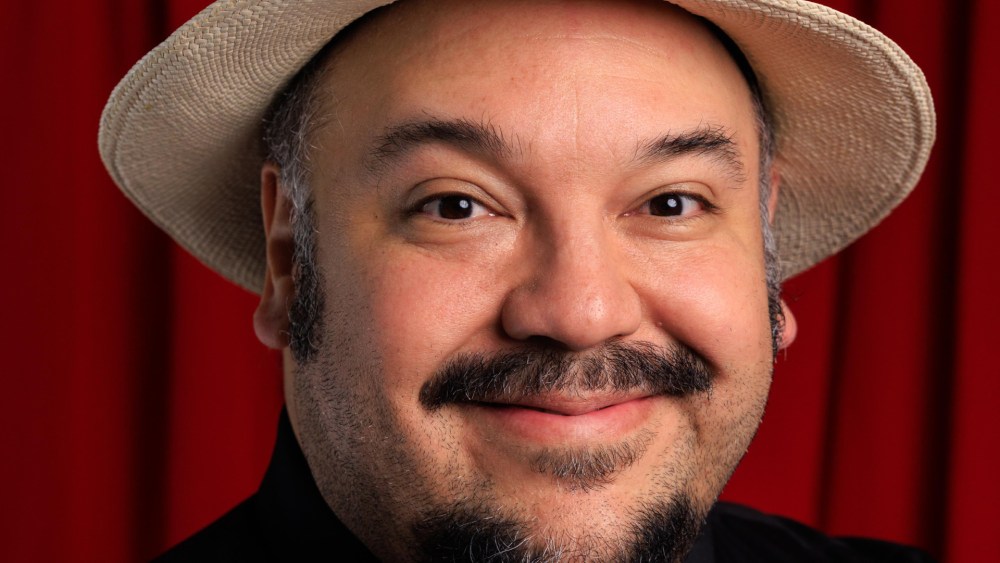
Jorge Gutierrez thought he was noble.
The director of “The Book of Life” had a bad feeling as he watched generative AI being quietly introduced to every animation studio in town. “There aren’t enough artists to direct this,” he thought.
So when Amazon MGM Studios offered Gutierrez to star in “Punky Duck,” one of three series under its new GenAI Creators Fundhe umbrella, he took the job, seeing it as part of its mission. “I wanted to guarantee artists a seat at the table,” he says. “We’re going to make sure this is driven by artists.”
What followed was one of the earliest public implosion in recent memory. When it was announced that Mr. Gutierrez would take the “Punky Duck” job, his colleagues saw him not as a hero working for a cause, but as a defector. Death threats soon began against him and his wife, and his home address was also made public.
“What we quickly learned was that this was a very black-and-white issue,” Gutierrez said. “You’re either a pro or you’re an anti, there’s no in between at this point.” He added, “The road to hell is paved with good intentions. My intentions were good, but by this act I ended up taking my family to hell.”
So Gutierrez withdrew from the project. “It was announced on Wednesday,” he recalls of his hiring. “Thursday, I said, ‘I’m listening to everyone.’ Friday morning, I pulled the plug.”
Amazon felt no hard feelings when he left. “They said, ‘Do what’s best for your family,'” he says. “I think I’m the first creator to cancel my show within a day and a half of the announcement.”
As extreme as Gutierrez’s ordeal was, the cracks it exposed have permeated animation studios everywhere. Travis Knight, CEO of Laika, which makes stop-motion movies by hand, sees the animation boom as an opportunity to save a declining corner of the medium. “Stop-motion celebrates artistry over algorithms,” Knight says. “AI is the furthest thing from humans, so I understand why people are nervous. I’m nervous about that too.”
Pete Docter, Pixar’s chief creative officer, said there is nothing wrong with using AI tools as long as the artists are interacting with them. “By bypassing that and letting the AI do it, you’re robbing the person of the opportunity to say something and the audience to respond.”
Jared Bush, chief creative officer at Walt Disney Animation Studios, says of authorship: “At the end of the day, your voice matters. It doesn’t matter what form you take as long as what you’re putting out into the world is you.”
For Gutierrez, the lasting damage is not the leak of personal information, but the silence it silences at this most important moment. “Many bad decisions will be made,” he predicts. “And artists won’t be part of those discussions.”
If they try to participate, in his words, “they will be crucified.”
