

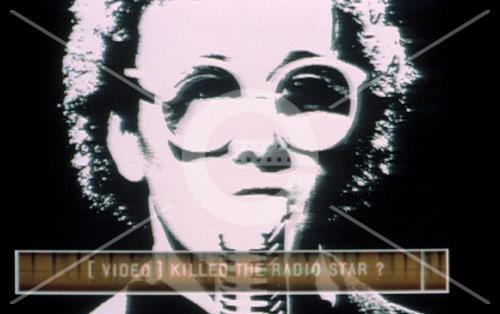
You’ve probably seen variations of this news on social media over the past few days. MTV officially shut down on New Year’s Eve, ending its last broadcast in the same way the network started. It ended with a clip of The Buggles’ “Video Killed the Radio Star.”
However, those posts provide incorrect information. It’s New Year’s Day 2026, and MTV still exists. Granted, today the channel airs the sitcom “The Big Bang Theory” on endless repeats, so “MTV still exists” may be interpreted differently by different people.
Here’s the source of the confusion: On New Year’s Eve, Paramount Skydance did indeed shut down several MTV-branded music channels in the UK. One source said: “MTV’s specialty music channels in the UK will no longer operate as linear channels. The flagship MTV UK channel will continue to broadcast…Paramount is reviewing and adjusting its international pay TV portfolio in light of the shift in viewer behavior towards streaming and digital platforms.”
For the United States, existing MTV channels, including MTV and MTV2, will continue to air unchanged. MTV hasn’t been “music TV” for a long time, but the network still programs several digital music channels in the United States. This includes MTV Classics (playing retro music videos from the 1980s, 1990s, and 2000s), MTV Live (playing the latest music videos and music from the Paramount Library), and a collection of MTV-branded FAST channels, including MTV Biggest Pop and MTV. Spankin’ New, Yo! MTV, MTV Flow Latino) plays contemporary music videos on Pluto TV.
Of course, fans of MTV’s golden era of the 1980s, 1990s, and 2000s still miss the days when the flagship network was truly about music. MTV’s programming at the time consisted of music videos and music-focused series such as “Headbanger’s Ball,” “120 Minutes,” and “Yo! MTV Raps.” Since then, “TRL” has become an afternoon staple for an entire generation of children.
But in recent years, MTV has focused on reality TV, and now includes shows like “The Challenge” and “RuPaul’s Drag Race.” The station has also been criticized for relying too heavily on series such as “Ridiculousness,” which often make up the bulk of its programming. (As Variety wrote in 2020, at one point “Ridiculousness” occupied 113 hours of MTV’s total 168 hours, making up 67.3% of its total schedule).
And perhaps that’s why this “news” that MTV is shutting down, while inaccurate, resonated across social media, especially among Gen Xers and Millennials. They still remember that MTV music was played at the VMAs at least once a year. And they’ve also seen recent reports about how layoffs wiped out the last vestiges of MTV as we know it. In 2023, the remaining shell of the once-vibrant MTV News division closed down, and last year the traditional MTV News website went dark and its archives were purged from the internet.
And in 2025, there was a sense that we were reaching a tipping point in terms of basic cable decline, as companies like NBCU looked to offload once-valuable assets. When Skydance acquired Paramount and began making deep cuts, the company’s cable network was particularly hard hit. MTV fired most of its remaining communications and talent teams, including its remaining music programming and talent executives. The idea that even a major network like MTV might shut down doesn’t seem so far-fetched anymore.
According to Variety’s tally of the most-watched linear networks in prime time in 2025, MTV ranked 49th with an average audience of 189,000 viewers. Among adults 18-49, MTV ranked 25th. Compare that to 10 years ago. In 2015, MTV ranked 36th with 606,000 viewers.
Yes, MTV as we know it disappeared a long time ago. But MTV as a channel still exists. For now.
