

Over an intensive six weeks last fall, Netflix went from an initial phone call with co-CEO Ted Sarandos and Warner Bros. Discovery head David Zaslav to closing an $82.7 billion deal to acquire Warner Bros. Streaming and studio business. But despite repeated rejections, David Ellison didn’t give up, and in the end his Paramount Skydance outbid Netflix with an offer of $111 billion for the entire WBD.
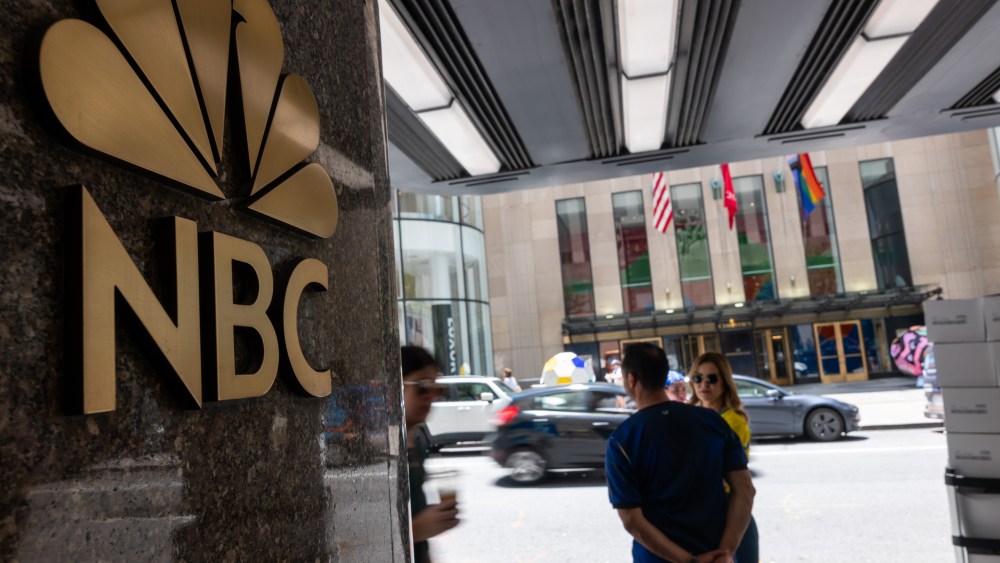
So Monday’s news that Comcast plans to spin off NBCUniversal (along with Sky) as a separate entity immediately had people wondering: Will Netflix return to the M&A realm to score the NBCU deal?
After all, NBCU, separated from Comcast, looks in some ways similar to Warner Bros.’ streaming and studio businesses, where Netflix made a multibillion-dollar bet. Both have streaming services (Peacock and HBO Max) and will benefit from Netflix’s much larger scale and TV and film production studios that fuel its content pipeline. It’s also worth noting that Comcast was in on the game. Comcast formally entered a bid to acquire Warner Bros.’ streaming and studio assets in December 2025 at a “maximum price” of $35.43 per WBD stock.
After the spinoff announcement, Comcast executives adamantly denied any indication of an M&A move that would separate the cable and NBCU/Sky businesses. “Absolutely not,” Comcast chairman and co-CEO Brian Roberts said, and co-chief Mike Cavanagh, who will become CEO of independent NBCU, said “absolutely not.”
“Our plan for NBCUniversal and Sky is to build and invest in the business for growth,” Cavanagh said on a conference call with analysts. “We have big ambitions to pursue opportunities that stay ahead of evolving consumer behavior and audience demands, and we now have the freedom to explore adjacent businesses that we are entitled to be a part of.”
Comcast executives’ disavowals about M&A could also be read as a reflection of their desire to project an image that they will be in a position of strength to negotiate when a merger or acquisition opportunity looms. That has led some observers to speculate that Comcast and NBCU will actually pursue the big deal independently. But that won’t be until after the transaction closes, which is expected in mid-2027, according to Craig Moffett, principal analyst and co-founder of MoffettNathanson. “To preserve the tax-exempt nature of the spin, a sale[of NBCU]can’t even be considered for several years.”
Moffett doesn’t think the separation of Comcast and NBCU will result in any obvious M&A deals. Below is an excerpt of his discussion of Netflix as an acquisition candidate for NBCU. “When Netflix moved into WBD, they probably backed off. Netflix wanted Warner’s library, and they wanted Warner’s IP.” But NBCU’s library and intellectual property “are not exactly on par with Warner’s — most would agree there’s a pretty big gap — but they’re the next best thing,” Moffett wrote in a June 29 research note.
Peacock had 46 million subscribers in the first quarter (up 2 million from the end of 2025), making it significantly smaller than Netflix, Prime Video, Disney+, and Hulu. But “Peacock’s scale issues do not require M&A,” Moffett wrote. “It’s much easier to deal with by having a simple distribution agreement. It’s not about the size of your company, it’s about the size of your content bundle.”
NBCU spun off most of its (declining) cable TV network into Versant Media, but still owns the NBC broadcast business. LightShed Partners analyst Rich Greenfield said in a blog post that Netflix would not want to own NBC’s network and stations, which would require direct regulation by the FCC. And while HBO was a prestige brand that fueled Netflix’s interest in the Warner Bros. lawsuit, “Peacock is not an asset that Netflix would want to acquire or retain,” Greenfield wrote. He added: “It’s hard to believe that Netflix really wants to own NBCU’s major asset, its massive theme park business (its most profitable division).” And while Universal Studios, particularly its Illumination animation business (which powers franchises like Despicable Me and Minions), is attractive, “we find it difficult to separate the studio from the rest of the company.”
In fact, Greenfield says independent NBCU is more likely to be a buyer than a seller. He cited Sony Pictures Entertainment, Roblox and Media One as potential targets.
Meanwhile, there was talk that the split between Comcast and NBCU could result in Comcast merging with Charter Communications, the largest cable operator in the U.S. (a deal to buy Cox is pending). But, according to Moffett, “the logic against a charter merger is even clearer than any deal involving NBCU.” “Comcast and Charter both have sufficient scale that any additional benefits from scale, such as SG&A or procurement, are likely to be minimal,” he wrote, adding that gains from negotiating leverage in programming deals will be less meaningful than they once were. And even if national regulators were willing to approve a merger between OK and Comcast Charter, state regulatory commissions “would make the regulatory process a nightmare.”
After Sarandos left the deal, he admitted he was disappointed that Netflix had lost the battle to Warner Bros. But overall, the company was able to come out of the process with “no change in our capital allocation philosophy,” the streamer said in April’s first-quarter earnings interview.
Netflix was willing to spend a lot of money on WB, but it had its limits. “We’ve said it from the beginning that the contract with WB is a ‘nice to have’, not a ‘must have’,” Sarandos said. NBCU might be nice to have. However, it is highly doubtful that Netflix will go all-in on the acquisition.
