

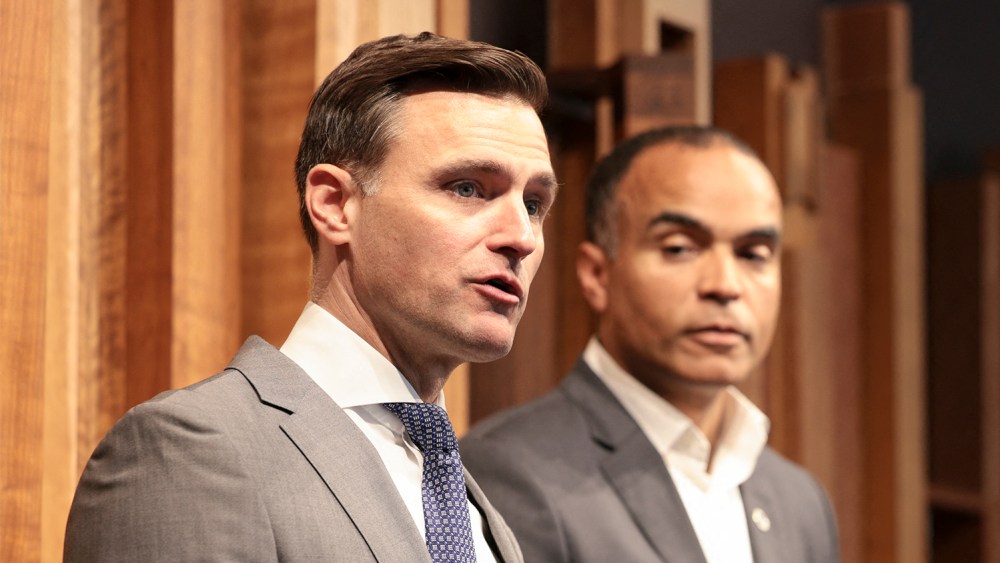
The Oregon Attorney General’s Office has withdrawn a motion to delay the completion of the Paramount-Warner Brothers merger, according to a filing Friday in Multnomah County Circuit Court in Portland, Oregon.
The deal could close as early as July 22, but several states, including Oregon and California, are investigating whether the $111 billion deal violates antitrust laws. States could seek a merger injunction before that date.
Oregon Attorney General Dan Layfield on Wednesday asked a court to extend the closure deadline by 60 days, arguing that Paramount Skydance has not responded to records requests and his office needs more time to investigate. The state has requested records and answers to questions about the company’s lobbying efforts with the White House and Justice Department, suggesting the Justice Department improperly approved the merger in June.
A judge scheduled a hearing on the motion for Monday morning, but the issue is now at issue. Mr. Layfield’s office also withdrew a request for records related to “Project Warrior,” the code name for the effort to gain regulatory approval for the deal.
Paramount had maintained that the request was unrelated to antitrust issues being investigated by the state.
“We are pleased that the Oregon Attorney General has withdrawn the motion to delay this transaction,” a company spokesperson said. “This was the right decision and avoided unwarranted efforts to delay a legitimate, pro-competitive merger.”
Jenny Hanson, a spokeswoman for the AG’s office, said the AG’s office is considering its next move.
“Paramount has made it clear that it has no intention of responding to requests for an investigation and believes they are above the law,” she said. “We are not going to waste Oregonians’ resources on these games. We have withdrawn our motion to consider next steps.”
Paramount is also working to secure approval from the European Commission and the UK, and has already received approval from authorities in Australia, Canada and China.
“Antitrust authorities around the world have carefully investigated this transaction and concluded that it does not violate competition laws,” the company said in a statement. “This regulatory record highlights what the facts, law and economics make clear: This transaction will create a powerful challenger to globally dominant streaming and technology platforms, expand consumer choice, increase investment in premium content and theatrical distribution, and create more opportunities for creators and workers. We look forward to completing the transaction and delivering on those benefits.”
