

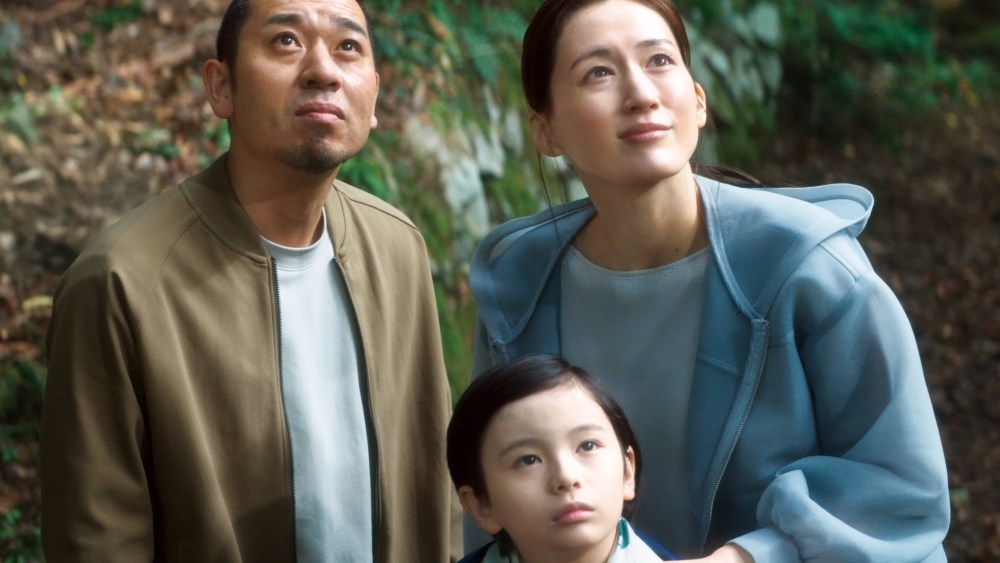
Japan Cuts 2026 announced the full lineup for the 19th annual Japanese film festival in North America, with Kei Ishikawa’s A Pale View of Hills, an adaptation of Nobel Prize winner Kazuo Ishiguro’s debut novel, being the highlight, and Hirokazu Kore-eda’s Sheep in the Box closing the festival following its world premiere in Cannes.
The festival will be held at the Japan Society from July 8th to 18th, and will feature global technology company Canon as the title sponsor for the first time.
Director Ishikawa’s film is a Japanese-British-Polish co-production that had its world premiere at the 2025 Cannes Film Festival, with Suzu Hirose and Yo Yoshida playing the same character at different points in time, tracing a woman’s post-war memories over 30 years. The film festival will hold its main screening on July 13th, which will also include a Q&A and reception, and will present director Hirose with the 2026 Cut Above Award, an award for outstanding achievement in the film industry. Hirose is also scheduled to appear to introduce a revival of Hirokazu Kore-eda’s film “My Little Sister,” which made him a big hit, and the festival is asking attendees to refrain from asking for photos or autographs at any event.
Director Hirokazu Kore-eda’s Sheep in the Box, which had its world premiere at this year’s Cannes Film Festival, will be screened as a closing night film on July 18th, with the director himself attending a Q&A and reception. In this sci-fi fable, Haruka Ayase, Daigo Yamamoto, and Rimu Kuwaki play a grieving couple who adopt an AI-powered robot created in the image of their deceased son.
The festival will kick off on July 8 with the East Coast premiere of “Tokyo Taxi,” director Yoji Yamada’s remake of the French film “Driving Madeleine.” This is Yamada’s 91st feature film, and reunites him with his long-time co-star Chieko Baisho, along with Takuya Kimura and Yu Aoi.
Among the competition and premiere films, Eiji Uchida’s “Night Flower” and Akira Nagai’s “Suzuki = Bomb” are both eligible for the Japan Academy Prize. Misato Morita won the Best Supporting Actress Award for “Yohana.” In this film, he plays a struggling kickboxer who forms an unexpected bond with his mother, who is on the run and in debt from Tokyo’s criminal division. Jiro Sato won the Best Supporting Actor award for “Suzuki = Bomb”, which is based on a best-selling novel about a mysterious drunk who claims to predict terrorist bombings and engages in mysterious battles of wits with the police.
The documentary Diamond Diplomacy, directed by Yuriko Gamo Romer, traces the history of baseball as a cultural conduit between Japan and the United States, from its first introduction to Japan to the global rise of Shohei Ohtani. At the New York premiere on July 15th, there will be a Q&A with Romer, author Robert Fitts, and MLB legend “Mashi” Masanori Murakami (MLB’s first Japanese player), followed by an autograph session with Murakami.
On the animation front, Cocoon, a 60-minute NHK commissioned work directed by Yukimitsu Ina and produced by Sasayuri, a studio founded by Studio Ghibli alum Hitomi Tateno, will be released in North America for the first time. The film, based on Machiko Kyo’s wartime manga, focuses on the Himeyuri students, girls who were forced to support the Japanese military in Okinawa during World War II. In terms of animation, “The Last Blossom,” directed by Baku Kinoshita, director of the animated series “Odd Taxi,” will also be screened, as well as Takahide Hori’s stop-motion feature “Junk World,” a prequel to the U.S. premiere of 2017’s “Junk Head.”
Takuya Uchiyama’s “Numb,” starring Takumi Kitamura, Rie Miyazawa, and Masatoshi Nagase, will have its North American premiere, as will the surreal comedy “Gosh!!,” starring Joe Odagiri. Director Satoshi Kimura’s expressionless youth comedy “Yoyogi Johnny” is based on Odagiri’s own TV series.
Daigo Matsui’s Rewrite, a time-loop tale that pays homage to the Japanese literature classic The Girl Who Leapt Through Time, will make its U.S. premiere alongside Makoto Nagahisa’s Burn and Anshul Chauhan’s Tiger, the latter a socially conscious drama that explores the pressures on queer existence in Japan.
Produced in partnership with VIPO, the festival’s Japanese Film New Directions section will feature the international premiere of four short films: Natsuka Yashiro’s A Wavy Girl, Shun Tsujii’s An Overflow, Tomonari Kamobayashi’s The End of What Goes Around, and Ere Nakata’s The Woman Who Returns. All-screen screening will begin on July 14th as a free ticketed program.
The Next Generation section focuses on Japan’s up-and-coming talent in five features vying for a $3,000 VIPO-funded prize. Miki Tanaka’s “Ginger Boy,” Daisuke Shigaya’s “Leave the Cat Alone,” Fuku Nakazato’s “Naomi Out of Sync,” Ryuichi Iwakura’s “Brand New Love,” and Yukari Sakamoto’s “White Flowers and Fruits.”
Archive elements include the world premiere of 4K restorations of Gakuryu Ishii’s two short stories, Shuffle (1981) and Master of Shiatsu (1981), as well as the world premiere of a 4K restoration of Hiroko Yakushimaru’s vehicle The Tragedy of W (1984) and a new 4K restoration of Haruki Kadokawa’s cult film Rex. (1993).
“Nearly 20 years ago, Japan Cuts began with the simple belief that Japanese storytellers deserved a bigger stage in America,” said Dr. Joshua W. Walker, Japan Society President and CEO.
“Canon has long been committed to the art of visual storytelling. Japan Cuts represents the power of creativity, craftsmanship and images to connect people across cultures,” said Sammy Kobayashi, President and CEO of Canon USA, Inc.
Japan Cuts 2026 is programmed by Japan Society film director Peter Tatara and the organization’s film programmer Alexander Fee.
