

On the Croisette, the Canneseries Festival is quietly gaining traction. Since 2025, when MipTV moved to London, the pink carpet television festival has strengthened its identity as an independent event, led by artistic director Alvin Lewis.
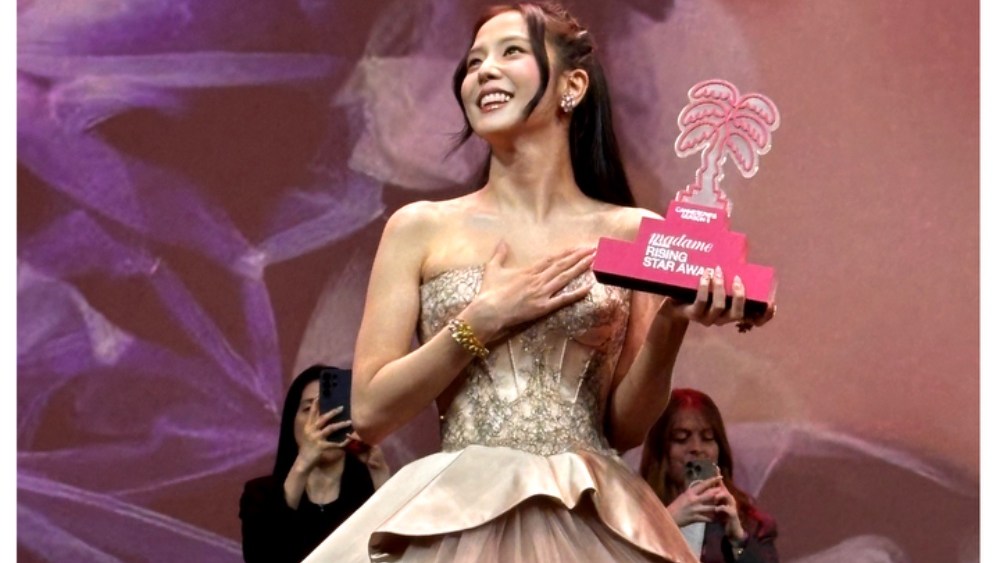
A month before the Cannes Film Festival took over the city, the Cannes series had managed to welcome American, British, and international talent to the city to present their shows. This year’s edition featured appearances by Adam Scott, Judith Light, Noah Hawley and Leslie Linka Glatter, as well as global pop phenomenon Jisoo, highlighting the festival’s expanding cultural reach. The Cannes series also kicked off with the U.S. premiere of director Richard Gadd’s much-anticipated HBO drama “Half Man,” and hosted high-profile premieres of Apple TV+’s “Star City” and AMC+/Shudder’s “The Terror: Silver in Silver.”
The festival ultimately built momentum through relationships as well as programming. One of the biggest highlights of this year’s Cannes series was welcoming The White Lotus producer David Barnado, who spoke for the first time about the upcoming season of the Mike White-directed anthology series, which is currently filming in Saint-Tropez. Lewis met White here in 2021 when the filmmakers were location scouting, and later helped broker an introduction that helped bring the show to France.
The festival also brought together a select group of producers and talent to participate in workshops, networking events and masterclasses, creating a “boutique” structure for the industry. “Meetings are more meaningful than traditional markets, where everything happens back-to-back, because people are in the right context,” he says. “Here, things happen more naturally. We create the environment and it transcends us. People meet, develop projects and even start companies.”
The Cannes series will be headed up by French industry veteran Laetitia Lecaité, who will replace festival chief Benoît Louvet who will retire in 2027, and will be held for the 10th time from February 11th to 16th.
It was a great coup to have The White Lotus producer David Barnard speak at the Cannes series. How did this happen?
He was incredible on stage. The fact that he came despite everything going on is a real gift. On the way he said this is the first time he’s talking about this…
You had a relationship with Mike White for a while, can you explain that?
I met Mike White at the Cannes Series in 2021. At the time, he was torn between going to Sicily and the Cote d’Azur. He came to talk and was looking for a hotel. That was between season one and season two. We kept in touch very closely and ultimately chose Italy. After that, we had no idea how things were going to go for the next season. Then they came back to Cannes over the summer, and that’s where things took shape.
And did the Cannes series play a role in bringing this project to France?
yes. Last summer, we facilitated connections with Team USA. As an intermediary, I provided them with a very customized setup to help them meet the right people in Cannes, especially from the city. It really helped us unlock things. All doors were opened and the project could move forward.
Do you know the production scale?
I think it’s been planned for about 7 months. Some filming will also take place in Paris. Season 3 has already been filming for a very long time, with the story only covering one week, making it incredibly complex to complete. That’s what makes it so appealing. The scale is large, but the storytelling is so intensive that it makes the whole process even more demanding.
Having spent time with the team, what struck you about the way they work?
What I like is that they are real craftsmen. You might think it’s a huge machine, but it actually operates in its own bubble. It is well protected from outside noise. Mike has a very unique world and Dave protects it. They have worked together for a long time. Mike is completely focused on his creative world, and Dave builds everything around it. It’s a very powerful alchemy. Of course, there are great resources, but the process itself is very intimate and remains mostly handmade.
You also brought Noah Hawley to the festival, how did that happen?
I had been in contact with him since 2018. He would get back to me, but I couldn’t reach him. Then, in Los Angeles last year, I visited composer Jeff Russo, who served as the head of the jury last year. I actually went out of my way to meet him, and during that meeting he said, “Why don’t you follow Noah?” That was the trigger.
He opened the door and everything went very quickly from there.
Is that word of the month part of the reason the Cannes series has built such a reputation in the United States?
that’s right. It’s all about word of mouth and trust. People come and have a great experience and talk about it. They leave with big smiles on their faces and a sense that this is a different kind of Cannes. It’s more relaxed, more intimate, and yet of a very high standard. And now, with the pink carpet and the energy around the festival, the festival is becoming something truly special.
There are many viral stars like Jisoo, and even Koreans are actively participating. How did it come together?
We have done a lot of work on the Korean series over the years. We traveled there, built relationships and met people. Then someone in the industry suggested we give it a try. Once you have an initial connection and a proven track record, it will be easy. It was months of work, very coordinated and very hands-on. And she went home really excited. That’s how it actually works. Consistency and trust over time.
Do you think the Cannes series is becoming more and more attractive to American talent?
yes. They know us now and respect us. At the same time, the broader landscape is changing, with less domestic production in the United States and an increased focus on internationalization. France today is very attractive. And importantly, they are not here to stay within themselves. They are looking to meet and connect with international talent. They become more open and that changes everything.
How does your industry program fit into that?
It’s a boutique – small group but very high quality. Because people are in the right environment, meetings are more meaningful than in traditional markets where everything happens back-to-back. Things happen more naturally here. We create environments that transcend us, where people meet, develop projects, and even start companies.
Have any specific collaborations already emerged from the Cannes series?
yes. Act4, for example, was created here by two Icelandic producers who decided to partner up after meeting at a festival. There are many others. It can be hard to keep track of everything accurately, but you can clearly see that things are happening and that they are producing real results.
How do you plan to evolve the industry side in the future?
We don’t want to change our identity. It’s not about destruction, it’s about gradual improvement. So far, everything has grown organically. We want to maintain the same trajectory without compromising the uniqueness of the festival.
How do you balance industry and general audiences?
Industry sessions are more intimate and curated. Truly designed for professionals. A public screening was also held at the same time, and the seats were sold out. In the evening we had to turn people away. This means maintaining both a high level of professionalism and a strong connection with your audience.
Canal+ is your historical partner, how does it work editorially?
These give us complete editing freedom. We maintain a strong relationship with Canal+ on big launches, working with everyone from Disney to Apple to HBO to AMC. This allows us to remain very open while supporting our key partners.
What defines the Cannes series today?
We have grown year after year without losing our DNA. It combines popular high-quality programming, international talent and French productions. We are making full use of Cannes as a stage.
