

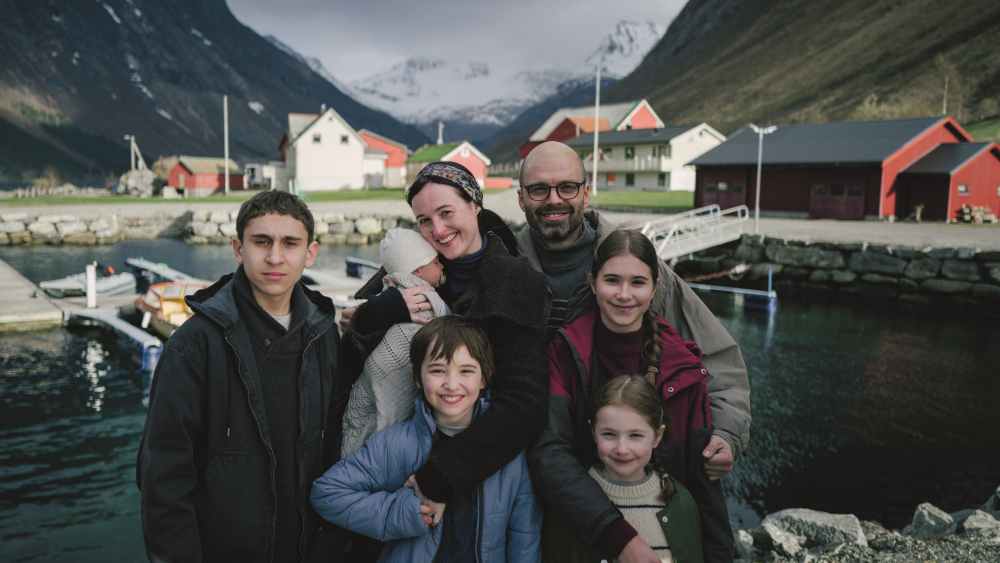
Cristian Mungiu’s Palme d’Or-winning film “Fjord” has secured entry to the Oscars for international feature film without requiring a national submission.
Neon, which will distribute the film for theatrical release, has exclusively confirmed to Variety that Fjord meets the Academy’s requirements for submissions in languages other than English. The film contains dialogue in English, Romanian, Norwegian, and Swedish, meeting the Academy’s requirement that at least 50% of a film’s dialogue track be in a language other than English, with accurate and readable English subtitles. There was some uncertainty and speculation about the English language content among critics and audiences who saw the film at the Cannes Film Festival.
The qualification comes thanks to significant rule changes announced by the Academy earlier this year. Films no longer need to be selected by an official national entry committee to compete for the International Feature Award. Instead, non-English titles can qualify by winning the top prize at one of six recognized film festivals: Berlin’s Golden Bear, Busan’s Best Film Award, Cannes’ Palme d’Or, Sundance’s World Cinema Award, Toronto’s Platform Award, or Venice’s Golden Lion.
“Fjord,” which won the Palme d’Or at this year’s Cannes Film Festival, automatically passes that criteria, freeing it from the uncertainty of national committee processes in many countries, but it still has a chance of being selected. The final choice could be Romania or Norway, who would have to meet additional requirements to be officially selected.
The film stars Sebastian Stan and Renate Rijnsve as a conservative Romanian-Norwegian couple whose lives fall apart when they move to the wife’s progressive hometown in Norway and come under scrutiny from local authorities over their children. The story is based on the true case of the Bodnariu family, whose children were forcibly removed by Norwegian child welfare authorities.
In his review, Guy Lodge, Variety’s chief film critic, called the film “a brilliant new drama about systemic order and personal chaos, looking with gentle appreciation at the region’s vast bodies of water and black-and-white mountain ranges. In the midst of this splendor, human nature, concentrated, scrutinized, and made ugly, is what causes all the anxiety.”
The film could be a mainstream break for Romanian director Mungiu. Mungiu’s credits include the Palme d’Or winner “4 Months, 3 Weeks, 2 Days,” and he won Best Director and Screenplay at Cannes for “Beyond the Hills” and “The Graduate.”
Neon is aiming for big recognition beyond the international feature races this awards season. When the film premiered in May, there was talk of the award all over France. Stan was nominated for a Best Actor Oscar for playing Donald Trump in the biopic “The Apprentice,” while Rijnsve earned her first Best Actress Oscar nomination for her role in the Norwegian drama “Sentimental Value.”
The Academy’s new festival path has already begun, with Variety calling it the “Autumn Anatomy” rule, a reference to 2023 Palme d’Or winner Justine Triet, who France rejected for the Oscars in favor of “The Taste of Things,” which did not receive a nomination. Anatomy of a Fall was nominated for five Oscars, including Best Picture, and won Best Original Screenplay.
The rule change also provides compensation to filmmakers working in difficult political circumstances. Last year’s Palme d’Or winner, Jafar Panahi’s It Was Just an Accident, was never a realistic candidate from Iran, given the director’s long history of conflict with the government. It relied on France intervening as a third party submitter. Germany had done the same thing a year earlier with Mohammad Rasoulof’s The Sacred Fig Seed.
Two other 2026 titles are also set to benefit from the same festival route. “Yellow Letters,” which won Berlin’s Golden Bear, is directed by Ilker Çatak and performed in Turkish, so no German or Turkish entries are required. Shame and Money, an Albanian-language drama directed by Kosovo’s Visar Molina, winner of the Sundance World Cinema Award, has a track record of co-productions across Germany, Kosovo, Slovenia, Albania, North Macedonia and Belgium, and enjoys similar protection.
In the case of “Fjord,” this would at least ensure the film’s place in the international feature film conversation heading into the fall. Whether or not he will be nominated in the end will depend on the season.
“Fjord” will be released in theaters on October 9th.
