

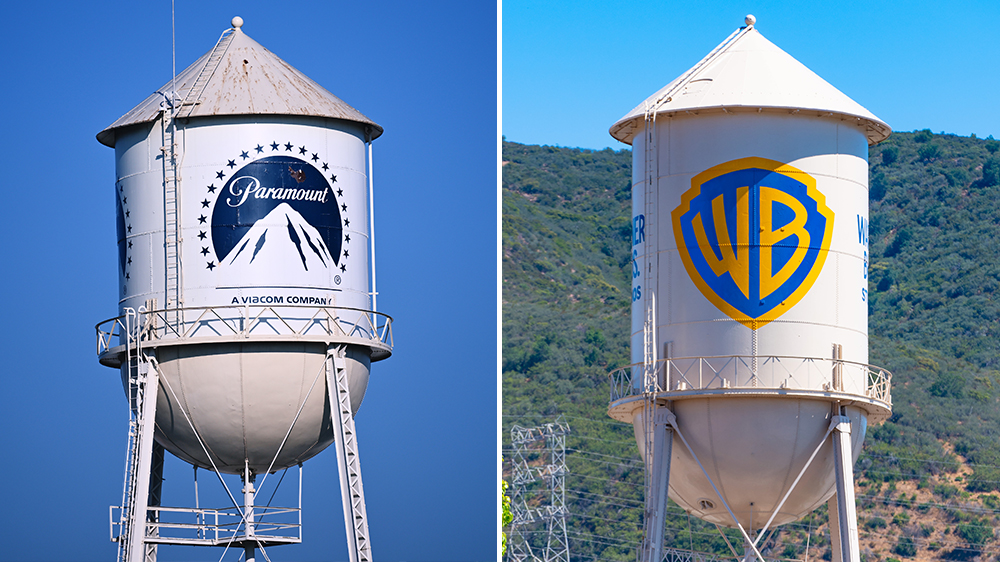
Paramount’s $111 billion acquisition of Warner Bros. Discovery is likely to get the green light from the European Union soon, and the next question will be whether Britain’s competition regulator, the Competition and Markets Authority (CMA), will follow suit.
Max von Thun, Europe director at the Brussels-based Open Market Institute, said Britain would not block the deal but could impose further hurdles.
Von Thun said the CMA has two options. They either follow the EU’s lead or “decide to take a tougher stance,” he said. This would include a longer investigation and the imposition of additional “remedies” beyond those reportedly requested by Brussels.
According to the Financial Times and other news outlets, the European Commission’s antitrust watchdog is currently finalizing the final details of approving the mega-merger and discussing the terms under which Paramount would have to exit its joint venture with United International Pictures and Universal. UIP currently operates as an agent in several regions of Europe, including Denmark, Greece, Hungary, Norway, Poland and Sweden.
“I think Paramount would be happy to abandon it if the merger was approved across Europe,” von Thun said.
However, he said the CMA could seek further relief in the UK, such as “some kind of binding commitment to release the film”, adding: “The creative and film industries in the UK are very strong, so that could happen.” However, he noted that US President Donald Trump “has given his blessing to this deal” and said he did not expect the CMA to ultimately block the deal because “the transatlantic relationship remains very important to the UK”.
Paramount CEO David Ellison has promised to release a total of 30 Paramount and Warner Bros. films a year in the U.S. over a minimum 45-day window.
The mega deal, signed in February after a long battle with Netflix, brings together Paramount properties including CBS, CBS News, Paramount Pictures and Paramount+, along with WBD’s HBO and HBO Max, Warner Bros. Pictures, CNN, TNT, TBS, HGTV and more.
In the UK, the deal would see the merger of two major film studios, as well as streamer Paramount+ and the recently launched HBO Max, as well as British broadcaster 5 and TNT Sports joining under the same ownership.
The deadline for the CMA to announce its decision on whether to approve the deal or refer the merger for further investigation is August 7, but it could be extended.
“The UK is clearly a much smaller market and a much smaller political player than the EU,” von Thun said. But the fact that Saudi Arabia’s Public Investment Fund (PIF), Abu Dhabi’s Rimad Holding Company and Qatar Investment Authority (QIA) are jointly investing $24 billion in Hollywood megaprojects doesn’t seem to matter in Europe. At least not when it comes to concerns about the indirect influence their home countries may have on news and entertainment content.
“CNN is not as big of a player in Europe as it is in the US, so I don’t think it’s a problem with CNN and the Gulf countries interfering with programming,” he said. As for whether it could encourage the production of more conservative films or those that are geopolitically advantageous for Gulf states, von Thun said, “that’s not even up for debate.” The only debate in Europe is whether the deal received illicit funds from Gulf investors under the EU’s foreign subsidy rules, but even that “no one seems to be worried about,” he said.
The European Commission has until July 7 to approve the deal or launch a detailed investigation.
A Paramount spokesperson said Wednesday that the company does not comment “on any ongoing regulatory process.” There was no comment from the European Commission.
