

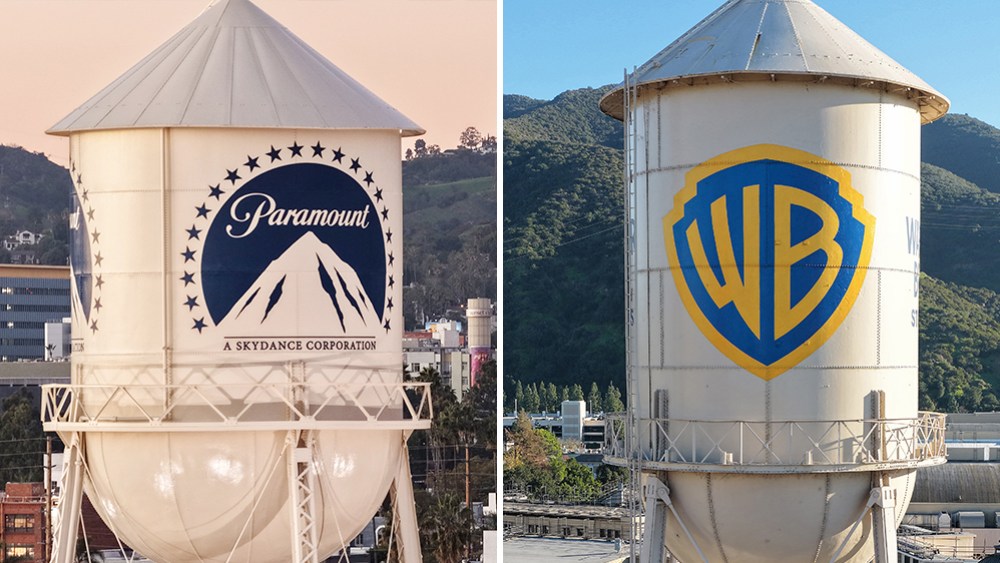
In April, five streaming subscribers filed a federal lawsuit seeking to block Paramount Skydance’s $111 billion deal to absorb Warner Bros. Discovery on antitrust grounds.
Paramount filed a motion Thursday (June 3) asking the court to dismiss the lawsuit, saying the plaintiffs’ claims that the merger violates antitrust laws have “no factual support.”
“This case concerns the future of the entertainment industry and Plaintiffs’ misguided attempt to politicize antitrust law,” Paramount said in a filing in the U.S. District Court for the Northern District of California in Oakland. “The combination of Paramount and Warner Bros. Discovery provides an opportunity to revitalize Hollywood and the industry as a whole by creating greater competition that will benefit consumers, theaters, workers and others alike.”
“This clumsy attempt to politicize antitrust litigation, unbound by established antitrust principles and law, has no place in this court and should be rejected,” the company’s filing said.
In the lawsuit, the plaintiffs (three current Paramount+ subscribers and two prospective subscribers) allege that they face higher prices and fewer viewing options as a result of the Warner Bros. deal. In addition to seeking an injunction to block the Paramount-WBD deal, the lawsuit also seeks to force the dissolution of the merger of Skydance Media and Paramount Global, a transaction that was completed in August 2025.
The five plaintiffs also claim that they owe damages as news consumers and movie patrons. The lawsuit alleges that David Ellison’s Skydance courted the Trump administration in order to secure approval for the Paramount deal, agreeing to “align the editorial stance of CBS News” with the White House, thereby “diminishing reporting credibility, editorial independence, and investigative vigor.” The lawsuit also claims that if the deal with Warner Bros. goes through, the plaintiffs will have fewer options for watching movies in theaters.
“This merger is designed to create a stronger competitor in a rapidly evolving media landscape,” Jeffrey Kessler, co-managing director at the law firm Winston Taylor, a prominent antitrust lawyer and the lead attorney representing Paramount in the matter, said in a statement. “Although Plaintiffs have not presented evidence that this transaction will harm competition, the record shows that it will increase investment, expand content offerings, and strengthen Paramount’s ability to compete with the industry’s largest players. Antitrust laws are intended to promote competition, and this merger does just that. Plaintiffs’ claims, divorced from established antitrust principles and law, should be dismissed.”
In a statement to Variety, a Paramount representative said: “As our response today makes clear, plaintiffs’ lawsuit is meritless from top to bottom. The proposed transaction between Paramount and WBD does not raise any plausible antitrust concerns. “At a time when the media industry faces unprecedented competitive pressure from dominant technology giants, this partnership will enable Paramount and WBD to better compete, invest, innovate and deliver premium content to audiences around the world.”
A Paramount spokesperson’s statement continued: “Opposing this deal means opposing expanded consumer choice, enhanced theatrical release, and expanded opportunity for creators and workers. That’s not what antitrust law is about. This politically motivated lawsuit… The lawsuit seeks to block a deal that would increase investment, expand production, and strengthen competition. We will continue to vigorously fight this misguided challenge and any attempt to derail a deal that benefits consumers, creators, and the industry as a whole.”
There has been considerable industry backlash against the Paramount-WBD deal, with more than 5,500 filmmakers, actors and other Hollywood professionals signing an open letter opposing the deal, saying it will lead to job losses, higher prices and less competition. House Democrats have called on California Attorney General Rob Bonta to “closely scrutinize” the agreement, and Bonta has indicated that the attorney general is considering legal action.
“There’s a lot of fear-mongering, especially from people in Washington, D.C., who are running political campaigns, some of whom are trying to undermine this deal because of their own anti-Semitic views,” Makan Delrahim, Paramount Skydance’s chief legal counsel, argued in an interview published this week by the Los Angeles Times. Delahim did not identify opponents of the Paramount-WBD merger who allegedly hold “anti-Semitic views.”
Paramount argued in a June 3 filing that if the court were to grant an injunction to block Warner Bros. Discovery’s merger, it would “result in significant harm” to Paramount, and that “delaying or preventing the merger would be anti-competitive, rather than pro-competitive, and would impose significant economic costs on Paramount.”
According to Paramount, the primary reason for the WBD merger is to increase the scale of Paramount’s integrated streaming service to more effectively compete with major streaming platforms such as Netflix, Amazon Prime Video, and Disney+. Delrahim also made this point in a May 7 letter to California AG Bonta.
“Netflix and other large technology platforms stand to benefit from a weakened Paramount and Warner Bros., while consumers, theater owners, and talent suffer,” Paramount said in its filing. “Whatever benefits plaintiffs may attribute to such an outcome, it is not procompetitive.”
The company said, “Competing with large streaming platforms also requires significant investment in new and exciting content. In fact, following the merger of Paramount and Skydance, the combined company nearly doubled its theatrical film output, and Paramount has committed to releasing 30 feature films annually in theaters following the Warner Bros. deal.”
A hearing in the case is currently scheduled for July 16th.
In April, Paramount disclosed in an FCC filing that 49.5% of the combined Paramount and WBD will be owned by foreign investors, and approximately 38.5% of the new company will be owned by sovereign wealth funds from Saudi Arabia, Qatar and Abu Dhabi. Three Middle Eastern countries had pledged to invest a total of $24 billion in Paramount’s acquisition of Warner Bros.
