

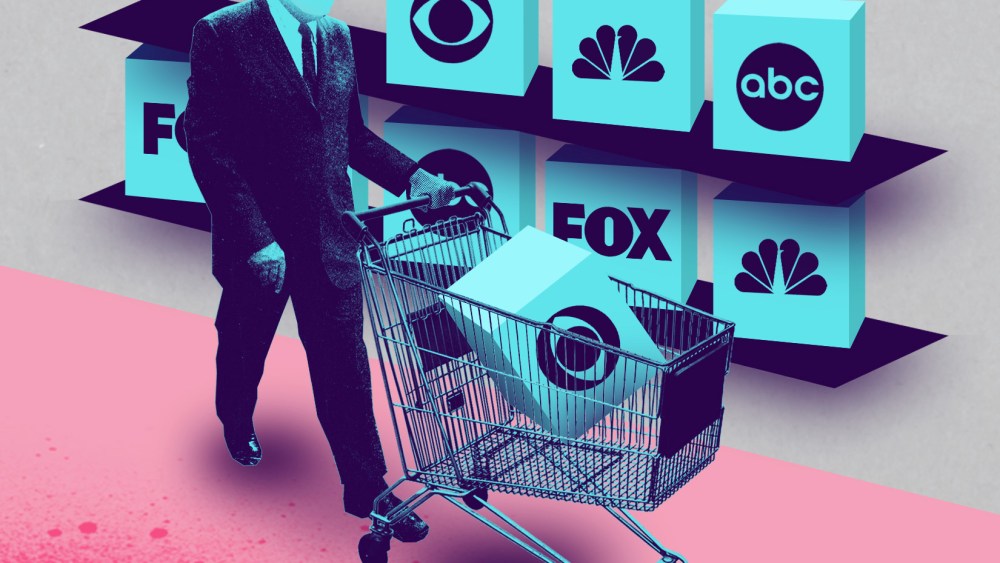
Upfront, the nation’s largest television advertising marketplace, remains the central location for billions of dollars in commercial-related transactions. As for TV, not so much.
Madison Avenue is increasingly focused on consumers watching their favorite dramas, comedies, sports games, movies and reality shows through streaming services, and traditional TV advertising is just one of the things being sold at the industry’s annual conference. Every May, U.S. media companies converge on New York City to sell most of the commercial time associated with new programming schedules.
Advertisers currently have many different types of eye spots. More TV companies are offering so-called programmatic advertising, or video inventory collected by algorithms tailored to specific audience demographics. There is a growing demand for events built for the community of fans who watch networks like Bravo and MS NOW. And digital players offering search and AI exchanges will look to siphon off TV ad revenue.
No wonder the amount allocated to traditional TV has decreased in the last three prepaid sessions. According to Media Dynamics, advertising contracts related to prime time broadcasting in 2025 were approximately $9.1 billion, down 2.5% from $9.34 billion in the same period last year. Dollars devoted to cable fell 4.3% to nearly $8.68 billion, compared to about $9.1 billion in 2024. Meanwhile, dollars allocated to streaming increased 17.9% to $13.2 billion compared to $11.2 billion upfront in 2024, according to Media Dynamics.
What will be the next front? Here are some early signs of how the money will move.
Advertising money is flowing, but what about TV?
According to research firm MoffettNathanson, the majority of U.S. ad spending goes to Alphabet, Meta, Amazon and Microsoft. “These four companies currently account for 65% of total U.S. ad spend, or approximately 80% of digital ad spend,” the company said in a recent research note. Forecasts for television in 2026 predict that advertising devoted to cable will decrease by 10% and advertising dollars devoted to broadcast television will increase by 5%.
Amazon becomes aggressive
The e-commerce giant has been on a roll since launching ad-supported slots on Amazon Prime Video in January 2024. Amazon not only quietly entered the first night of Upfront Week, a show in which networks make splashy presentations to potential sponsors, it also infiltrated the programmatic system. In recent months, Amazon has signed a series of deals with Roku, Disney, Netflix and others to help advertisers reach both video and audio users for content tied to other companies. “At some level, we want to be a ‘jack of all trades’ in advertising,” Alan Moss, vice president of global sales for Amazon Ads, told Variety in January.
Those involved have doubts about mergers in the advertising industry.
The recent merger of advertising giants Omnicom Group and Interpublic Group gives one organization control of two of the industry’s largest buyers of advertising inventory. The newly expanded Omnicom now runs both Omnicom Media Group and Media Brands, although a different owner previously acquired the agency. Salespeople and advertisers want to know how this new dynamic will work in the upfront market.
pitch forward
What kind of ad plays will drive spend for marketers?
What kind of TV advertising are marketers looking for? Some evidence is already emerging.
As more viewers ignore traditional commercials, advertisers are pursuing new partnerships that weave their messages and products into programming.
— Although the full-scale effort has yet to begin, Toyota and Fox have already struck a deal to make the automaker’s Tacoma pickup truck a central character in the network’s reboot of “Baywatch.” Tacoma serves as the show’s lifeguard throughout the season.
* Advertisers are eager to put commercials on popular sports programs, so TV networks are going the extra mile to boost new contests. ESPN will replace “Sunday Night Baseball” with “Women’s Sports Sunday” this summer.
*In a bold move, State Farm has arranged for popular advertising character Jake to make a cameo appearance in the second season of Netflix’s sports comedy “Running Point,” starring Kate Hudson.
