

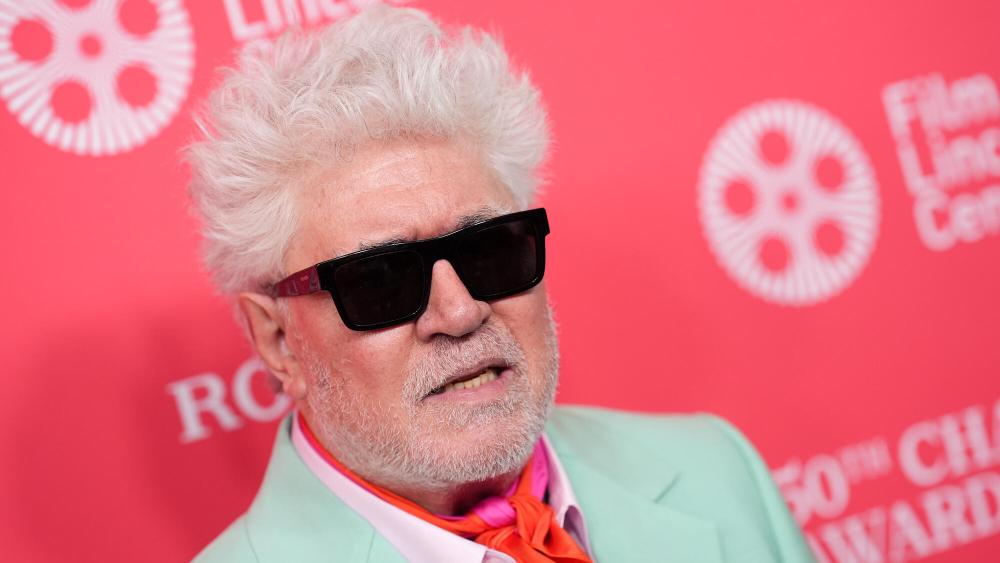
Pedro Almodóvar recently spoke to the Los Angeles Times ahead of his latest film, “Bitter Christmas,” which will be screened at the Cannes Film Festival, and criticized this year’s Oscars for being decidedly apolitical.
“You know, I’m not blaming anyone in particular, but it was very noticeable watching the Oscar telecast that there wasn’t a lot of protesting against the war or against Trump,” Almodovar said. “Maybe he wasn’t the only one, but the only example I remember is a European friend of mine, Javier Bardem, who directly said, ‘Liberate Palestine.’ ”
“People are obviously very scared,” the director continued. “The United States is not a democracy right now. Some say maybe it’s an imperfect democracy, but I really don’t think the United States is a democracy right now. The heartbreaking irony is that a democracy, through a proper and correct voting mechanism, has created this kind of totalitarian regime. And that’s a paradox, and it’s also incredibly sad.”
Mr. Almodovar has expressed his opposition to Mr. Trump in the past, most notably when he accepted the Chaplin Award at New York City’s Lincoln Center in 2025. Referring to then-President Trump, the filmmaker said America is “ruled by a narcissistic authority that has no respect for human rights.” He later said Trump would be remembered as a “disaster.”
Asked by the Los Angeles Times whether speaking out could affect his career, Almodóvar said: “Absolutely not.”
“I’m not really afraid. In a general Spanish sense, here we’re not afraid to call things what they are. We had a government that called Gaza a genocide, and in general the Spanish people are not afraid to call these wars what they are,” he explained, adding that because he is a foreigner and works outside of Hollywood, it is “easy for him to articulate” his beliefs.
Many film journalists criticized this year’s Oscar Awards as being “too safe” in dealing with political issues. The ceremony’s apolitical bent was further accentuated by Paul Thomas Anderson’s politically charged “One Battle After Another,” which won best picture and several other trophies.
As Variety’s Owen Gleiberman said in his review of the show, “One Battle is a film that has today’s American politics at the very heart of its cinematic DNA…It was a cathartic piece of political art. On the night it won six Oscars, , that reality should have been at the forefront of the victory celebration.In fact, if you were paying attention to the Oscars but hadn’t seen the film they praised most fervently, you might think, “I had no idea what that movie was about.” ”
