

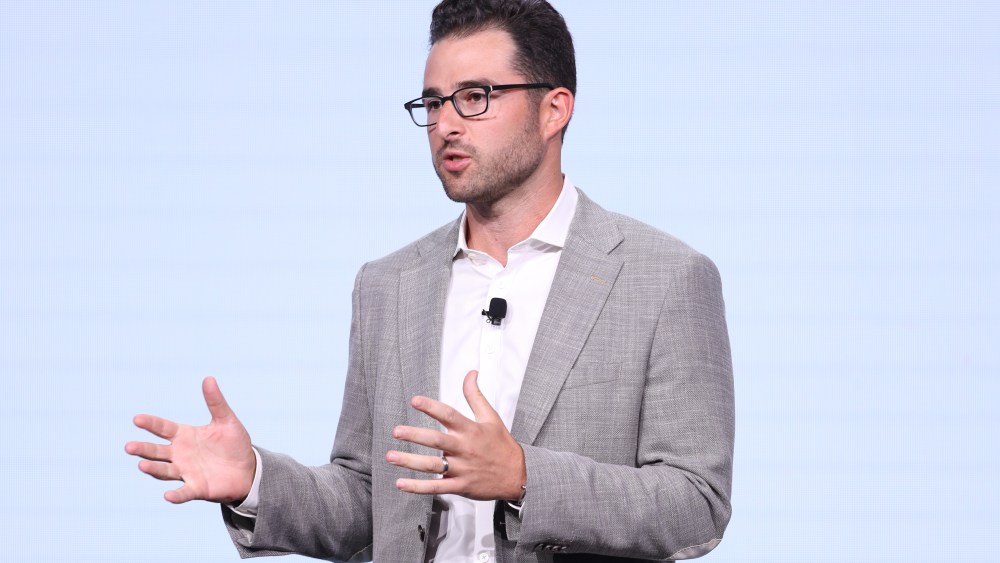
Jay Askinasi’s preparation period is over.
Paramount Skydance’s newly created chief revenue officer will move into the public sphere this week as the media conglomerate begins a series of “advanced” meetings with various agencies and advertisers. Most of Paramount’s rivals are waiting until mid-May to host a group of flashy programming showcases to begin annual negotiations for billions of dollars in commercial time tied to the nation’s most-watched video programming. Paramount has opted for this less flashy route in recent years.
Madison Avenue is keeping an eye on Askinasi to see how he will lead advertising sales at Paramount Skydance, the oldest of the country’s major media companies. After all, CBS and cable networks like Nickelodeon and Comedy Central still drive much of the revenue and operating profit. Still, Paramount, like its rivals, is working to find new opportunities in streaming.
Under Asinasi, Paramount appears poised to erase the distinction between linear and digital advertising. “I’ve worked on the buy side for a long time, so I think about this every day: What do customers need to do to solve their own challenges? How can we help them do that?” he says. “I think if we take that approach and streamline it to some extent to make it easier to understand, we’ll be in a good place. And we’re streamlining our organization and simplifying our approach. We’re thinking about portfolios and platforms, not individual brands.”
The company wants streaming advertisers to feel like they’re getting the big audience recognition that comes with traditional TV. Paramount is touting a concept called “streaming fixed units,” which gives sponsors regular positions on streaming shows. Many streaming hubs fill each commercial break with different spots through programmatic buying, which inserts ads based on algorithms tied to demographics and geography. But the new concept could give certain advertisers prominent positions, such as the first ad during a commercial break, for the first seven days after a new episode is released.
Paramount has also begun opening up its sports inventory to commercials inserted programmatically, potentially reaching a broader advertising following by making some of its top programming available in new ways.
Paramount needs to reverse a difficult trend. While advertising revenue for streaming media like Paramount+ and Pluto is increasing, the company’s longtime television network is ceding valuable ad dollars to other sites. About 27% of Paramount’s revenue comes from advertising sales, according to research firm MoffettNathanson. The company is already predicting further declines in its TV business in the first quarter of 2026. TV advertising decreased by 10% in the fourth quarter of 2025.
Paramount doesn’t just have to contend with internal dynamics. The global economy is unstable, as recent stock market fluctuations have highlighted. “A worsening of the U.S.-Iran conflict could cause a significant deterioration in consumer spending and a broader demand shock,” the company said in a recent research note, noting that “advertisers are expected to exit” under such circumstances. However, the signals we are hearing today do not support that scenario. ”
Paramount executives “feel strongly about the market,” Askanasi said. Advertisers have recently endured the threat of President Trump’s tariffs and other tough economic indicators, he said. “These are the unknowns, and we are focused on preparing every advertiser to focus on the pain points in their business.
Although Askanashi is new to traditional cable and broadcast TV sales, he already has hard-earned knowledge of what advertisers are looking for in a media partner. He was previously a senior purchasing executive at Publicis Groupe and led advertising sales for Roku before joining Paramount. “Are there any nuances that I’m learning? For sure,” he says. “Is it that different from what I used to do? It’s not as different as I thought it would be.” He recently surprised the market by hiring Daniel Carney, the executive who led sports ad sales at Amazon’s Prime Video, to oversee all U.S. ad sales for Paramount.
Paramount’s pre-meetings begin, but the company appears ready to hold on and at this point has no intention of returning to the days when CBS held court in front of advertisers at Carnegie Hall.
“They’re working well,” Askanasi says of the meetings. “I think it’s unique in the sense that you can interact with people one-on-one. Meetings are still large and talent-driven and content-driven, like a large-scale, many-to-many approach, but in a more intimate environment. So I think that’s an advantage for us. We know that our customers really enjoy it.”
