

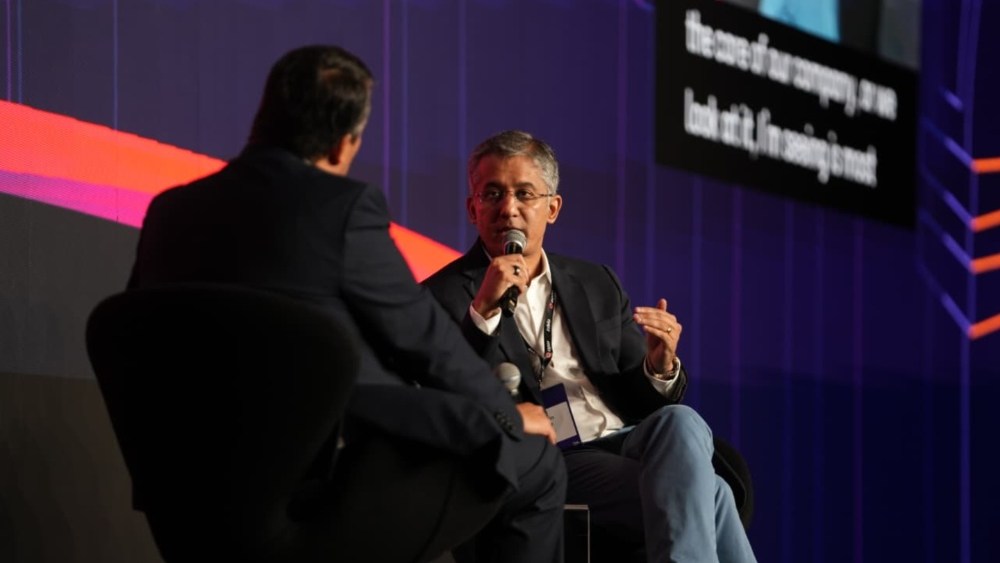
Indian streamer JioStar is building commerce into a third revenue stream alongside advertising and subscriptions, Entertainment CEO Kevin Vaz said at APOS 2026 on Tuesday, citing live integrations with food delivery platforms and premier partnerships for branded films as early evidence of changes he expects to accelerate as cyclical pressures come on in India’s advertising market.
Vaz told the audience that JioHotstar, India’s leading streaming service, has over 500 million monthly active users, over 260 million paid subscriptions, currently has over 1 billion app downloads across India, has full PIN code coverage, and provides consumers with access to approximately 300,000 hours of content. JioStar’s broader linear business operates 100 channels and reaches more than 85 million TV-connected households.
The platform was created three months after the merger of Viacom 18 and the Walt Disney Company’s India operations closed on November 14, 2024. This integration schedule is unusually fast by global industry standards, Vaz said. “We’re bringing together two very successful companies, each with their own technology, content, consumer base and culture, and bringing them together,” Vaz said.
Vaz argued that scale should not be measured by the size of the audience, but by the depth of impact on that audience’s lives. “Scale is defined as how you impact people’s lives once you reach them,” he said.
On the question of how to categorize JioStar, Vaz positioned the company first as a technology business, with storytelling as its core driver rather than its defining identity. “For us, we think of JioStar as a technology company that also delivers content. Storytelling has always been at the heart of everything we do. Storytelling drives engagement, it drives fandom, it drives cultural impact. But ultimately, we need technology to see how that storytelling is communicated, how it’s personalized, how it’s experienced, and how we do this at scale,” Vaz said. He cited a partnership with OpenAI among recent technology investments, along with AI-driven content discoverability and work on short-form products.
The short films come in the form of Tadka, JioStar’s microdrama service, which launched on April 3 and has been integrated into the existing JioHotstar app rather than being offered as a separate product. The service attracted about 100 million viewers in its first six to eight weeks. He explained that the decision to house microdrama content alongside long-form dramas and movies was a deliberate choice in the consumer experience, designed to allow viewers to move between vertical short-form content and long-form programming without leaving the platform.
Commerce is what Baz calls a third revenue stream for an industry that has traditionally relied solely on advertising and subscriptions, and he expects it to grow in importance as advertising faces cyclical pressures. He cited live integration with Swiggy during sports broadcasts, allowing viewers to order food while watching, and a partnership with clothing brand NewMe on one of the company’s most-watched shows, allowing viewers to shop the fashions worn by contestants on screen. A recent partnership with Samsung to coincide with the premiere of ‘Dhulandar The Revenge’ on JioHotstar brought the Galaxy S26 through an exclusive promotion. “This is a powerful example of how premium content can have a meaningful impact on brands and marks an important milestone for our company,” Vaz said.
When asked where entertainment is headed in the next five years, Vaz acknowledged that it is difficult to predict amid rapid technological change. “Entertainment will shift from being a passive consumption to a more active and participatory consumer,” he said.
Baz spoke with Vivek Kout, executive director of Media Partners Asia, which produces APOS.
