

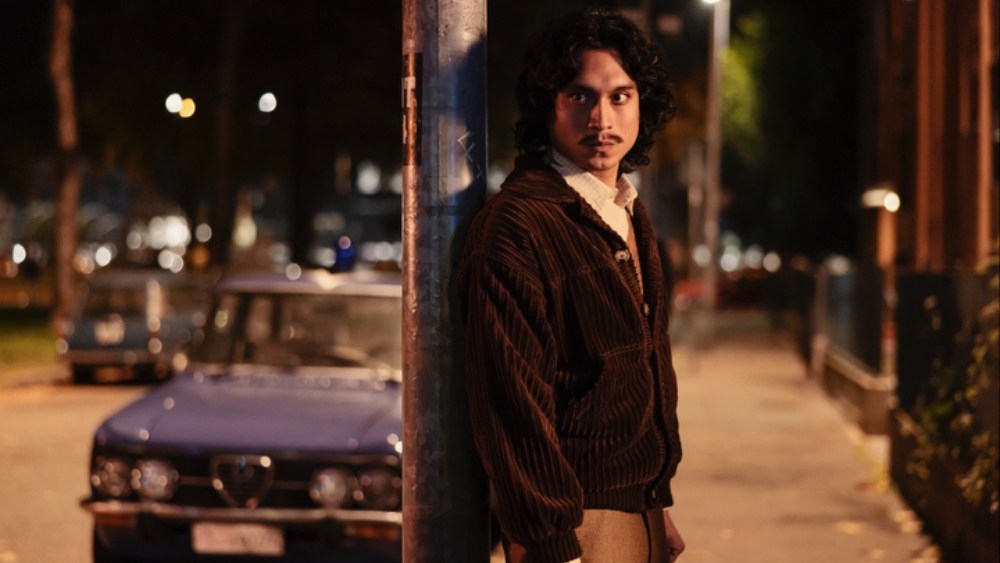
Fandango Sales has boarded Sergio Castro-San Martín’s The Chilean ahead of its world premiere in Locarno.
The film, set in 1976, follows Aldo Marin, a Chilean miner who flees the Chilean regime and travels to Turin, where he meets Luciana, a doctor who performs illegal abortions. However, his attempts to rebuild his life are threatened by his talent for making bombs, which is also his curse.
“The 1970s were a decisive decade for both Italy and Chile. Although the outcomes were very different, there were important similarities in the motivations behind the social and political movements in both countries,” Sergio Castro-San Martín told Variety.
“Talking about that era, in many ways, means revisiting the beginnings of the massive wave of migration in Chile and Latin America that triggered forced exile. Today, that same sentiment seems to be resurfacing again, not necessarily through demonstrations in the streets, but in the digital realm.”
The biggest challenge for “The Chilean,” he said, was creating a period drama that felt “deeply rooted in the present.”
“When you make a film set in the past, especially during a politically charged time like this, it’s easy to fall into the trap of propaganda and didactic political discourse. That’s exactly what The Chilean seeks to avoid.”
Camilo Arancibia plays the role of Aldo alongside Sara Seraiocco, Gaetano Bruno, Andrew Bergstead and Lorenzo Richelmi. “The Chilean” is produced by Dispàrte, Equeco and Cinédokké in association with Redibis Film.
Inspired by Juan Cristóbal Guarello’s book Aldo Marín, Carne de Cañon, the film is a masterpiece in its own right.
“[In the book]the main character dreams of returning to Chile to assassinate Pinochet. I think Aldo’s dream in ‘The Chilean’ is simpler and more universal. He wants to be reunited with his wife and son, and for that he has to earn enough money.”
He added: “By shifting focus in this way, the story transcends ideological boundaries and becomes deeply human. In that sense, Asylum naturally leads us to one of today’s most pressing social issues: immigration, a theme that permeates every layer of the film.”
Recreating a historical period requires “an understanding of the societies that lived in that world and the people who gave life to it.”
“We wanted the language of ‘The Chilean’ to have an inherent duality. Chileans speak Italian, Italians speak Spanish. Both police officers and militants are forced to learn each other’s language. A fundamental principle of guerrilla warfare is to know your enemy as much as you know yourself.”
Aldo says, “My heart is in Chile, but my body is in Italy.” However, he is not the only orphan in the story, as Luciana is also scarred by a painful past.
“Together they represent a militant leftist driven by revolutionary ideals, but ultimately orphaned. Abandoned by their political parties, leaders, and ultimately their own utopias. The characters wander the city alone like ghosts, unable to unite and defeated, forced to reinvent themselves.”
Today, he argued, many of our political concepts have been turned upside down.
“Words that once belonged to the language of the left have been usurped by the right, and we now live in an environment in which their ideological meanings have become blurred.”
But Aldo’s struggle isn’t just political. “It’s very personal.”
“That’s why ‘The Chilean’ brought the revolutionary idea back to the domestic sphere: ‘I don’t plant bombs. I just make bombs.'” This line defines Aldo as someone who is actively observing both his own life and the world around him. His burden is one of accumulation. It’s the accumulated anger, the accumulated sadness over the accumulated defection, the accumulated betrayal. In this shared anger, which is also reflected in Luciana, he ultimately breaks his promise to himself. ”
Aldo Marín Piñones is a “ticking time bomb,” Castro San Martín said. And so are his movies.
“Every scene is like a spark slowly traveling along a fuse, moving silently toward an inevitable explosion. Everything is on the brink of exploding. We know something is going to happen, but we don’t know when or how.”
