

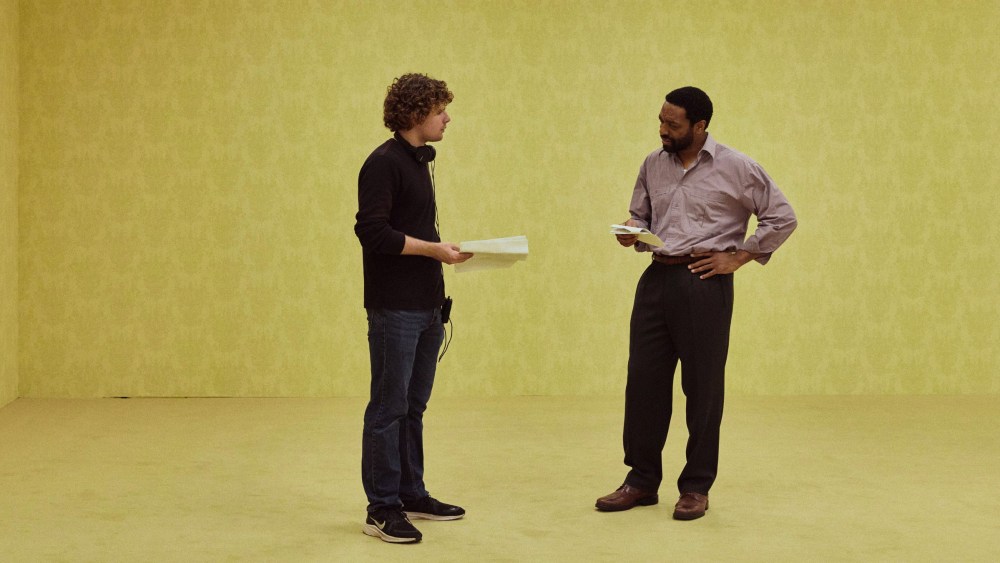
Backroom director Kane Parsons recently criticized AI in filmmaking in an interview with The Australian. The 20-year-old filmmaker said he is “like most adapted people” and doesn’t want to see technology take over Hollywood.
“If I could snap my fingers and make generated AI disappear forever, I probably would,” Parsons said. “I don’t get any creative fun out of using these tools. It completely defeats the purpose for me.”
Parsons explained that he sees a future in which AI will make some VFX tasks less labor intensive, but added, “It’s hard to argue objectively right now because there’s so much at stake and so many harmful outcomes have already occurred.”
Parsons teased that he would like to explore themes surrounding AI in future films, although he wants to keep AI out of his work.
“What’s more interesting to me is asking that artistically,” Parsons said. “We already live in a world where you can walk outside and see billboards and signs that are obvious AI slop. It’s become part of our visual reality. To me, generative AI feels less like an innovation and more like a symptom of broader cultural and economic corruption.”
He added, “I’m interested in using that iconography in art. I’m interested in using AI to find out what it represents rather than creating the art itself. I’d like to explore that further in future projects.”
While Parsons rejects AI, Martin Scorsese, one of Hollywood’s most famous directors, embraces it. The “Taxi Driver” director recently joined AI company Black Forest Labs as an advisor, with the aim of “pushing the boundaries of creativity and creating deeper and richer experiences for viewers.”
“Movie is a young medium, only 125 years old, so we must be open to how it evolves,” Scorsese said in a statement posted on the Black Forest Institute’s website. “I leveraged 3D on Hugo and de-aging technology on The Irishman. These tools allow me to more clearly and efficiently share what I’m visualizing with my creative team (production designer, art designer, cinematographer) and leverage it to enhance the intelligence of the film.”
