

In its 15th year, Locarno’s think tank StepIn discusses “power, people, data and the future of cinema”.
“Last year, StepIn focused on one of the hallmarks of independent film: its embrace of risk. One of the strongest conclusions from these discussions was that playing it safe is rarely the wisest strategy,” said Marcello Paolillo, Locarno Pro, StepIn and U30 Project Manager.
“At the end of the day, audiences fall in love with movies because they are novel, surprising, and emotionally true. But we are increasingly surrounded by algorithms, advanced data analytics, AI, and systems designed to reduce uncertainty, predict outcomes, and optimize decision-making.”
This event explores how power structures, human capital, politics, AI, data-driven decision-making, and increased industry consolidation are reshaping the future of independent film.
Approaching the theme from “four interconnected perspectives”, participants will be able to discuss the following topics: “Film and formula: algorithms, integration, creative freedom”, “Sustainable indie financing: connecting private investors with distributors and market realities”, “Why film still matters: activism, social relevance, audience renewal” and “The cost of gender equality and inclusion: who can afford it?” Can you afford to build a career in this industry? ”
“For many, algorithms have become synonymous with the death of art. At the same time, there is another perspective: when used wisely, data can be a valuable tool rather than a creative constraint,” Paolillo said. The same goes for AI.
“Whether we like it or not, this issue is already impacting every step of the filmmaking process, from development and financing to marketing and distribution. Ignoring it is no longer an option. At StepIn, we want to create a space where these questions can be openly and honestly discussed, recognizing both the opportunities and risks.”
A ready-to-use primer called “Fear, Lies, and the Illusion of Control” is provided by analyst Stephen Follows.
“For a century, the industry has purchased tools that promise to control the uncertainty inherent in arts-based businesses, including the use of stars, test screening, tracking, franchising, and now algorithms,” he told Variety.
“My thesis is that most of them work to some degree, but (a) they don’t work nearly enough, and (b) the industry is using them incorrectly. They test what they test, and they produce real numbers. In some cases, those numbers even make things slightly better, or at least defensible. The problem starts with what we do next, because we mistake the edge of the limit for control.”
“Once you buy a hammer, everything starts to look like a nail, and the questions the tool answers start crowding out the important questions. I’m not saying tools are crap, it’s just that we use them incorrectly. They’re an expensive comfort, and the side effects often cost more than the blade is worth.”
While familiar IPs and sequels “change the odds,” he said, “the safe choices are always going to fail, and we don’t see those failures as risks.”
“We call it franchise fatigue, bad marketing, or star casting. Fame really pays off, but the stars get most of that increased paycheck. The insurance mostly ends up in the stars’ pockets, but the movies underneath it became even more expensive to save on.”
There’s also the “total misuse and misunderstanding” of the oft-repeated line “no one knows anything.”
“People quote Goldman as if it’s humility and use it as a cover for not doing their job,” Follows says.
“The trade in certainty is booming right now. On every stage, on every panel, on every feed, there are people selling the film industry a dream: a dream that this tool, this model, this dataset will finally break the code. And we are the perfect customer. The dire probability of 100 years makes people despair, and despair buys the dream.”
Platforms “measure everything and share nothing” — “Netflix has redefined what ‘viewing’ means four times, while Apple has never published viewer numbers” — while people ignore the algorithms that already determine what gets watched.
“Less than 6% of titles on major streaming services account for about three-quarters of all viewing. The threat right now is discovery, not creation. And the only thing a machine can’t do is someone with sense say, ‘This is it.'” That’s what festivals are about. Counter-algorithms are people who don’t care, and Locarno is full of them. ”
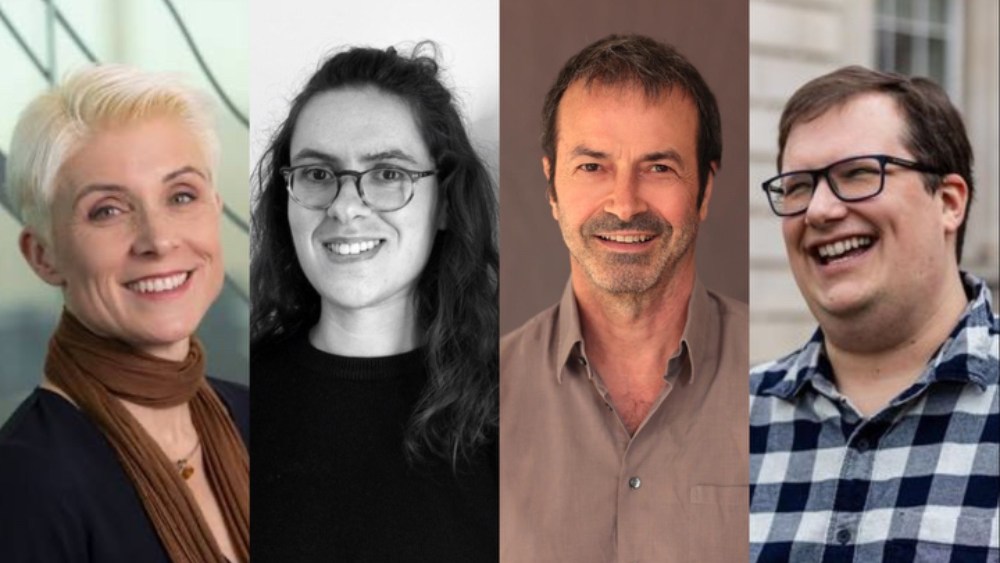
The opening panel will feature distributor Andrea Occhipinti (Lucky Red), mk2 production director Yasmin Tali, and Doris Ruth Eichoff, professor of cultural economics and policy at the University of Glasgow.
“What[Occhipinti]has built with Lucky Red over the past 30 years speaks for itself. Lucky Red’s recent partnership with Studiocanal makes his perspective on consolidation, independent film, and the changing market particularly timely,” Paolillo said.
Yasmin Tali “has first-hand insight into how ambitious auteur films can continue to thrive in an increasingly challenging market”, while Doris Ruth Eichoff is “one of Europe’s leading experts on diversity and inclusion in the cultural economy”.
“The statistics about women in the film industry remain discouraging. Women are still less likely than men to hold positions of influence and be praised for their work,” Eickhoff told Variety.
“It’s important to keep focused on statistics because they tell an important story and are powerful evidence, but focusing solely on statistics creates an incentive to ‘just let more women in’. That’s a big mistake. We need to enable women to stay and succeed.”
Often, people tend to take a “one-size-fits-all” approach that removes some barriers to women’s opportunities and social participation, while others remain in place.
“We need to support production companies and small businesses to create environments where women of all ages, religions, races, and class backgrounds, women with disabilities, LGBTQ+ women, and women with and without caregiving responsibilities can all do their best work. It’s not a statistic’s job. It’s the work we have to do every day at work,” Eickhoff said.
The good news?
“It’s possible. It can be done one step at a time. It doesn’t all cost money. And it will benefit everyone, not ‘just’ women.”
Activism and political engagement will also be discussed, with “the world around us once again creating a sense of urgency, and filmmakers responding.”
“Many of the films that have sparked the most intense public debate in recent years are not only because of their artistic qualities, but also because they raise social, political, and ethical issues,” Paolillo said, citing “Parasite,” “The Zone of Interest,” “One Battle After Another,” “The Sinner,” and “The Voice of Hind Rajab.”
“Interestingly, this is reigniting an old debate. Wim Wenders’ comments at this year’s Berlin International Film Festival, followed by Paul Laverty and Park Chan-wook’s comments at Cannes, brought to mind a central question in 1970s film culture: whether cinema is inherently political.”
Wenders’ statement that filmmakers should “stay out of politics” was widely discussed.
“This is a discussion we want to discuss within the broader question of the cultural and social significance of film in an era shaped by social media, algorithm-driven platforms, fragmented audiences, and overwhelming visual streams. Does film still matter as a cultural and social force? And what strategies can help expand and renew audiences by finding new ways to engage people across generations?”
Overall, Paolillo remains optimistic about the future of film.
“I’ve been in this industry for a long time, and I’ve heard time and time again those who herald the end of independent film. They’re always wrong. Every few years, a new generation of filmmakers, a new movement, or a slew of unexpected films reminds us why film still matters,” he argued.
Having said that, we are currently living in an era of “great change.”
“Economic models are changing, technology is evolving at an unprecedented pace, and power within industries is becoming increasingly concentrated. These challenges should not be ignored, but neither should they be feared.”
Paolillo added, “That’s ultimately what Step In is about: bringing together people with very different perspectives to ask difficult questions, challenge assumptions, and collectively imagine what the next chapter in independent film will be.”
“I’m really interested to see where this year’s conversation takes us.”
