

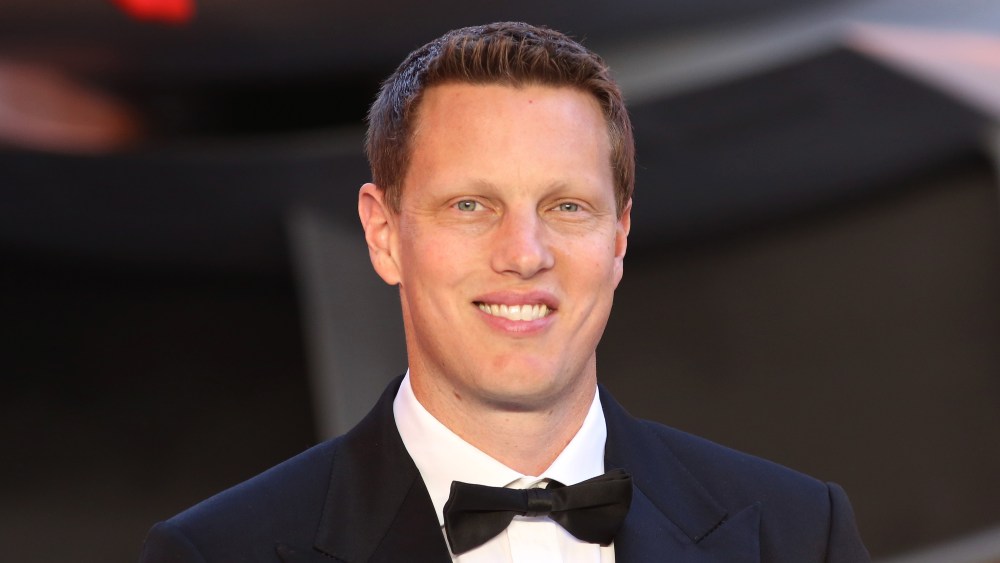
Paramount Skydance CEO David Ellison is quietly backing a bill that would launch federal film tax incentives, with support from lawmakers on both sides of the aisle, multiple people told Variety.
Mr. Ellison has spent at least six months working on the bill, two people familiar with the matter said, and was in Washington, D.C., on Monday night for a meeting with Republican leaders where the issue will be discussed.
The names of politicians from both parties involved in the bill were not immediately available. Sources pointed to the irony that Mr. Ellison’s Monday night meeting took place on the same day that a group of state attorneys general filed a lawsuit seeking to block the mogul’s acquisition of Warner Bros. (Mr. Ellison’s general counsel Makan Delrahim is close to him in Washington, D.C.)
Federal film tax incentives would provide significant financial relief to content creators who have fled the United States to other parts of the world in search of kickbacks. The federal program would also help boost deals in Hollywood’s home state of California. The state’s AG, Rob Bonta, is spearheading a bitter antitrust lawsuit filed today against Ellison over Warner Bros.
Hollywood unions, including DGA, IATSE, and SAG-AFTRA, also receive federal incentives to do their part. The DGA just negotiated a contract that stipulated that top studio executives must participate in lobbying for more favorable filming incentives in the country.
California has $750 million worth of television and film tax credits, but no such program exists nationally.
Bonta and a coalition of 12 other states argued in the antitrust suit that the $111 billion merger of the two legacy studios violated the Clayton Act by undermining competition in three markets: big-release theatrical distribution, “top-grossing” theatrical distribution, and basic cable licensing. The complaint alleges that if Paramount and Warner Bros. merged, the combined company would control 27% of the wide-release theatrical distribution market, 30% of the submarket of “anticipated blockbuster movies,” and 27% of basic cable bundles.
“The illegal merger of these two entertainment giants will lead to higher prices, lower quality, and less content for movies and television, hurting movie theaters, basic cable distribution companies, and ultimately the audience on every couch and movie theater seat in America,” Bonta said in a statement Monday.
Of course, Paramount fired back with a scathing statement after the lawsuit was filed. “The lawsuit brought by the state attorney general reflects a fundamentally flawed application of antitrust law, even from the most liberal perspective, and is wrong on both fact and law,” the company said in a statement. “Delaying this deal will only harm entertainment workers who have already suffered in recent years as technology has disrupted their livelihoods and cost tens of thousands of entertainment jobs in California.”
The Justice Department had already approved the deal in March, effectively clearing the way for Mr. Ellison to complete his planned merger of Paramount and Warner Bros. Hollywood unions and stars aren’t enthusiastic about the deal, worried that an already struggling Hollywood will be pushed further by the historically ineffective strategy of a mega-merger between two media giants.
Politico’s Daniel Miller first reported Ellison’s interest in federal film incentives.
