

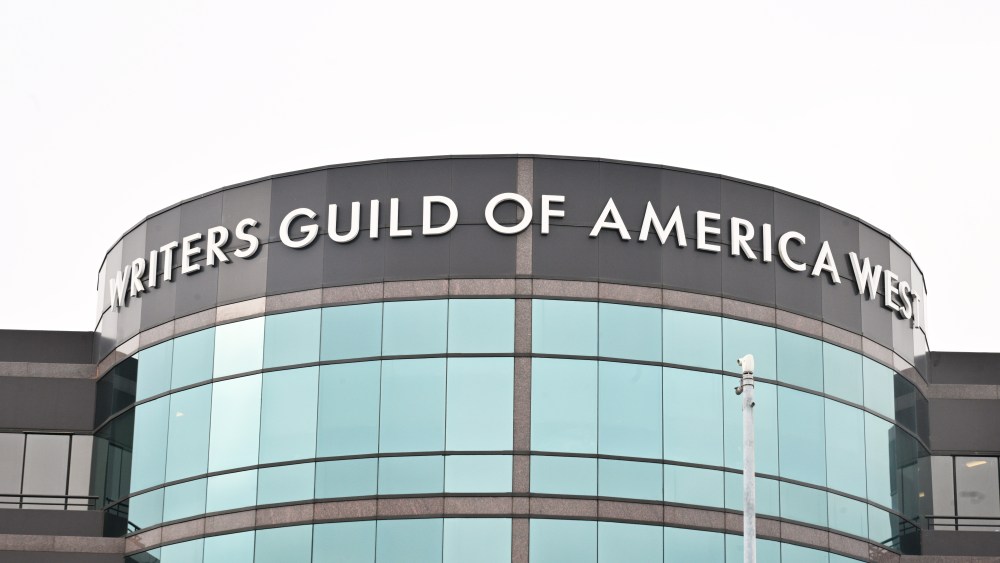
The Writers Guild of America has approved four-year deals with major studios and agreed to drastically reduce health plans for screenwriters.
Guild members ratified the MBA of 2026 with 90.38% (4,282) voting in favor and 9.62% (456) voting against. The MBA term is from May 2nd to May 1st, 2030.
Under the agreement reached on April 4, writers will see individual insurance premiums for the first time. The deal also includes higher deductibles and out-of-pocket maximums, as well as a significant elimination of the “extended coverage points” system that allows writers to maintain health insurance when they’re not working.
“In the face of industry contraction and runaway health care cost inflation, the writers were able to put the health fund back on a sustainable path and secure a contract that builds on the proceeds of the 2023 strike,” said WGAW President Michelle Mulroney. “We could not have achieved this goal without our thoughtful negotiating committee led by co-chairs Daniel Sánchez-Witzel and John August, the WGAW and WGAE Boards of Directors, and the professional staff of the WGA. We thank all the writers who supported us during this process.”
“AMPTP congratulates the WGA on its ratification of a new contract that includes historic investments in writers’ health plans, significant improvements in residuals and wages, and important security for writers’ jobs. This agreement supports both writers and the long-term stability of the industry. We look forward to building on this progress and reaching a fair agreement with SAG-AFTRA and the DGA that fosters opportunity across the world while increasing certainty.” industry. ”
The WGA was forced to accept the changes after running an average annual deficit of $50 million over four years due to accelerating health inflation and a downturn in film and television production. In return, the studio has agreed to commit an estimated $321 million over the next four years to stabilize the health fund, including $280 million in new contributions.
“We came to this situation knowing that changes may be necessary,” said WGA West President Michelle Mulroney. “We wanted to keep them as manageable as possible.”
The deal marks the first time this cycle that an agreement has been reached. The Alliance of Motion Picture and Television Producers will return to the negotiating table with SAG-AFTRA next Monday after more than a month of talks in late February and early March. Negotiators are optimistic that a deal will be finalized before the Directors Guild of America meets with the studio on May 11.
The WGA’s contract largely maintains the status quo regarding the issues that led to the 148-day strike in 2023. The studios agreed to hold further meetings regarding artificial intelligence, but did not commit to paying screenwriters if their scripts are used to train AI models.
AMPTP has agreed to increase the 50% “success bonus” for popular streaming shows to 75% of a writer’s base residual. This agreement does not change the formula that determines success.
And the agreement maintains the 2023 agreement on writers’ room staffing without increasing mandatory minimum writing staff. AMPTP had called for the return of the “mini room” before it was given the green light, but the WGA remained adamant.
