

As with the rest of the world last week, the shocking news of Paramount Skydance’s 11th-hour acquisition of Warner Bros. Discovery hit hard at HBO. When news broke Thursday that Netflix was no longer pursuing the company, HBO Chairman and CEO Casey Bloys came out of his office and declared, “It’s over,” according to at least one person familiar with the matter.
And he wasn’t just referring to the uncertainty surrounding the future of Warner Bros. Discovery, and by extension, who will ultimately control HBO. No, the surprise deal that put Paramount Skydance and the Donald Trump-friendly Ellisons in charge of HBO, and what it means for the future of the company and its HBO Max streamer, left staffers in disarray over the weekend.
When Paramount CEO David Ellison finally revealed parts of the Paramount-WB merger plan on Monday morning, he had not yet contacted key Warner Bros. executives, including Bloys and Channing Dungey, head of Warner Bros. TV Group, according to insiders. Ellison didn’t provide many details, but he told analysts that while he is looking to merge HBO Max and Paramount+, he intends to give HBO autonomy.
“Casey and his team are doing a really great job at HBO,” Ellison said on Monday’s investor call. “We plan to operate with an independence that, frankly, allows HBO to do incredibly well. Our view is that HBO should continue to be HBO.”
One HBO staffer said Ellison’s comments were “reassuring, but basically meaningless because there’s no concrete plan. I haven’t heard anything. I feel like Casey was the first person Ted Sarandos called when the Netflix thing happened.”
After the Ellison investor meeting, Warner Bros. Discovery CEO and President of Global Streaming and Gaming JB Perrette held a meeting with staff and noted that integrating the HBO Max and Paramount+ streaming entities will take time and significant effort. And given that WBD’s product team is already doing it with HBO Max and Discovery+, it’ll likely be necessary for some time to come.
“Our employees have experience with that, but Paramount is very new to this,” the staffer said, adding that Perrette’s address to the troops was “surprisingly motivating given the circumstances…In fact, the situation was probably not as good for our product guys as it was for Netflix. It was great to hear that, and it was very interesting to hear that perspective from him.”
However, not all companies are stunned after last week’s bombshell. Employees have spent months grappling with the looming schism between Warner Bros. and Discovery, but all efforts to disentangle the two sides appear to have been in vain.
Then there’s the even more precarious fate of CNN, whose transition under more friendly ownership was a priority for President Trump. Even for non-cable WBD staff, the potential impact on Ted Turner’s cable news initiative is perhaps most upsetting for rank-and-file employees. Mr. Ellison’s visit to the State of the Union address and his friendly photo with Sen. Lindsey Graham (R.S.C.), who invited the executive, did not go well with the public. (This tone-deaf photo was likened by a WBD insider at the time when David Zaslav was photographed drinking champagne in Cannes during the writers’ strike.)
Besides CNN, the fate of WBD’s linear cable channels (which include TNT, TBS, Cartoon Network, Discovery Channel, HGTV and Food Network) is another source of fear that even larger layoffs are on the horizon for a division that has already faced significant layoffs in recent years. Paramount’s linear cable channels are already operating with a skeleton staff for the most part.
On the other hand, if Paramount wants to maintain its premium TV status, it can’t strip away every inch of HBO. Paramount insiders say Mr. Bloys’ stature, expertise and relationships should be welcome under the Ellison administration, especially since former Paramount management killed off HBO’s longtime rival Showtime. The Paramount+ streamer, on the other hand, is still a small operation, with about 100 staff.
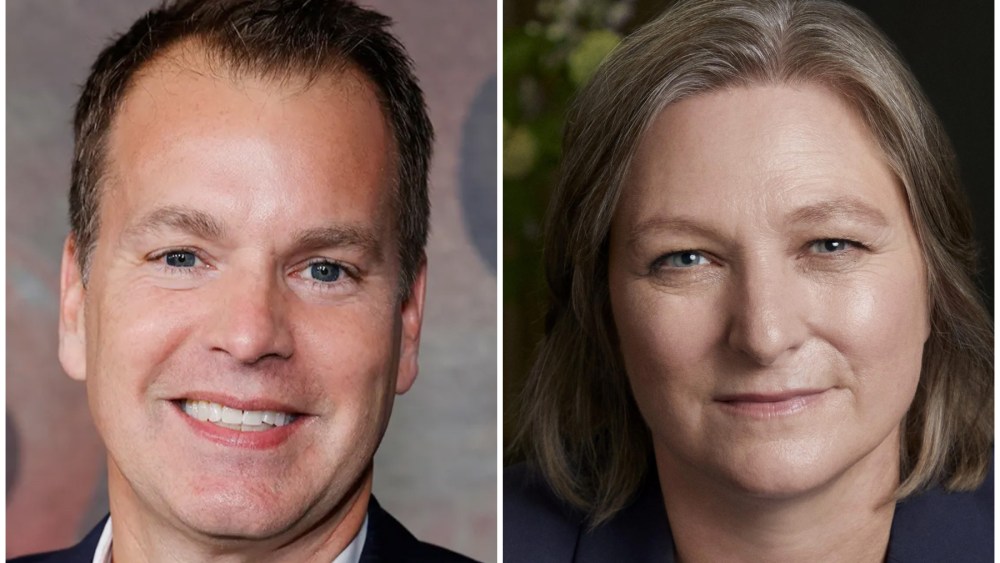
How will the HBO-Paramount+ merger work? No one seems to know for sure, starting with the potential question of how Bloys and Paramount’s direct-to-consumer chairman Cindy Holland would be able to coexist under the new structure. Bloys’ contract (a five-year contract signed in 2022) runs through next year, so the timing is probably convenient for him. At that point, the Warner Bros. Discovery-Paramount Skydance merger will likely be complete or close to being complete, and Bloys will have a better idea of whether to stay or leave (or whether Ellison will make the decision on his behalf).
“We’ll have to see what the first conversations with Casey and David (Ellison) go like,” one source said, noting that until then, it’s hard to predict what will happen next. Another executive added: “I think Casey is just waiting to see what happens now and what the actual idea is of how HBO will operate independently.”
Under Netflix, Bloys and his team expected HBO to be marketed and sold as a premium upgrade in many ways, just as it was in the pay cable TV era. Will it continue to be standard under the combined HBO Max/Paramount+, or will it be an add-on like Paramount tried to do with “Paramount+ With Showtime”? “Paramount+ with Showtime is not really the same value proposition that HBO has for its streaming platforms,” an HBO executive said.
By the end of the week, HBO staffers were still reeling from what one person called “whiplash,” finding peace with the idea that Netflix would acquire the brand. But only to see the rug being pulled out from under them. During Netflix’s courtship process, co-CEO Ted Sarandos said all the right things, luring many inside HBO with the idea that the brand would remain intact and operate as its own quality label, similar to Hulu or FX within Disney.
“A lot of people are very disappointed because, yes, it was a shock when the Netflix deal was announced, but we’ve spent the last four months wrapping our heads around this and we know that Ted Sarandos really valued Casey and wanted to keep HBO intact as an independent business,” another source said. “So to find out this news and be blind to what Ellison even thinks about HBO, I was like, dammit. What a setback.”
Now they don’t know what to make of Paramount Skydance, other than to worry that the company’s massive debt will force a major reduction.
“Debt is something that affects all of us,” said one executive. “What are they going to do with it? It’s been a problem since AT&T, and it’s never gone away. There’s always going to be cuts and bone amputations. The people who have survived this company so far know what’s going to happen. Everyone is stretched thin. This definitely hurts morale.”
While there is much to worry about, staff also noted that there is still work to be done. “I think the atmosphere right now is, is it okay to be cautiously optimistic? It feels like we just have to keep our heads down and work,” the source said. “There will be a lot of works this year.”
That “business as usual” mantra will cause some awkward moments in the coming weeks, including HBO Max’s March 26 launch in the UK, but Bloys is expected to give interviews with the press around that debut, and will likely have more to say about HBO’s fate at that point.
Emmy season is just about to start on HBO’s Rank & File, with new seasons of shows like “The Comeback,” “Euphoria” and “House of the Dragon.” And then there’s the long-awaited Harry Potter series, which is in production for an early 2027 premiere.
The same is true at the much smaller Paramount+ in town. Holland attended a press event on Friday for Paramount+’s new drama The Madison, starring Michelle Pfeiffer and Taylor Sheridan, but declined to speculate on what the future holds. But that’s not surprising. Deals like the Warner Bros.-Paramount merger are handled in small rooms, and Holland and Bloys likely weren’t involved in those discussions and probably have many of the same questions that the rest of town has.
Ironically, Warner Communications was once a co-owner of Showtime, but sold its stake in the pay cable TV company to Viacom, which merged with HBO owner Time Inc. in 1990. Now, the successor companies of Time Warner and Viacom, two long-standing rivals in the pay-TV space, are merging. Showtime essentially doesn’t exist anymore (its remains are being consumed by Paramount+). Now, a big debate has begun over the fate of HBO.
Anna Tingley contributed to this report.
