

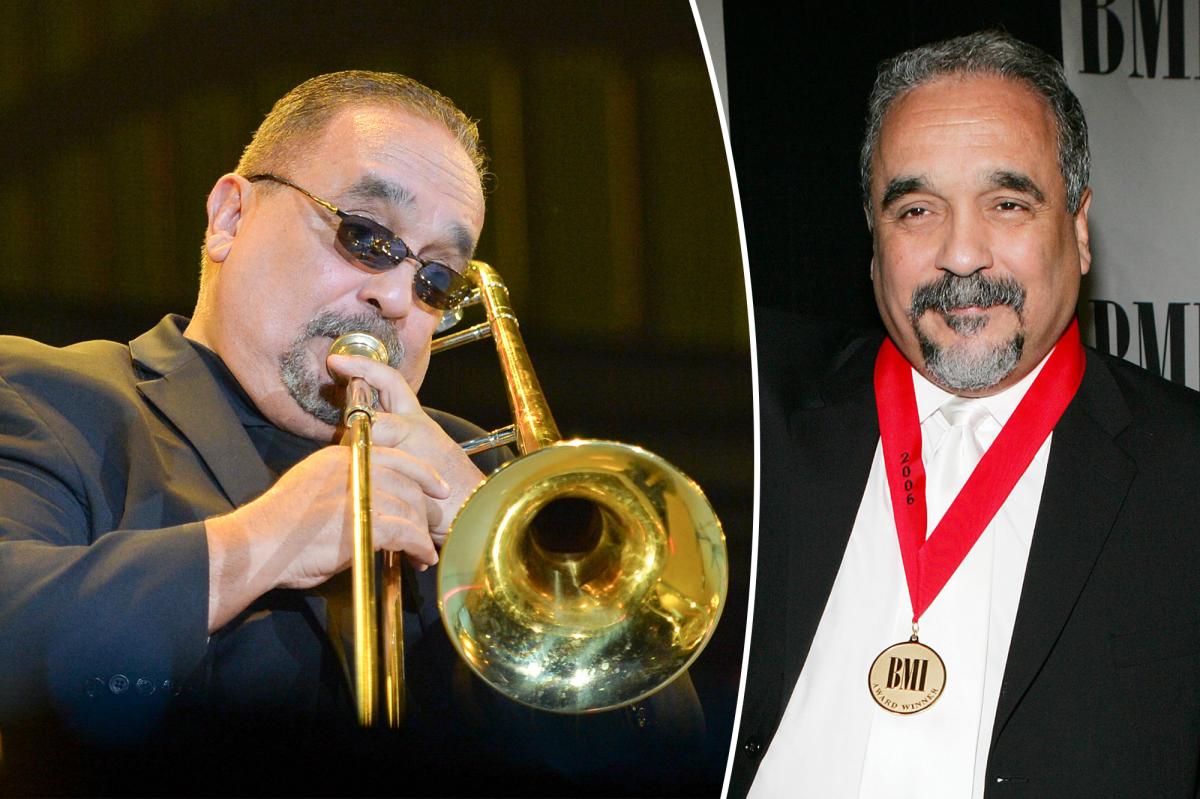
Willie Colon, the Grammy-nominated architect of urban salsa music and social activist, died Saturday. He was 75 years old.
During his decades-long career, the trombonist, composer, arranger, and singer produced more than 40 albums that sold more than 30 million copies worldwide.
He has collaborated with a wide range of artists including Fania All Stars, David Byrne, and Celia Cruz.
His famous collaboration with Rubén Blades, Siembra, became one of the best-selling salsa albums of all time, and the pair were known for addressing social issues through the genre.
Colon’s family and manager confirmed his death through social media posts.
“Willy didn’t just change salsa; he expanded it, politicized it, clothed it in urban annals, and brought it to a stage where it had never been heard before,” writes manager Pietro Carlos. “His trombone was the voice of the people, an echo of the Caribbean in New York, a bridge between two cultures.”
Nominated for 10 Grammy Awards and one Latin Grammy Award, Colón is responsible for such famous songs as “El gran varón,” “Sin poderte hablar,” “Casanova,” “Amor verdad,” and “Oh, qué será.”
Blaise confirmed the “incredible news” on social platform X and expressed his condolences to Colon’s family.
The path to trombone and fame
Born in the Bronx, New York, Colón was raised by his grandmother and aunt and was taught traditional Puerto Rican music and the typical rhythms of Latin American repertoire, such as Cuban son and tango, from an early age.
At the age of 11, he entered the music world, first playing the flute, then the bugle, trumpet, and finally the trombone, making his mark in the then-nascent genre of salsa.
His interest in the trombone was sparked by hearing Barry Rogers play it on the Mon Rivera song “Dolores” with Joe Cotto.
“It sounded like an animal, like an elephant or a lion. It sounded so different that as soon as I heard it, I thought to myself, ‘I want to play that instrument,'” he recalled in a 2011 interview published in the Colombian newspaper El Tiempo.
At the age of 17, he joined a group of artists who formed Fania Records, a famous record label led by Jerry Masucci and Johnny Pacheco.
Fania was a major contributor to the new sound created in New York’s Latin world that later became known as “salsa.”
Colon’s main characteristic as a musician is his rhythmic fusion, harmonizing jazz, rock, funk, soul, and R&B with the old Latin styles of son of Cuba, cha cha cha, mambo, and guaracha, with the nostalgia of traditional Puerto Rican sounds including jibarra, bomba, and plena music.
In 2004, the Latin Recording Academy awarded Colon a special Grammy Award for his career and contributions to music.
community leaders and activists
As a community leader, Colon primarily fought for civil rights in the United States. He was a member of the Hispanic Arts Association, the Latino Commission on AIDS, the Arthur Schomberg Coalition for a Better New York, and the Congressional Hispanic Caucus, among others.
In 1991, he received the Chubb Fellowship honor from Yale University, a distinction also shared by John F. Kennedy, Moshe Dayan, the Rev. Jesse Jackson, and Ronald Reagan.
In politics, he served as special assistant to New York’s first black mayor, David Dinkins, and was later appointed special assistant and advisor to Mayor Michael Bloomberg.
However, Colon himself had little luck running for public office. He unsuccessfully challenged then-Rep. Eliot Engel in the 1994 Democratic primary, and finished third in the 2001 Democratic primary as a New York public defender.
He told the Observer that he supported Hillary Clinton for president in 2008, but voted for Donald Trump in 2016.
Colon clashed publicly with artists and politicians. Colon’s friendship with Blaze broke down in 2003 when Colon filed a lawsuit for breach of contract over the “Siembra…25 Years Later” concert in Puerto Rico.
He also caused controversy by calling then-Venezuela President Hugo Chávez “rotten” on social networks.
Colon has appeared in films such as “Vigilante,” “The Last Fight,” and “It Could Happen to You,” and appeared on television in “Miami Vice” and “Demasiado Corazon.” Most recently, she appeared in Bad Bunny’s music video for “NuevaYol.”
He is survived by his wife and four sons.
