

The US is the world’s largest market for African storytelling content, accounting for 8.7% of global demand, followed by the UK, South Africa, Canada, France, Brazil and China.
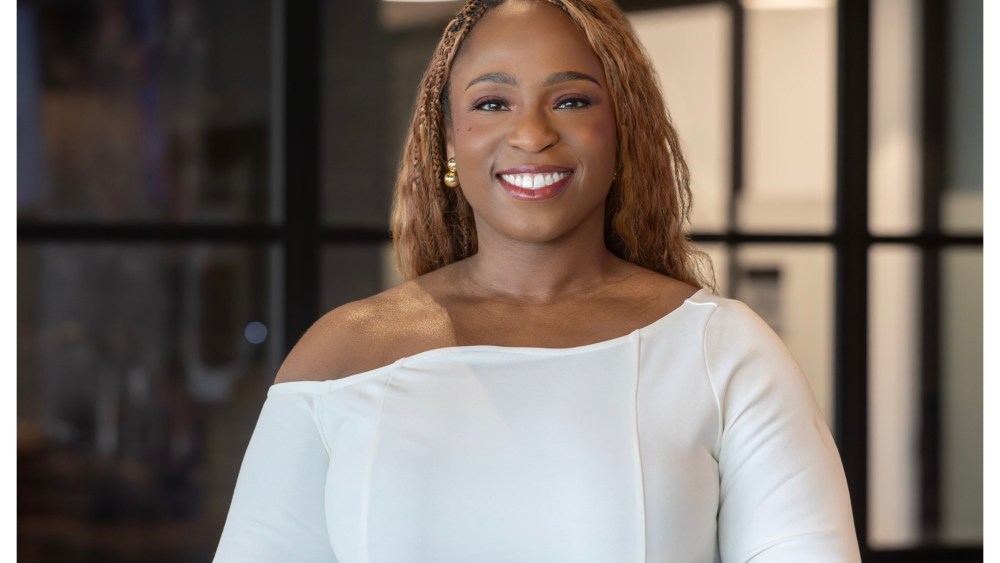
This is one of the takeaways from a study released Thursday by the Next Narrative Africa Foundation. The Next Narrative Africa Fund was founded in 2024 by Akuna Cook, a former diplomat and lawyer who serves as the fund’s CEO. NNAF is a $40 million commercial content fund combined with $10 million from nonprofit Venture Studio.
Other key findings of the study, conducted by Parrot Analytics for NNAF and touted to be the first of its kind, include the fact that non-English African stories account for 28% of global audience demand but only 16% of available supply, “revealing clear structural gaps within the global streaming ecosystem,” the report said. Therefore, there is room for growth.
Geographically, excluding Africa and the Caribbean, the hottest markets for African content are shaped more by local demographics than by size, with Belgium and Portugal leading in Western Europe due to their large African diaspora populations.
The US and UK, despite their size, have more modest metrics in terms of viewership, suggesting that while “a diaspora base exists” African content is “competing with a huge amount of locally dominant content”.
At the same time, strong demand for African narrative content is emerging in markets “both within and outside traditional diaspora corridors,” the report said. “Countries like Brazil, which share deep historical and cultural ties with Africa, along with markets like China, demonstrate that audience appeal extends far beyond the continent itself.”
The report stressed that a “consistent thread” across the research is that African narrative content “first finds its audience through cultural connections.”
Although the United States accounts for the single largest share of global demand for African and diaspora content, over 90% of audience activity for this type of content is not confined to a single market.
Interestingly, in the U.S., Black women consume Black-led content at approximately six times the rate of the general U.S. population, “making them the audience segment most predictive of crossover success,” the report said.
Meanwhile, “Black American men have played a complementary role, especially as early adopters of non-English African storytelling, helping expand its reach beyond English-language titles.”
In terms of titles, “Black Panther” achieved the peak of No. 1 both domestically (US) and worldwide. It proves “the global breakthrough potential of African-inspired storytelling,” the report said.
“Sinners” achieved No. 1 in domestic peak demand and the highest ever demand among “in-cohort”, i.e. people who were already interested in African storytelling content. The Ryan Coogler-directed film won four Oscars, with the report praising its “genre-blending storytelling and cultural allegory.”
The Woman King, starring Viola King, ranks as one of the best-performing African historical dramas, ranking No. 5 in domestic demand and No. 22 worldwide.
Netflix’s South African teen drama series Blood and Water is the No. 1 African series in the country (US) and “proves the potential for global streaming of African-set stories with universal themes.”
Independent films such as Mati Diop’s “Atlantics” and this year’s Oscar nominee C.J. Obasi’s “Mami Wata,” from Nigeria, received huge international acclaim at Cannes and Sundance and “demonstrated that African storytelling resonates critically as well as commercially.”
The report also notes that music is a major driver of storytelling content in Africa and “provides one of the clearest bridges from culture to film.”
For example, the HBO documentary “Wizkid: Long Live Lagos,” about Nigerian pop star Wizkid, has become a global hit within the music documentary category, placing it on par with other music documentaries featuring world-famous artists such as “Avicii: I’m Tim.” “Justin Bieber: Our World”; and the David Bowie documentary “Moonage Daydream.”
“This comparison highlights that African music IP is already competing within the same global demand ecosystem as major international music documentaries, reinforcing music’s role as a powerful entry point for African storytelling to reach global audiences,” the report concluded.
