

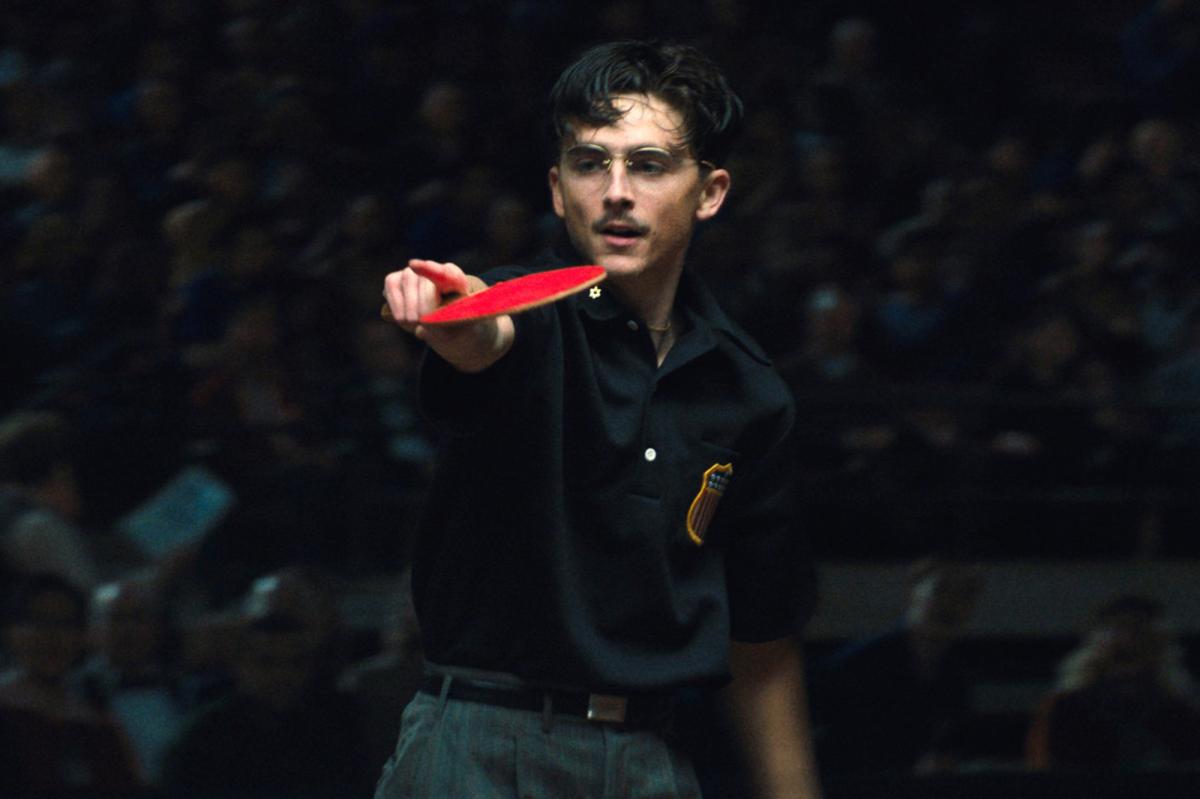
When actors talk about “getting into character,” it usually means months of dialect instruction, physical training, or immersing themselves in the world of the character they’re playing.
But for Timothée Chalamet, preparing for his role in the Oscar-nominated film Marty Supreme required something far more unusual. It’s about intentionally making your eyesight worse.
In order to make it successful, the actor consulted the famous optometrist Dr. Mitchell Cassel. The doctor temporarily blurred Chalamet’s vision so he could experience what it was like to rely on thick glasses. Just like the late table tennis legend Marty Reisman, nicknamed “The Needle.”
“Timothy doesn’t need glasses, but Marty did. Timothy wanted to really anchor the authenticity in his performance,” Cassel told Page Six in an exclusive interview.
“To truly embody Marty, we needed very realistic-looking glasses with some thickness and nearsightedness or squinted eyes,” he continues. “Timothy wanted the glasses to feel like they were being acquired rather than a costume. The aim was not just to provide thick lenses, but to create an experience of needing the glasses.”
Riesman’s signature thick glasses are a defining part of his personality, and Chalamet, 30, wanted his character’s relationship with the glasses to feel natural rather than theatrical.
Cassel began the process, as he would with any patient, by carefully assessing the actor’s eye health and vision.
“I started with a comprehensive eye exam to assess his baseline eye health, confirm his vision, and determine corneal measurements,” says Cassel. “From there, I put contact lenses on him to make him blurry. We used daily disposables for ultimate safety. His vision was poor with contacts, so it gave the glasses a real reason to exist and created the exact optical effect his character has.”
Without glasses, Chalamet’s vision was intentionally impaired. However, once the lenses were fitted, his vision returned to normal after the optical balance was carefully adjusted.
“The key was to create a very controlled optical balance. I first used contact lenses to introduce a certain level of blur, essentially simulating Marty’s baseline reality,” Cassel explains. “From there, I designed a prescription for the glasses to precisely counteract that blurring. Once we worked together, his vision returned to normal, but the glasses themselves had the thickness and visual characteristics you’d expect from someone with truly poor eyesight.”
Safety and ethics were central considerations before agreeing to the unusual request. Cassel said the actors’ vision was altered only in a reversible and highly controlled manner.
“Safety is always the most important concern,” he emphasizes. “His vision changed in a highly controlled and reversible manner. Through thorough examinations, we ensured that his lenses fit and were made to be as comfortable as possible for his eye health. Timothy was made aware of the visual challenges he would encounter if he did not wear prescription glasses to counteract the effects of contact lenses.”
The change in vision also had unexpected benefits for Chalamet’s acting. It subtly altered Chalamet’s physical behavior in a way that would be difficult to replicate if the glasses were just a prop.
“Visibility changes behavior,” Cassel points out. “People who rely on glasses may adjust the position of their frames, tilt their head, look through certain parts of the lens, or take protective measures. Actors often wear glasses as props, but if they don’t actually need them, their body language will tell.”
He says that eventually, because Chalamet “needed” the glasses, “the little behaviors that you see in people who actually wear glasses – how they looked through the lenses, how they adjusted the lenses, how they focused on things and people” began to emerge organically.
That level of authenticity was “very important to him,” Cassel elaborated, noting that Chalamet, who is currently dating Kylie Jenner, “wanted the relationship between the character and the glasses to feel real.”
Cassel said that despite working with intentionally poor eyesight, the star quickly adapted during rehearsals and filming. A contact lens technician was also on site to ensure everything was safe and comfortable.
“Timothy adapted quickly, and we had a contact lens technician on set to ensure his comfort and safety,” says Cassel. “Timothy’s professionalism and commitment to his craft, combined with his on-site support, made for a seamless experience.”
For Cassel, this request was unusual, but not outside the scope of his work. A leading expert on prosthetic contact lenses in the eye care profession, he has spent over 30 years creating special visual effects for film and television, contributing to over 1,000 productions.
Over the years, he has always focused on protecting actors’ comfort and eye health, designing everything from simulating blindness to red and diseased eyes. His credits include creating Tom Cruise’s bloody eye effect in Days of Thunder and Robert De Niro’s “blind effect” in Red Lights.
“I’m often on set to ensure comfort and safety,” he says. “If that’s not possible, we’ll send in a trained technician. When I was on set with Tom Cruise for ‘Days of Thunder,’ the actor playing the doctor missed his call time. I told Tom he could play the part. So you could say we looked out for Tom on and off camera. I still love the crew jacket they gave me.”
To see more of your favorite Page Six…
Cassel’s expertise extends far beyond Hollywood. A graduate of Lehigh University and the Pennsylvania College of Optometry, he has lectured extensively on prosthetic lenses and consulted for major contact lens companies including Johnson & Johnson’s Vistacon, Wesley Jessen, Ciba, and CooperVision.
Much of his work involves designing custom prosthetic contact lenses for patients with congenital eye diseases or traumatic injuries, which he says has been particularly meaningful for some parts of his career.
“These lenses are designed to restore your natural appearance and, in many cases, restore your confidence,” says Cassel. “Helping someone feel mentally whole again can be truly life-changing.”
Looking back on his collaboration with Chalamet, Cassel believes the experience reflects how far an actor will go in the pursuit of great acting.
“An actor of his caliber understands that authenticity lies in the physical details,” he says. “And vision is one of the most powerful things.”
