

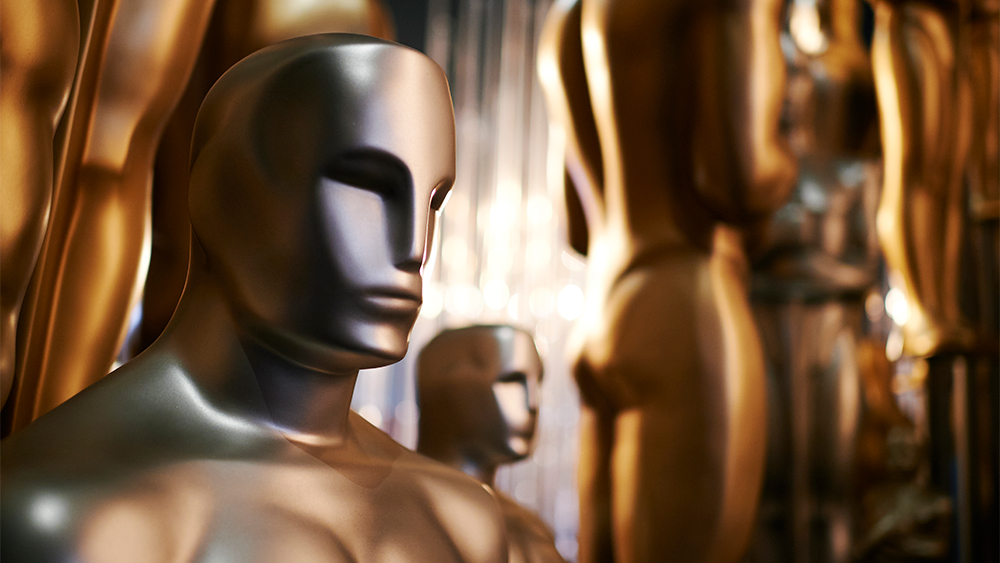
The Academy of Motion Picture Arts and Sciences announced that 15 scientific and technological achievements, represented by 27 award winners, will be recognized at the annual Science and Technology Awards Ceremony to be held on April 28 at the Academy Museum of the Motion Picture.
Technology Achievement Awards will be presented to developers who have driven advancements ranging from safer and more practical effects and layered shading systems to dialogue restoration and high dynamic range lighting. Innovators who have made three major breakthroughs will receive science and engineering awards.
“Their innovation, dedication and technical excellence continue to shape the art and craft of filmmaking,” said Academy CEO Bill Kramer and President Lynette Howell Taylor.
The Technical Achievement Award will be presented to Brent Bell, Joseph Koehler and Ian Medwell for developing lead-free pyrotechnics used for real bullet effects, a safer and more environmentally friendly alternative to on-set stunts. Andrea Weidlich and Luca Fascione are recognized for their work on the layered material system in Wētā FX’s Manuka renderer, which increases realism and flexibility in visual effects workflows. Vincent Dedun, Emmanuel Turquin, and Jonathan Moulin will be honored for Industrial Light & Magic’s layered shading system “Lama,” which allows artists to create complex, physically plausible looks without writing shader code.
Other winners include Josh Bainbridge and Nathan Walster for Framestore’s Layered Shading System. Brett St. Clair, Marc-Andre d’Avignon, Pav Grochola, and Edmond Boulet-Giri are honored with Sony Pictures Imageworks’ Animation Linework and Brushing Tools, which expand the creative possibilities of large-scale animation production. Baptiste Van Opstal, Jeff Budsberg, Michael Losure, John Lanz, and Eszter Offertaler are recognized for DreamWorks Animation’s stylized animation toolset, which allows for painterly effects and diverse art styles.
Other Technical Achievement Award winners include Benjamin Graf for his dxRevive Pro dialogue restoration system, which preserves the emotional fidelity of on-set performances; John Ellwood and Jeff Bloom developed Titan automatic assembly software that streamlines digital audio coordination. Marc Joel Specter, Kraken Dialogue Editors Toolkit. This facilitates accurate audio assembly. and Justin Webster of Matchbox, a system for rapid audio and video refitting. Paul DeBevec is also known for pioneering high dynamic range, image-based lighting technology that transformed computer-generated imagery in feature films.
Jamie Caliri and Dyami Caliri will receive the Science and Engineering Award for the design, engineering, and continued development of their “Dragonframe” software, which has transformed stop-motion animation workflows.
“From improving the safety of practical effects with lead-free bullet hits to pushing the limits of stop-motion animation and sound restoration, these technologies are now the cornerstone of this technology, and we are honored to recognize the brilliant minds behind these tools that continue to improve the cinematic experience,” said Darin Grant and Rachel Rose, co-chairs of the Academy’s Science and Technology Awards Committee.
The final Oscar voting for this year’s 98th nomination will take place from February 26th to March 5th. The Oscars will be held on March 15th and will be hosted by Conan O’Brien and broadcast on ABC.
