

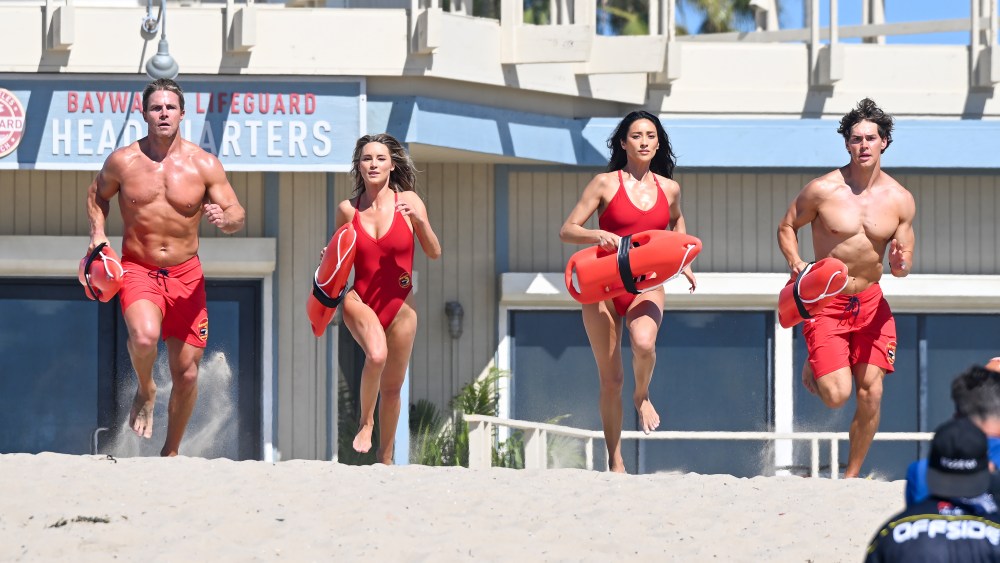
The “Baywatch” production won permission to park its vehicles overnight in Venice Beach on Thursday after facing its first hurdle earlier this spring.
The California Coastal Commission approved a modified film permit that will allow productions to be parked overnight in 27 spaces on property adjacent to the Venice Lifeguard headquarters. The original permit required vehicles to be removed by 8 p.m. each day.
Fox’s 12-episode reboot began filming in March, but faced a series of problems with Los Angeles County officials responsible for enforcing beach access rules. These issues culminated in an April 10 meeting at the Fox compound with Los Angeles City Councilman Tracy Park, Supervisor Lindsey Horvath, and Los Angeles Mayor Karen Bass’ film director Steve Kang.
At the meeting, it was agreed that the production would seek changes to the film permit, which was first approved by the Coastal Commission in February.
The producers applied in April to extend the permit until January, which would allow them to air an additional 12 episodes of the season. However, according to the commission’s rules, this requires a separate filming permit and cannot be granted by amendment.
Instead, the permit end date was extended from July 16 to August 7 to account for delays that occurred during set construction. The Coastal Commission’s executive director was given the leeway to extend the permit beyond Aug. 7 “for good cause.”
The producers were also given an additional three months, until October 31, to remove the temporary film installed at lifeguard headquarters, with the understanding that the set could remain in place if another season is approved.
The April amendment also included a request for nighttime filming, but it was not included in the version approved Thursday. Filming hours are still restricted to 7 a.m. to 7 p.m., with a 15-minute grace period.
However, commission spokesman Joshua Smith said the executive director has the discretion to allow night filming with advance notice.
“Everyone agrees to the permit conditions and we’re happy with where we’re landing,” Smith said.
The committee also authorized the use of an alternate route for transporting equipment between filming locations and parking lots, which proved to be more convenient than originally requested.
“As per the terms, the commission has determined that this development will not have long-term or significant adverse effects on public access and recreation,” commission staff reported. “As the Commission analyzes future filming activities, it will continue to evaluate the public access issues identified in the required report and will consider expanding the mitigation measures shown to be necessary and permitted by the terms of this permit.”
This amendment was approved without any opposition from the public.
