

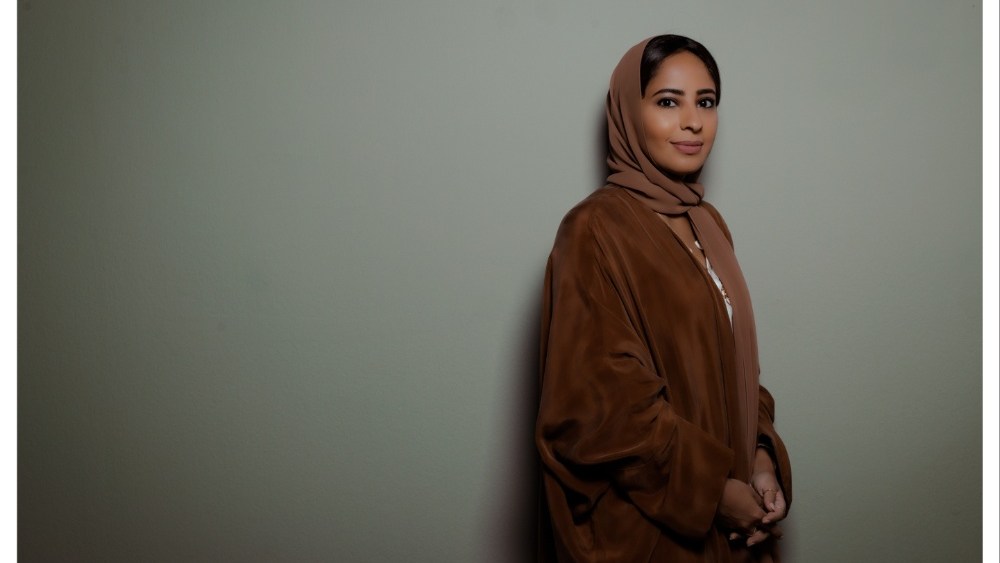
Fatma Al Ghanim is a Qatari athlete and filmmaker who is breaking new ground for women in her small country and across the Arab world. In 2010, she captained Qatar’s first women’s national soccer team. Al Ghanim is currently attending the Tribeca Film Festival with Theater of Dreams. The film marks her directorial and acting debut and is a powerful short film that exposes the intense cultural opposition to women playing soccer in Qatar from her personal perspective.
2022 FIFA World Cup Set against the backdrop of Qatar and inspired by her true story, Theater of Dreams delves into why the country’s national women’s soccer team, which was founded in 2009 as Qatar was preparing to bid for the 2022 FIFA World Cup, has been inactive since 2014 and is currently unranked in the FIFA world rankings.
Following her career as a soccer player, Al-Ghanim became one of the first Qatari women to compete in triathlons and later served as the first female director of the Qatar Triathlon Federation. She also started working at the Doha Film Institute, which led to her directorial debut.
Below, Al Ghanim talks to Variety about what drove her to create “Theatre of Dreams” after repressing the trauma caused by her experience spearheading women’s soccer in Qatar. She said: “Something was stirring inside me, and if it didn’t come, my body was going to rebel against me.”
This film is obviously very personal. What made you decide to tell this story?
I was working at the Doha Film Institute and was looking to get involved in film production in some way. The biggest opportunity came during the 2022 World Cup. A lot of international journalists contacted me because they had heard that there used to be a women’s soccer team and were looking for players to interview to talk about aspects of women’s soccer. I have achieved great results in triathlons and have been supported to reach the world stage in the sport. But the challenges we face as Qatari women in sports and Arab women in sports are very nuanced. It has nothing to do with the fact that organizations or countries don’t support women’s sports. The real challenges are more nuclear in families and society. So when the World Cup approached, I could no longer avoid facing this trauma.
Please tell me more.
The entire city was decorated with signs of (male) players that looked larger than life. I had to drive by it every day and it started stirring something in me. I felt guilty for not working harder for my sport. The Qatar Football Association has asked me to take a bigger role in women’s football (soccer). However, as a manager, I began to feel that doing so would not solve the real problem. The real change had to be a mindset shift that broke the fearful taboo of the family. What does it mean for a woman to play a sport associated with male domination? All of that started to feel like something was stirring inside me, and if it didn’t come, my body would rebel against me.
There’s a powerful moment in your film where you watch a Qatari women’s soccer team play on TV and a male voice makes a comment in Arabic that translates as “Congratulations…you can now see Dyke and Tranny on TV!” Is this line drawn from reality?
Yes, these lines are taken verbatim from a discussion forum. There were many supportive comments on these forums as well. So people were going back and forth (on this issue). But when your negativity reaches that level, you know you’re breaking a cultural taboo, and you’re the first to do it. So this is really a story about what it takes to be the first and the cost that comes with breaking down barriers. Even a victory may not seem like a victory at the time. But someone has to break through that barrier first, and it doesn’t necessarily end in big wins, trophies, and comeback stories. For a long time, I struggled to tell my story. Because I didn’t think it really ended with a victory. Then I realized that, in fact, it was. Because I’m still here and I’m still talking about it. And the act of putting yourself in front of the camera, choosing visibility rather than being intimidated, and owning that vulnerability. It’s something I completely own now.

“Dream Theater”
Provided by: Doha Film Institute
This interview has been edited and condensed for clarity.
