

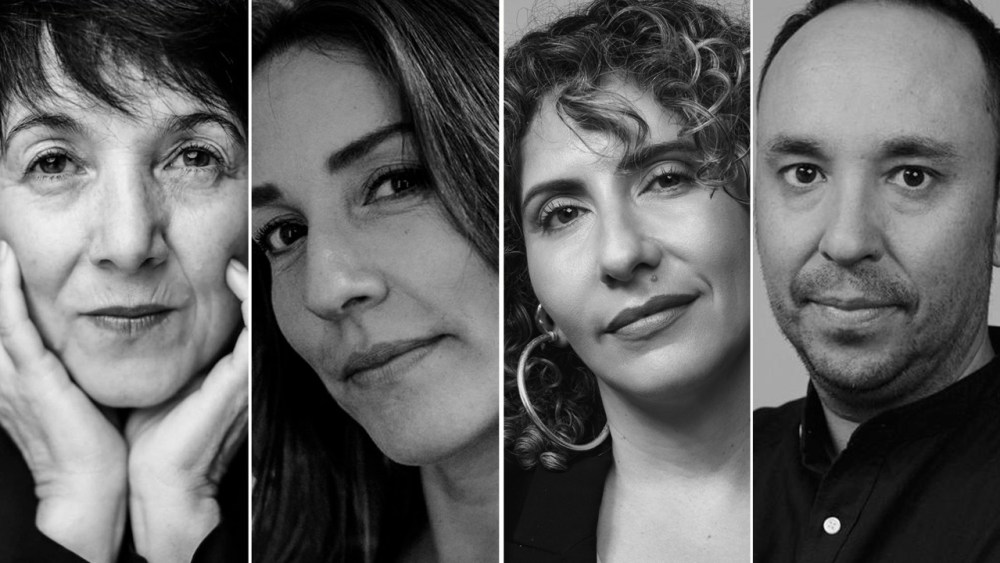
Chile’s Paulina García, who won the Berlinale Silver Bear for her performance in Sebastian Lelio’s Gloria, is set to direct her first feature, La Pasión según Carmen.
Described as a “coming of age story,” Carmen, a journalist, makes her life seem happy and stable, at least on the surface. She has close friends, a comfortable life, and is married to Nico, with whom she has a 20-year-old daughter. However, Carmen is saddened by the death of her grandmother and best friend, Merle.
On her 50th birthday, Carmen follows her estranged daughter to a feminist protest, where she is struck by a rock and has an unexpected awakening. Rescued by a group of women and taken to a pre-Columbian museum in Santiago, she meets Lina and is drawn into a world of sensuality and liberation, causing a profound change.
“This is a passionate, near-menopausal, curious, rebellious, funny and intense journey through which Carmen sheds her skin and crosses over to the other side, driven by the ghost of her grandmother, her conflict with her daughter, and the turmoil that comes with her uncontrollable desire for another woman,” the synopsis reads.
The Passion of Carmen is based on an original idea by García and Mariana Loyola (Lara, The Maid), who co-wrote the screenplay with Josefina Fernández (The Wave, Venser O Morir). Loyola plays the titular Carmen, while Garcia plays Lina, Carmen’s newfound passion.
Garcia and Loyola have launched a new production company, Cautiva, to develop and produce original content for femmes. For their first feature, “…Carmen,” they collaborated with Storyboard Media’s Gabriela Sandoval and Carlos Nuñez, who recently attended Premios Platinos, aka Platinos Xcaret, in Mexico earlier this month.
Negotiations are underway with well-known Latin American actors and actresses to complete the cast, while we are also looking for international co-production partners.
“Mariana and I experienced the feminist wave together, both personally and on the streets: #MeToo, #NiUnaMenos, #SocialOutburst in Chile. During the coronavirus lockdown, we began to ask ourselves which women were shaken by that wave. When we cross the river and meet ‘all of us,’ what will happen to the women on the other side?” Garcia said.
“‘Carmen’ became a vessel for our concerns. At first it was about us writing it ourselves, coming up with ideas, and finding ways to bring them to fruition so that we could work. Having me direct and Mariana star was a great opportunity for us if we really wanted autonomy in the creative process. “It was a natural outcome,” she continued, “We want to explore the impact of fourth-wave feminism on women over 50. We want to depict the physical and emotional changes that women go through in adulthood. What happens when women live free? Are we really free?”
For Sandoval, The Passion of Carmen “takes place in an area rarely explored in international cinema: the emotional, political, and sexual awakening of a woman in adulthood. This is a project with strong distribution potential, not only because of the universality of its themes, but also because of the uniqueness of its perspective.”
“As producers, it is especially meaningful for us to support the debut feature film of one of Ibero-American’s most important actresses. This film combines the intimate and the political, reflecting one of the great strengths of Chilean cinema today: its ability to tell stories that have global resonance but are deeply rooted in the country.”
