

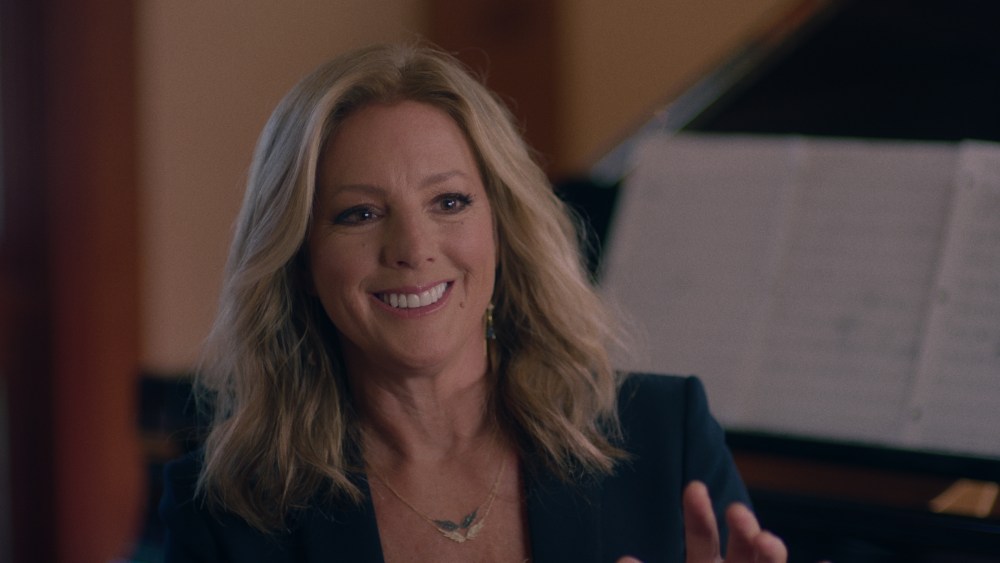

 Award-winning musician Sarah McLachlan shared this essay with AWARDS HQ about the legacy of Lilith Fair and why it’s important to share its story in the documentary Lilith Fair: Building a Mystery – The Untold Story, now available on Hulu.
In 1997, I started the touring music festival Lilith Fair with my then management and agent. At the time, it was common in the music industry for bookers not to list more than one female artist on a concert bill because tickets wouldn’t sell. Radio DJs were also instructed not to continue playing female artists for fear of losing listeners.
The Lilith Fair tour had an all-female lineup. It was a direct challenge to that “industry norm,” and my partner and I took a gamble that there was a demand for music made by women.
No one expected it to work. My managers, Terry McBride and Dan Fraser, had to go against my label’s wishes in order to start touring. My agent, Marty Diamond, had to face a constant stream of “no’s” from horrible artist reps. Potential sponsors were turned away. But in the end, artists who had gone through the same difficult situations alone realized the potential. And over three summers, Lilith Fair showcased a powerful collection of musicians, including Sheryl Crow, Tracy Chapman, Jewel, Fiona Apple, Bonnie Raitt, Erykah Badu, Sinead O’Connor, and the Indigo Girls.
During those three years, something magical happened. Together, we created a space where women artists can connect, empathize, and uplift each other. Rather than competing for a single performance slot, as we had been conditioned to do, we created a platform for up-and-coming talent and joined in on each other’s songs. That spirit of openness and inclusivity resonated with audiences, creating a communal space for fans and a welcome alternative to male-dominated festivals of the time like Lollapalooza, Warped Tour, and Woodstock ’99.
Lilith Fair featured a whopping 313 artists over 135 shows. All three summer tours were the highest grossing tour of the year. The festival has become a cultural phenomenon, helping launch the careers of artists like Missy Elliott and the Chicks, and raising more than $10 million for women-focused charities. It clearly proved that women are a commercial force. It also redefined what a music festival could be.
However, while Lilith Fair was celebrated, it was widely criticized in the press and languished in the wider culture. The same qualities that made it a safe and fun space for women and gay people also made it a cultural punchline. The festival’s support for Planned Parenthood and other women’s organizations sparked protests and bomb threats. And when we ended it, after three unusual and exhausting years, the industry moved away from female singer/songwriters and placed the power directly back in the hands of those who had always had it.
It took me years to understand what this meant. But with the blessing of time and the experience of helping a talented team of filmmakers turn this story into a documentary, its meaning has come into sharper focus.
As Lilith Fair celebrates its 30th anniversary, it is now clear that the festival has brought about real and lasting change, both in the lives of its participants and in the culture as a whole. In 2026, women will be at the center of the music industry. Artists like Chapel Lawn, Taylor Swift, Beyoncé, and Olivia Rodrigo will fill arenas and champion other female artists at their shows. They are in control of their careers, and their female and queer fans are free to celebrate them and themselves with pride.
At the same time, women’s rights and protections are being systematically stripped away in the United States and around the world. The national conversation is dominated by brutality, division, and fear. We’ve made some progress, but it’s clearly not fixed. And there will always be people trying to take it away.
Revisiting Lilith Fair in this moment creates a tremendous sense of nostalgia and pride for the community and positive change we all created together, and a deep admiration for the women who came of age during that time, myself included. But I think the emotional response we’re experiencing is deeper than that.
As Paula Cole says in the film, “Lilith Fair is a beacon of hope.” This is an example of what can happen when women reimagine a world beyond the one presented to them. This is a reminder that we can reject the idea that there is room for only a few to succeed. Empathy and vulnerability are strengths, not weaknesses. That sometimes a mild act of rebellion can grow into something bigger.
In the face of oppression and cynicism, kindness and joy are revolutionary acts. We need them now more than ever.
