

In 2018, Eliza Schlesinger wrote: “What if high school came back to bite you in the ass?”
After many rewrites and a few false starts and stops, that germ of an idea culminated in “Chasing Summer.” The film is a comedy about a woman in her 40s who returns to her hometown in Texas, where she fled decades ago, and enjoys a summer of parties, boring jobs, and carefree romance. It may sound like the premise of an Apatow-style exercise in halting development, but Schlesinger wasn’t interested in simply landing a punchline.
“I knew what I wanted,” Schlesinger said in a Zoom interview a week before the Sundance premiere of “Chasing Summer.” “I wanted to make a movie. I wanted to make art. I thought it was time to make something beautiful and not just a comedy, because this could easily have been that and I wanted to elevate it.”
To realize her vision, Schlesinger turned to indie filmmaker Josephine Dekker, best known for moody thrillers and dramas such as “Shirley” and “Butter on the Latch.” Although it was an unconventional match, there was something about Decker’s style that Schlesinger thought would be perfect for “Chasing Summer.”
“This is the kind of movie that has always spoken to me and that I would love to direct,” Decker said. “Instead, what I get sent is like a serial killer movie. For some reason, all I get sent is something where this woman gets murdered in the first three minutes.”
Schlesinger, a popular stand-up and sketch comic, wasn’t worried about delivering laughs. Working with Dekker, she revisited the script to ensure humor was not brought at the expense of exploring the characters’ broken hearts. Decker, like Schlesinger, was originally from Texas and had an innate understanding of the region, its idiom, and rhythms of life, which helped. As for casting, they looked for people who appeared to be from the Lone Star State, including Oklahoma native Megan Mullally, who plays Schlesinger’s mother, and Texas-born “Ransom Canyon” star Garrett Wareing, who plays Schlesinger’s younger lover.
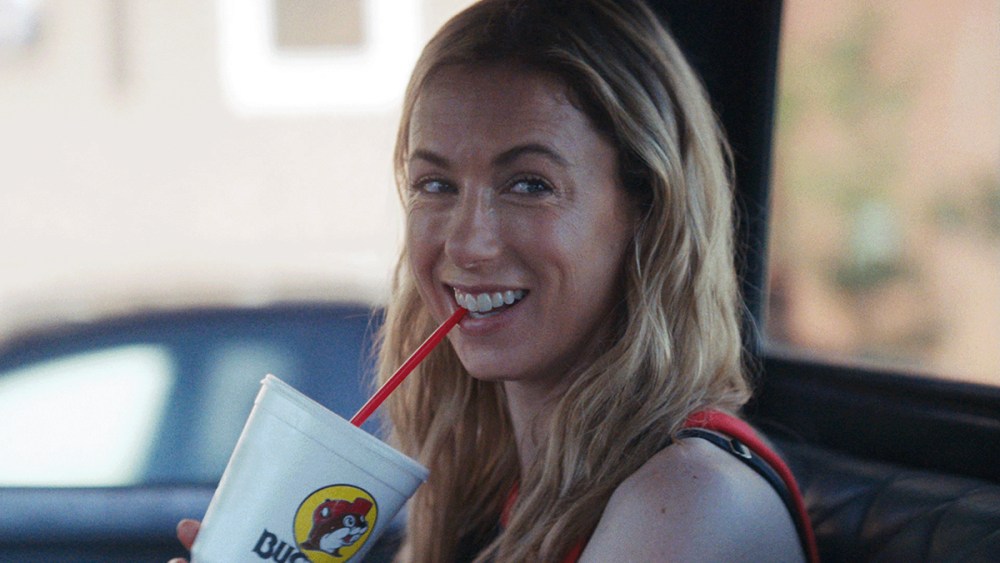
In “Chasing Summer,” Schlesinger plays Jamie, a humanitarian aid worker who flies to disaster areas around the world. However, after experiencing a nasty breakup, she returns home to recover and spends her days working as a maintenance worker at her sister’s skating rink. She also meets Colby (Waring) at a keg party, sparking a heated relationship.
“What I wrote in the script was, ‘Jamie and Colby kiss and they go out of frame,’ and when I showed up on set, Josephine was like, ‘Okay, he’s coming at you, and the camera’s going to pan over them from behind,'” Schlesinger jokes.
There’s certainly a lot of sex in “Chasing Summer,” but Schlesinger and Decker were keen to stage it in a way that would be sexy to men as well as women. That meant making sure the cinematography was beautiful and sensual, rather than replicating what Schlesinger dismisses as “a total ’90s Michael Douglas, Skin Max.”
“Josephine, if you think about this through a woman’s perspective, what do you want us to see as women?” Schlesinger said. “What kind of intimacy do we want? How do we want to feel? We wanted it to be beautiful so that the woman would enjoy it. She would just stand there for six seconds and the man would enjoy it.”
That means the scenes last longer than in a traditional romance, and ended up splitting audiences along gender lines during recent test screenings.
“It’s been a long time in the making,” Decker says. “We did a screening in early December for 30 or 40 people to see how it all landed. And it was so funny because one guy said, ‘I don’t know, these sex scenes feel a little long.’ And literally every woman there stood up and said, “Sit down!” they’re perfect! ”
Decker and Schlesinger also relied on intimacy coordinators.
“The coordinators created an emotional safety net and worked closely with the actors performing the sex scenes to discuss consent and comfort,” Decker said. “It’s like having a fight coordinator who makes the action scenes cooler and more interesting. It deepens the storytelling.”
“Chasing Summer” is one of many films seeking distribution at Sundance, and while the filmmakers claim they just want to find a good venue, you can tell they want it to be seen by as wide an audience as possible.
“The best way to answer this is we want to make a lot of money and we want a lot of people to see this,” Schlesinger said. “I hope people feel the same way when they see this work.”
