

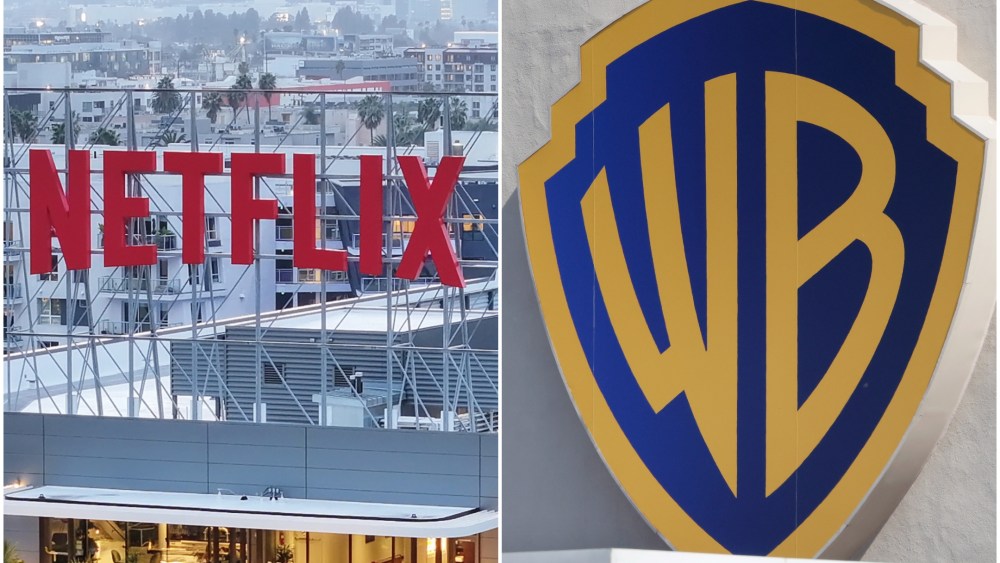
FCC Chairman Brendan Carr, appointed by President Trump, said in a statement that Netflix’s proposed $83 billion deal to buy Warner Bros. studios and HBO Max operations raises “competitive concerns.”
However, the FCC does not have the authority to review Netflix’s contract with WB. The proposed sale does not include the transfer of any FCC-regulated broadcast licenses. Warner Bros. Discovery does not own any television broadcast assets. Meanwhile, Netflix hasn’t acquired WBD’s cable TV assets (it will be spun off into a new company, Discovery Global), but even if it had, the FCC would not have jurisdiction in that area.
Carr made the comments in an interview with Bloomberg published Friday. “From an organic growth perspective, Netflix’s efforts in general have been great,” the FCC chairman said. “There are legitimate competitive concerns that I’ve raised in the past about their acquisition here and the sheer scale and consolidation that we’re seeing in the streaming market.”
The Department of Justice and the FTC are U.S. government agencies reviewing the Netflix and WB agreement for potential antitrust issues.
Paramount Skydance, led by Chairman and CEO David Ellison, has launched a hostile takeover campaign, hoping to convince Warner Bros. Discovery shareholders that its $30 per share bid is better. Carr said in an interview with Bloomberg that he doesn’t think there would be any competition concerns if Paramount Skydance were to sign a deal with WBD, but that the FCC could review Paramount’s bid because it includes financing from a foreign company. In addition to David Ellison’s father, Oracle co-founder and billionaire Larry Ellison (who has personally committed $40.4 billion to the future deal), Paramount’s offer also has support from sovereign wealth funds in Saudi Arabia, Qatar and Abu Dhabi.
This week, Netflix switched to an all-cash deal for all of its global bank assets, a move aimed at countering Paramount’s claims that it could get a better deal by offering an all-cash offer versus Netflix’s previous cash and stock terms. Netflix and WBD said they have each filed antitrust applications with Hart Scott Rodino (HSR) and are “coordinating with competition authorities,” including the U.S. Department of Justice and the European Commission. “Netflix and WBD remain committed to working closely with regulators and all stakeholders to ensure a smooth and successful transaction,” the companies said.
As part of promoting a competitor’s bid, Paramount argued that the Netflix-World Bank deal exposes it to “serious regulatory risks as it further entrenches market concentration, as opposed to a partnership with Paramount that enhances competition and strengthens the long-term prospects of the entertainment industry.” Paramount said Netflix and HBO Max together will have an estimated 43% share of global streaming subscribers, “leading to higher prices for consumers, lower compensation for content creators and talent, and significant harm to U.S. and international theatrical companies.”
Politicians on both sides of the aisle are wary of the power Netflix would amass with its acquisition of Warner Bros., but Sen. Elizabeth Warren (D-Mass.) called the proposed deal an “anti-monopoly nightmare.” Netflix co-CEO Ted Sarandos and WBD chief strategy officer Bruce Campbell are scheduled to testify at a Senate antitrust hearing next month. “There are a lot of antitrust red flags here,” said Sen. Mike Lee (R-Utah), chairman of the Senate Judiciary Subcommittee on Antitrust, Competition Policy, and Consumer Rights, predicting in a tweet last month, “Get ready for a fiery antitrust hearing in the Senate.”
When it comes to antitrust issues, Netflix says its core competitive set is overall TV viewing (including YouTube, which is viewed on big-screen TVs), and more broadly competing for consumer attention with the likes of Instagram. “We enjoy competition and strive to further capture the attention of consumers. Despite years of success, our share of TV viewing time in the major markets in which we operate remains less than 10%,” Netflix said in its fourth quarter 2025 letter to shareholders.
After being appointed FCC chairman by President Trump, Carr has been actively promoting White House policy and has argued that the FCC is not “independent” from the Trump administration.
In September, Mr. Carr threatened ABC and its affiliates with possible FCC investigation into “news distortion” complaints if they did not leave “Jimmy Kimmel Live!” following Mr. Kimmel’s on-air comments that MAGA was trying to use the Charlie Kirk assassination to score political points. (Mr. Kerr called Kimmel’s comments “the most egregious act imaginable.”) ABC suspended Kimmel from hosting the late-night show for nearly a week before returning him to the air after the two major broadcast groups, Sinclair and Nexstar, announced they were pre-empting Kimmel’s show.
This week, the FCC Media Bureau issued a warning against airing late-night and daytime TV shows such as “The View” and “Jimmy Kimmel Live!” Broadcast political interviews may not be considered “real” news programs and therefore may be subject to the station’s “equal time” rules, which give equal airtime to opposing candidates.
“For years, traditional television networks have considered late-night and daytime talk shows to be ‘bona fide news’ programming, even when motivated by purely partisan political objectives. Today, the FCC reminded us of our obligation to provide equal opportunity to all candidates,” Kerr tweeted on January 21.
