

Public media is scrambling to prepare for a future without Washington’s support.
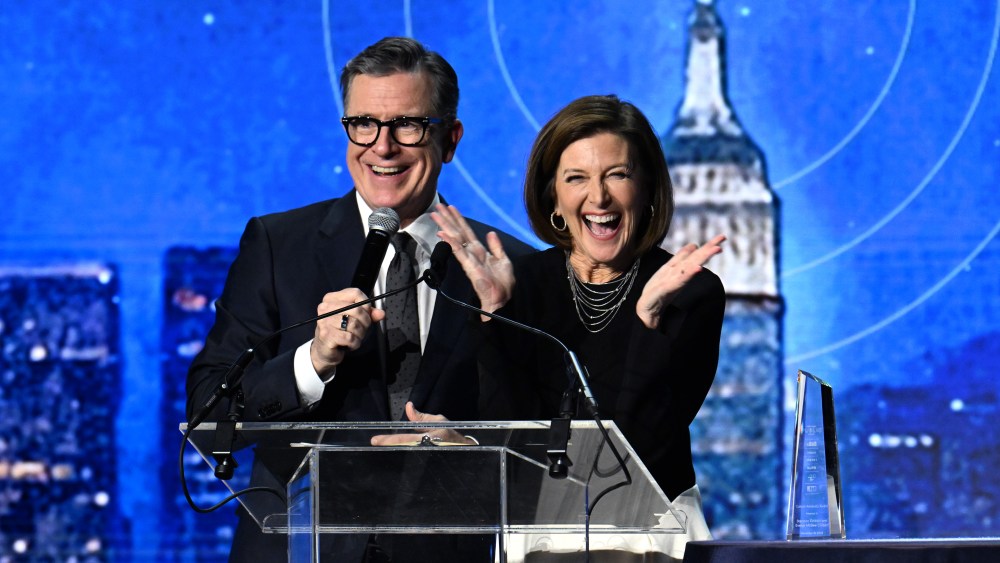
New York Public Radio is turning to private donors to fill the gap after the Trump administration cut more than $1.1 billion from the public broadcaster. The organization raised $1.7 million Tuesday night at the Stand with Public Media Gala, which honored “The Late Show” host Stephen Colbert and his wife, Evelyn McGee Colbert, for their fight for free speech. Colbert said he hopes the reduction in federal aid doesn’t continue under future administrations.
“I don’t know if that’s going to continue into the future, but I hope not,” Colbert told Variety during the celebration. “So many people value what public media has to offer. In many communities across the country, public radio is the only local news because local newspapers have failed. Public radio gives people a sense of community and lets them know what’s going on in and around their neighborhoods. That’s why it’s so important that these stations survive.”
But organizations like New York Public Radio have no choice but to prepare for a scenario in which federal spending may never return, according to President and CEO LaFontaine Oliver.
“We need to look for new revenue streams,” Oliver explained. “We need to connect with our communities and audiences in a variety of ways, and that means we’re looking for institutional funders and philanthropists who would ideally step up. We’ll look for ways to monetize the content we produce. This is a time to reinvent our system. And that spirit of reinvention will serve us well even if some or all of the federal funding comes back.”
Some parts of the country are at immediate risk of having their federal aid cut off. Local leaders in Alaska have described the loss of public media funding as a “life-or-death matter.” In dozens of remote communities with limited roads and broadband Internet access, public radio is often the only means of communicating emergency alerts and rapidly changing weather conditions. Owners of Alaska stations have warned that they could lose between 40% and 90% of their funding and risk bankruptcy without a backup source of income.
At the same time, research shows that Americans view public media as more favorable and trustworthy compared to commercial media, as trust in national and local news declines.
“I think people in the public media world are giving us the facts,” Maggie Colbert said. “It’s really hard to go to a place now that’s unbiased, independent, and purely fact-based.”
Colbert and Maggie Colbert, who call themselves public radio supporters, say they get most of their news from WNYC. “And because it’s commercial-free news, you can watch stories longer. Instead of seven minutes, you can spend 20 or 30 minutes on a story,” Colbert explained. That’s going to be a long time on cable news. You can also cook at the same time. You don’t need to see anything. ”
Mr. Colbert’s recognition of independent reporting comes at a time when his own relationship with broadcast television is complicated. Although CBS labeled the abrupt cancellation of his late-night show a “financial decision,” several prominent media outlets and organizations, including the Writers Guild of America, have questioned whether the move was related to Colbert’s on-air criticism of Paramount’s $16 million “60 Minutes” settlement with President Donald Trump. Earlier this month, Colbert said that while it was “natural to think” that his show’s cancellation was a politically motivated decision, it wasn’t “fruitful” for him to “get caught up in that speculation.”
