

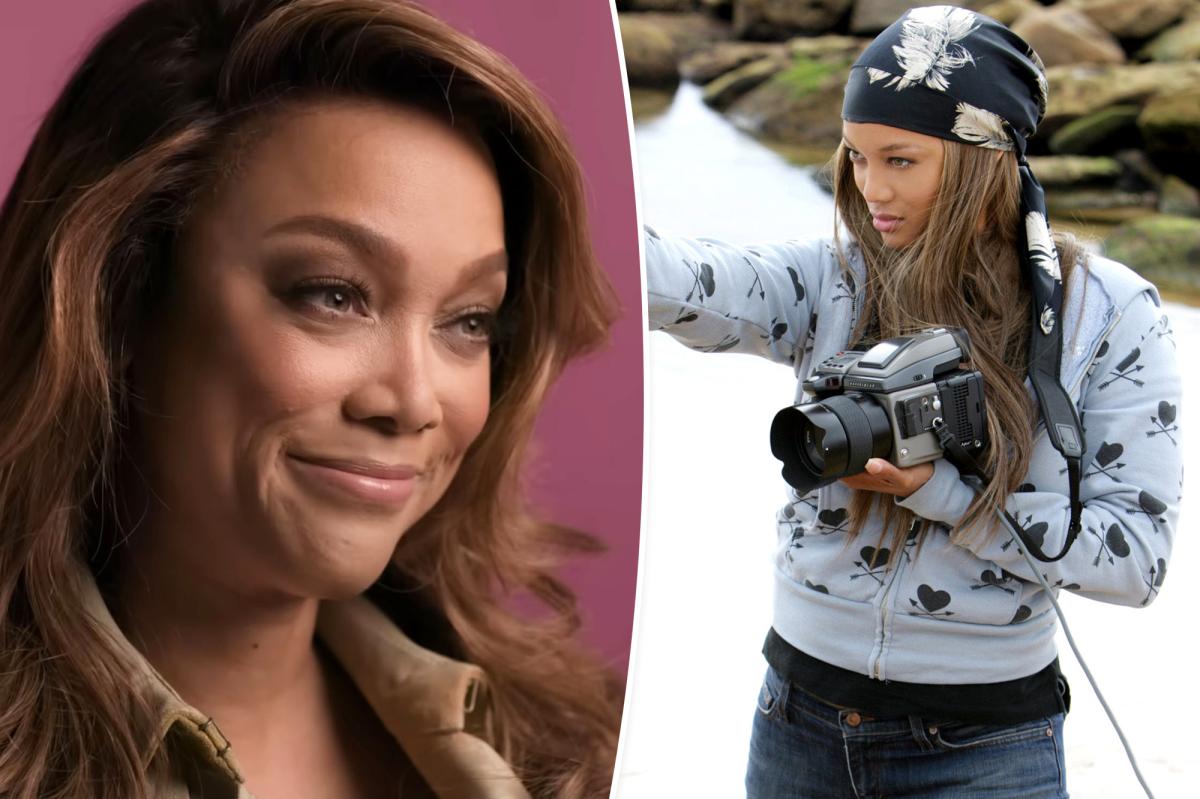
Get ready to hit the catwalk.
Netflix’s new doc, “Reality Check: Inside America’s Next Top Model,” explores the behind-the-scenes turmoil and complicated legacy of the iconic reality series, without Tyra Banks’ input.
“There was no creative control. Tyra will be watching[the documentary]exactly the same way as all 270 million households[that subscribe to Netflix],” documentary director Daniel Sivan told Page Six.
Banks, 52, appeared on screen in an interview, marking her first time speaking since Top Model ended in 2018.
Co-director Mo Rousey told Page Six that it “took a while” to bring Banks on board, estimating that she had been negotiating with the production company for “several months” before she agreed to come on board.
“Tyra decided it was time for her to speak up,” she said, adding that since it was the “first time” Banks had spoken out, “I didn’t know what to expect. We came and she was very emotional. Just like the contestants are telling their side of the story, Tyra wanted to tell her side of the story. But everyone was on the show as a contestant and nothing more.”
America’s Next Top Model is a seminal reality series that first aired in 2003. Banks produced and hosted the show. In addition to Banks, the doc also features executive producer Ken Mok, the show’s former judges J. Alexander, Jay Manuel and Nigel Barker, and a number of former contestants including Shandi Sullivan, Dani Evans, Whitney Thompson, Ebony Heiss and Gisele Samson.
The show has been the subject of much controversy, with Banks and the judges subsequently receiving criticism for discussing contestants’ weights and on-screen appearances, as well as having aspiring models pretend to be of different races and participate in photo shoots in which they pose as murder victims.
Silvan said no one was reluctant to participate or answer questions.
“I think enough years have passed and enough reflection and remorse has been done…I think everyone is here to tell their story.”
He explained that everyone involved in the doc, including the former contestants, Mr. Banks, Mr. Mok and the judges, “were at a place where they accepted the good and the bad of what they had done.” “I think that’s something to be admired. People who aren’t shy about the ugliness and are here to share it and show their process.”
Nor did he get the impression that interviewees like Banks were there to do “damage control” or to say, “How do I get out of this situation?”
“People were here to say, ‘Hey, this is me, this is what made me do this,'” the director said.
Both filmmakers said they wanted viewers to “engage” with the documentary.
“We don’t just want people to be angry, we want people to like this (Doctor) and discuss it with each other,” Sivan said.
“We want people to keep the discussion going,” he told Page Six. “I think if that’s going to spark a discussion about body image today, about boundaries, about sexual harassment, when do we need to put down the cameras and yell, ‘Cut!'”
