

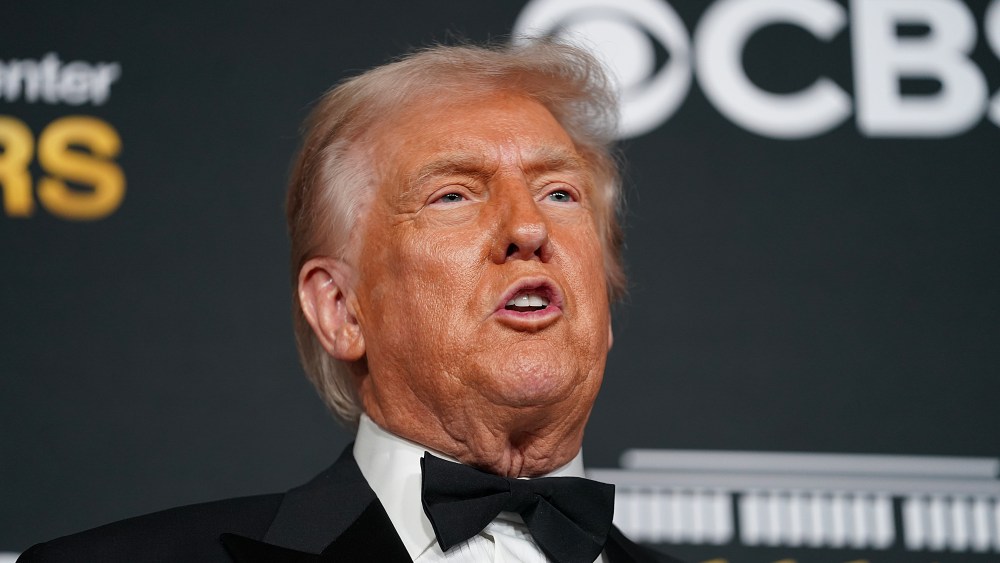
President Trump on Monday renewed his threat to impose tariffs on movies made overseas, but also suggested he would offer “low-interest bonds” to stimulate domestic production.
In an interview with the New York Post, the president did not explain his proposal, but said he was still considering reducing production.
“I especially want to bring the movie business back to Los Angeles,” he said.
Hollywood unions and producers have been lobbying the administration for a year to create a federal film incentive to compete with similar production incentives in Britain, Canada and elsewhere. Such subsidies are structured as tax credits or rebates that significantly reduce the cost of production in a particular region, and are not structured as loans that must be repaid.
President Trump has twice threatened to impose 100% tariffs on films made overseas, but he has not explained how that would work or what legal authority would allow it.
“The American film industry is dying very quickly,” he wrote in Truth Social in May, threatening films made on “foreign soil” and causing mild panic among filmmakers working abroad. But when he reiterated his tariff threat in September, the industry reacted with a collective shrug.
“The heat is back again,” one producer told Variety.
President Trump’s first threat came after a meeting with actor Jon Voight, whom Trump named as one of three “special ambassadors” to Hollywood. Voight and two producer friends, Stephen Paul and Scott Karol, developed a plan for the industry that included ideas for federal incentives, credits, and tariffs.
President Trump has so far only supported tariffs, but he also mentioned bonds in an interview with the New York Post’s new California Post, which debuted Monday.
“So I’m going to impose tariffs and issue bonds, some bonds, some low-interest bonds for the film industry. We’ll take it back,” he told the Post.
Sen. Adam Schiff and other members of Congress have been working on the idea of establishing federal production incentives. California Gov. Gavin Newsom last year asked President Trump to expand the state’s tax credit for production to $750 million and support federal incentives that would be 10 times that amount.
Hollywood unions have applauded President Trump’s attention to the issue, but they are trying to shift his attention to a more limited goal of extending and reauthorizing federal tax credits that help producers.
The film association declined to comment.
