

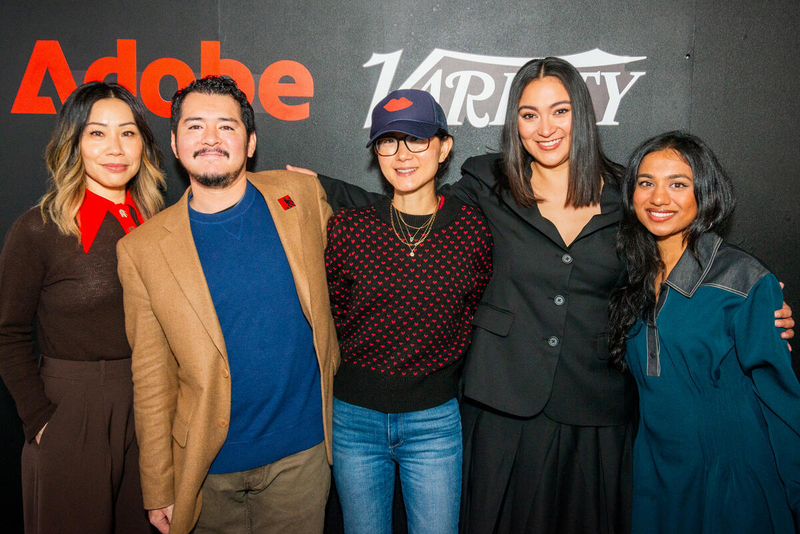
At Sundance’s Shaping the Future – Voice of Next-Gen Filmmakers, an event sponsored by Variety and Adobe, up-and-coming filmmakers whose work has been supported and nurtured through Adobe’s creative programs sat down with Variety’s Angelique Jackson to discuss their creative process. The group also included American Pachuco documentary editor Daniel Chavez. Stephanie Ahn, writer and director of “Bedford Park.” Gisele Bonilla, director of “The Musical.” Anuja Swamy, director of ‘Pankajya’. and “Rock Springs” screenwriter and director Vera Miao.
The panel discussed their experiences attending Sundance’s final festival in Park City. Some of them were participating in this scene for the first time. “This is my first Sundance, so I don’t know what to compare it to, but the energy and magic here is incredible,” Anne said. “We all know about the Sundance legend and the support we get from this community, but you don’t really know until you get here.”
The group also discussed the short film community, which Bonilla described as “very tight.” “I’ve seen all of my close friends take risks and make movies. If they can do it, I can do it. It’s possible,” the director said, adding that he met many of his colleagues and friends through the Ignite Mentorship Program, which he called “a great starting point for 18-25 year olds.”
Like Bonilla, Chavez was awarded the Adobe-funded 2025 Gloria Schoeman Editorial Fellowship for Latinx editors.
“It’s very empowering to be able to talk to people already in the industry who share their experiences. We have talent and we need to get out of the impostor syndrome (mindset), but especially as filmmakers of color, it’s just a matter of believing in our work,” he said.
During the panel discussion, which explored the filmmakers’ personal and cultural connections to their projects, director Ahn said that many of the Asian American stories she saw at Sundance felt “very conventional,” and that she ultimately realized that if she wanted to create a representative story, she had to create it herself. Similarly, Swamy from Bangalore, India wanted to paint his house as he saw it in ‘Pankajya’.
“Many films about poverty in India tend to be extremely desaturated,” says Swamy. “I grew up around pink and orange walls, so my memories of the house are super saturated, but I had never seen that[in the movies].”
A fan of horror, Miao wanted to pay homage to the history of the first Chinese residents of the United States, and eventually came across the story of the Rock Springs Massacre, which became the basis for her film Rock Springs. Chavez also examined the legend of Chicano film director Luis Valles and drew inspiration from history to create American Pachuco.
“I have a 5-year-old son who is Mexican-American, and I don’t want him to grow up in a country where he feels like a second-class citizen,” Chavez said. “Art can change thinking and is an act of resistance, which is why we must continue to work.”
Bonilla, who is also Mexican-American, said she sobbed throughout the premiere of “American Pachuco.” “Yesterday, after all this stupid reporting all day, I found out that another person was killed. Everything else feels like shit. It’s really hard to deal with shit like this. It’s really inspiring to see people standing up for their communities.”
Miao supported Bonilla’s statement, writing, “Yesterday morning, I woke up to the news that another protester had been shot and killed by ICE in Minneapolis. I was mentally challenged and pulled myself together to attend a panel discussion on creativity and healing. “I think a lot of times, especially in moments like this, it’s a dichotomy of resistance or healing. I think storytelling, creativity, imagination, art is about exploding that dichotomy. It’s both.” And what I love most about filmmaking. ”
