

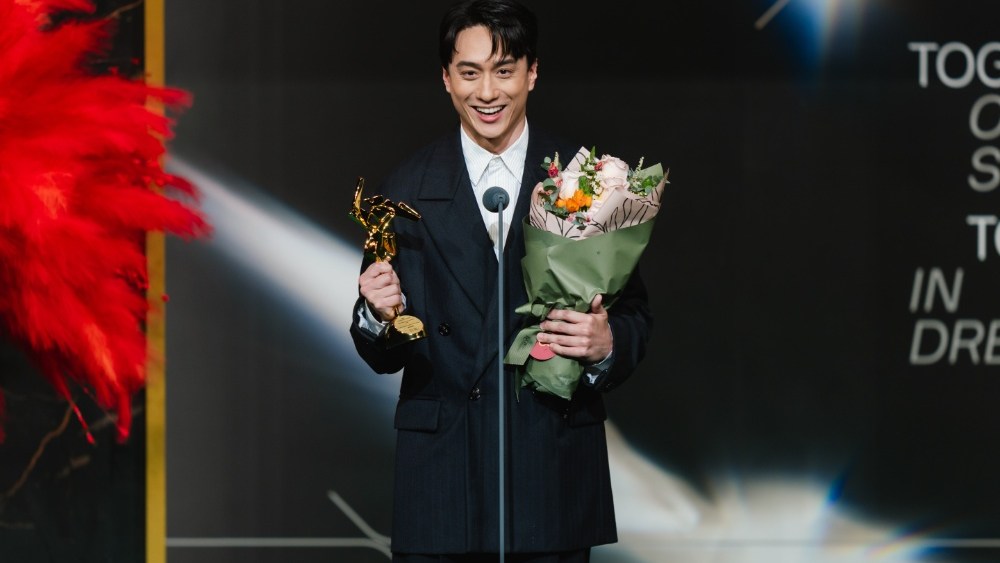
Terrence Lau Chun-him, who starred in Hong Kong’s 2024 box office hit and blockbuster hit Twilight of the Warriors: Walled In, may just be the elusive figure Hong Kong audiences have been waiting for: a generational movie star and leading man.
Lau, who rose to fame after playing a schizophrenic patient in Beyond the Dream (2019), won the Hong Kong Film Critics Association Award for Best Actor for the role. He also won the Rising Star Award at this year’s Asian Film Awards.
Lau will next be seen in the cop/gangster blockbuster Cold War 1994.
After the worldwide success of Twilight of the Warriors: Walled Inn, how has the international interest in Hong Kong action changed your approach to your career? What trends are you seeing in Hong Kong?
Haha, to be honest? I don’t have a “strategy”. As an actor, you’re usually just waiting for the phone to ring. But I think because of Twilight of the Warriors, people realized, “Oh, he can actually handle action.” As a result, offers for such roles have increased.
Mainly large commercial items are made. Investors feel more confident when they have data to back up their projects. They are much more willing to put money into something if they think the numbers already add up.
You went from the psychological depth of “Beyond the Dream” to a more physical role in “Stuntman.” Is there commercial pressure on Hong Kong actors to prove themselves in the action genre?
Not at all. I studied theater at university, and when I choose a movie to watch, I tend to choose something more artistic, literary, or independent. I never thought that I would do an action movie. I don’t have an “action star” background. I am learning a little bit of the basics of dance. For me, it’s just about being ready for whatever project comes my way.
You are active extensively in both Hong Kong and Taiwan. Are there any differences in production culture?
Besides language, what’s important is atmosphere and pacing. Hong Kong values efficiency. Filming in Hong Kong is very expensive, so everyone moves at lightning speed on the Hong Kong set. I have to finish it quickly. Taiwan is a little more calm. They take their time to hone their creative side. There is much more preparation time, including table reads and rehearsals, which gives actors more space to get into their roles.
You played Leslie Cheung in “Anita.” “The Stuntman” specifically deals with the decline of the Hong Kong film industry. Is there a reason why you are drawn to these roles? Does it stem from a sense of responsibility to revitalize Hong Kong’s film industry, which has lost more than a generation of filmmaking talent since the 1990s?
As you said, the industry faces some difficult challenges. We used to be the “Hollywood of the East” because we put out so much. But these days, with the economy as it is, investors are playing it safe.
We don’t make as many movies as we used to. Filmmakers of my generation have been grappling with this question for a while, and honestly, there’s a real sense of, “What can we do?”
To be honest, I don’t have much to be picky about. There aren’t that many movies being made, so we all have to make a living. It’s very reactive.
In fact, that’s why I just finished writing my own screenplay. I would like to get this project off the ground and film it to further advance the story of Hong Kong.
There is an age gap among leading actors in Hong Kong, especially between stars from the 1980s and 90s and today, with many high-profile productions still having to be played by stars in their late 50s or 60s. Do you feel like the industry is finally starting to invest in your generation as new leaders?
To be honest, it’s difficult. A lot of actors from my generation have been cast in leading roles, but whether investors and audiences really see us as “that person” is another story.
Everyone wants to try the next generation, but the market is very small at the moment. I don’t really have a chance to go around it. But I get it. Generations have been competing for position in an ever-shrinking market. It’s difficult to keep everyone employed.
What Asian film trends excites you, and which trends concern you?
It’s great that Asian films are finally being recognized globally. The quality is great. But my concern is that everyone is so focused on data and making things “global” that the scripts are starting to get confusing. It doesn’t feel as punchy or unique as before. Everything is starting to look a little bit the same, and the strong, personal voices of creators are being lost.
