

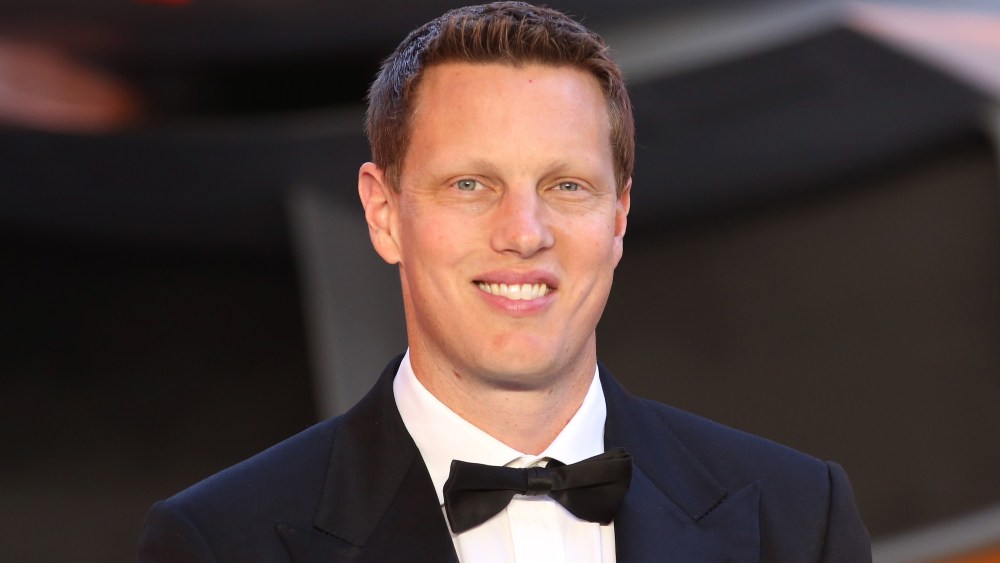
David Ellison is still struggling to win support from Warner Bros. Discovery shareholders for Paramount Skydance’s takeover bid, continuing his unlikely quest to derail the Netflix-WB deal. But the Ellisons have so far shown no intention of shelling out more cash in the M&A battle.
On Thursday, Paramount Skydance announced it was extending its $30-per-share all-cash offer for WBD to February 20th. Paramount’s previous tender offer expired on January 21st. Paramount has filed preliminary proxy materials with the SEC asking Warner Bros. Discovery shareholders to vote against the amended transaction with WBD and Netflix at a special meeting scheduled for April.
In announcing the deadline extension, Paramount Skydance said it “reaffirms its commitment to transacting with WBD at an enterprise value of $108.4 billion, which is significantly larger and more certain than the purported enterprise value of $82.7 billion in the Netflix transaction.”
“Paramount requests WBD stockholders to bid their shares today and register with the WBD board of directors to give preference to Paramount’s superior offer,” Paramount Skydance said in a statement.
In response, WBD said Thursday that more than 93% of its shareholders reject Paramount’s “poor plans” and support selling WB to Netflix. “Once again, Paramount continues to make the same offer that its board has repeatedly and unanimously rejected in favor of a superior merger agreement with Netflix,” Warner Bros. Discovery said in a statement.
Netflix strengthened its $83 billion deal to acquire Warner Bros. Discovery’s TV and movie studios and HBO Max streaming business on Tuesday (Jan. 20) by converting it into an all-cash offer, replacing the previous cash and stock deal. WBD’s board of directors unanimously approved the Netflix deal, rejecting Paramount’s takeover bid eight times.
Netflix’s move to an all-cash deal was aimed at defeating one of Paramount’s key talking points. The idea was that Paramount’s offer was a better offer for WBD shareholders because the $30 per share offer was all cash.
Netflix and WBD said the deal is expected to close within 12 to 18 months after signing the original deal on December 4, 2025, pending regulatory approval and WBD shareholder approval. Netflix’s deal with Warner Bros. is completed on the heels of WBD’s planned third-quarter spinoff of Discovery Global, which will include cable networks such as CNN, TNT, TBS, HGTV and Food Network, as well as TNT Sports and Discovery+.
Another key argument in Paramount’s hostile takeover bid is that WBD’s board is overestimating the planned Discovery Global spinoff — as WBD argues that the deal with Netflix would be of greater benefit to shareholders than Paramount.
Earlier this month, Paramount sued WBD’s board of directors, demanding disclosure of financial details, including how Discovery Global was valued. According to Paramount’s analysis, Discovery Global’s stock would be worthless (though it acknowledged that Discovery Global’s theoretical M&A value would be $0.50 per share).
In a Tuesday WBD SEC filing related to its revised all-cash deal with Netflix, Warner Bros. Discovery disclosed details of its Discovery global entity, including five-year financial projections for CNN and other assets. No court order required. WBD said the board’s analysis of “selected public companies” on a sum-of-parts basis showed that Discovery Global’s approximate implied stock value reference range was $2.41 to $3.77 per share. Additionally, the company said its analysis of Discovery Global (based on some transaction analysis) considering potential future acquisitions indicated that Discovery Global’s per share value was between $4.63 and $6.86.
On Thursday, Paramount claimed that WBD “continues to omit very important information that shareholders need about Discovery Global.” It also said WBD’s own financial advisors provided a discounted cash flow valuation analysis of Discovery Global’s stock value “as low as $0.72 per share.”
What remains unclear is how much debt WBD will ultimately transfer to Discovery Global, Paramount noted. WBD said Discovery Global’s target net debt is $17 billion as of June 30, 2026, decreasing gradually to $16.1 billion as of December 31, 2026. As part of the upgraded terms, Netflix has agreed to reduce the specified amount of net debt owed by Discovery Global by $260 million. According to Warner Bros. Discovery’s proxy statement, this is “based on Discovery Global’s stronger 2025 cash flow performance than previously expected.”
Paramount noted that if WBD were to allocate a portion of Discovery Global’s $17 billion in fixed debt (as of June 30) to WBD’s streaming and studio businesses, it would “reduce the per-share consideration that WBD stockholders would receive” under Netflix’s proposal.
“Despite the fact that Discovery Global’s capital structure will directly determine the amount that WBD shareholders will actually receive in the Netflix transaction and that WBD will be required to disclose such information along with full financial information about Discovery Global upon separation, WBD plans to seek shareholder approval for the Netflix transaction without this information,” Paramount Skydance said. “This is even more unusual given that the WBD board is using claims about the value of Discovery Global stock as a basis for arguing that this transaction exceeds Paramount’s all-cash offer of $30 per share.”
Under its latest deal with WBD, Netflix said it will assume $10.7 billion in Warner Bros.’ net debt. The World Bank acquisition will be financed with $20 billion in cash on hand and $52 billion in borrowings. In an all-cash deal priced at $27.75 per share, Netflix secured $42.2 billion in debt financing from Wells Fargo, BNP and HSBC.
In announcing the extension of its tender offer, Paramount reiterated its claim that Netflix’s deal with WB would face significant regulatory challenges, particularly in Europe, where Netflix is ”by far the dominant streaming service and WBD’s HBO Max is the only significant international competitor.”
“The deal with Netflix would substantially cement Netflix’s market dominance, give it an estimated 43% share of subscription video-on-demand subscribers worldwide, and result in higher prices for consumers, lower compensation for content creators and talent, and significant harm to U.S. and global theatrical companies,” Paramount said.
Netflix executives said they are “confident” the company will receive regulatory approval for its deal with WB. “Today’s amended agreement reinforces what we have always believed: Our transaction not only provides superior shareholder value, but is also fundamentally pro-consumer, pro-innovation, pro-creator and pro-growth,” co-CEO Greg Peters said in a statement Tuesday.
Even after the merger with Warner Bros., Netflix’s share of TV viewing in the U.S. will be around 10%, according to Nielsen data, which Netflix says is “well below” YouTube (13%) and a potential Paramount-WBD combination (14%). “We believe the facts speak for themselves and are fully prepared to be in a favorable position to win approval,” Netflix said in a staff FAQ last month.
