

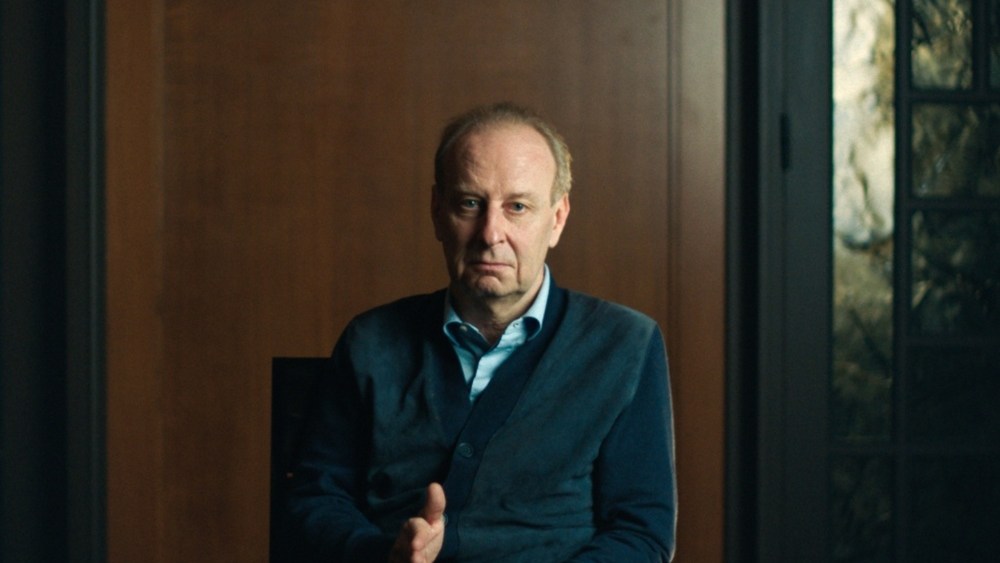
A $1 billion dispute over dozens of masterpieces involving a Russian oligarch, a Swiss art dealer, and one of the world’s most powerful auction houses takes center stage in the three-part documentary series “Oligarchs and Art Dealers,” directed by Andreas Dalsgaard and Christoph Jörg, which premieres in its entirety this week at CPH:DOX.
The pilot episode premiered at the Sundance Film Festival earlier this year. Copenhagen marks the world premiere of a complete series tracing the decade-long legal battle between art dealer Yves Bouvier and Russian billionaire Dmitry Rybolovlev, which exposed how masterpieces worth hundreds of millions of dollars are circulated through private transactions, offshore structures and high-security vaults.
“We talked to a lot of wealthy people while making this,” Dalsgaard told Variety. “They all agree that investing in art is probably the best investment you can make. Better than gold, better than diamonds.”
The idea for the series arose from Dalsgaard and Jorg’s previous collaboration as co-producers of director Andreas Koeford’s “The Lost Leonardo,” a story about the controversial history of Leonardo da Vinci’s “Salvator Mundi.” The controversy centers on 38 works of art, including paintings by Van Gogh, Rothko, Klimt and da Vinci.
Mr. Rybolovlev, who made his fortune in Russia’s fertilizer industry during the privatization era of the 1990s, accused Mr. Bouvier of secretly inflating the prices of art purchases he brokered between 2003 and 2014 and embezzling the difference of more than $1 billion.
Extensive legal documents produced over years of litigation provide valuable insight into a market typically hidden from public view. A 2024 New York trial involving Sotheby’s, in which Mr. Rybolovlev sought to prove that the auction house was involved in the disputed transaction, is central to the story.
“We didn’t want this to be a story of innocent and guilty, villains and victims,” Jörg says. “Rather, this is a story based on power, ambition, and the interdependence of these people. Together they built an entire ecosystem built around privacy. One provided the logistics and knowledge of where all these masterpieces were, and the other had the resources to purchase the largest art collection of the 21st century.”
While Mr. Bouvier speaks on the record, Mr. Rybolovlev, who is notoriously private, is represented through his lawyer and former financial director. Journalists and writers who have investigated this controversy help guide viewers through the web of art deals, lawsuits, and competing narratives.
Asked how he was able to convince both sides to speak up, Dalsgaard said: “It was a matter of saying, ‘If you’re not going to talk about your side, there’s no room for discussion on the other side.'”
As the series unfolds, it becomes clear that Bouvier, a snowboarding pioneer in his native Switzerland known for his love of speed and risk, was instrumental in developing Freeport’s network. Freeports are highly secure facilities used by collectors and dealers around the world to store art outside of each country’s customs jurisdiction.
His appetite for risk also showed during filming. While filming a ski scene in the Alps, Bouvier collided with a cameraman at high speed and suffered several broken bones. However, the staff was called back the next day and filming continued.
“He was the architect of the system of freeports that he built and created, and the Geneva Freeport he developed became the most important in the art world. It is estimated that it houses over $100 billion worth of art,” Dalsgaard said.
For filmmakers, these facilities also provided a way to illustrate how the art market treated masterpieces as financial assets hidden from public view. To recreate the moments that took place behind closed doors, Dalsgaard staged a stylized reenactment of the meeting that introduced the artwork to Rybolovlev, using replicas of paintings and storage boxes.
“We created the entire reenactment in a studio, and it wasn’t meant to feel completely realistic,” he says. “It’s a kind of visual hyperreality, a way to expand on the developments we see and the tension between the two men.” Jorg says the aim was not to pass a verdict, but to pull back the market curtain that would allow the masterpiece to circulate as a financial asset. “I don’t think much has changed in that world, but it was important to us to show how the system actually works.”
The duo will be screening several other films at this year’s CPH:DOX. Dalsgaard’s Elk Films will present the world premiere of “If Luck Will Come,” director Po Seeten’s Sundance premiere “American Doctor,” and bring Cine Plambek and Janus Metz’s “Rescue” to the festival’s industry forum. Dalsgaard and Jorg are also the creators of Tanaz Eshagian and Farzad Jafari’s An Eye for an Eye, which premiered at Tribeca in 2025 and won two awards.
“The Oligarch and the Art Dealer” is produced by Elk Film and Vestigo Films in association with Scenery, Akka Films and Words + Pictures. Global sales will be handled by CAA Media Finance, with Dogwoof managing sales outside of North America. Connected stations include DR, Arte, RTS, VPRO, NRK, RUV, and YLE.
The three-episode series had its world premiere on March 15 at CPH:DOX’s special premiere section. A full-length version of the project is expected to be released in the spring.
CPH:DOX will be held in Copenhagen until March 22nd.
–
