

Netflix on Tuesday threatened ByteDance with “immediate litigation,” joining three other studios accusing the company of enabling copyright infringement through its Seedance 2.0 AI service.
Netflix has sent a cease-and-desist letter to the Chinese company demanding that it remove intellectual property from its training dataset and put guardrails in place to prevent further infringement.
“Sedance acts as a high-velocity piracy engine, producing a flood of unauthorized derivative works that utilize Netflix’s iconic characters, worlds, and scripted stories,” litigation director Mindy LeMoyne wrote. “Netflix will not sit idly by as ByteDance treats our valuable IP as free public domain clip art.”
ByteDance was given three days to respond.
The move follows similar actions by Disney, Paramount and Warner Bros., each accusing the company of stealing their most valuable intellectual property. Netflix accused ByteDance of enabling copyright infringement of “Stranger Things,” “KPop Demon Hunters,” “Squid Game,” and “Bridgerton.”
In the case of “Bridgerton,” the letter alleges that a video has been circulating that depicts unauthorized season 4 costumes at a masquerade ball.
“These pieces reflect specific costumes that are important to the story, such as Sophie Baeck’s ‘Lady in Silver’ gown,” Lemoyne writes. “ByteDance promoted this content through its own official social media channels, including @BytePlusGlobal, using the #Bridgerton tag.”
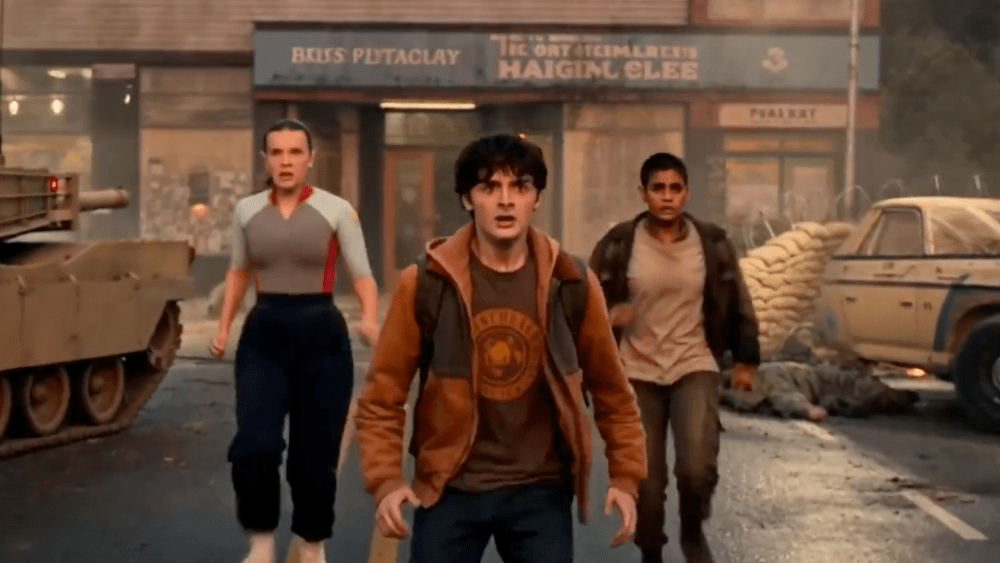
Netflix also cited a circulating video depicting the final episode of the “Stranger Things” series.
It’s a replica of the series’ iconic cast and monsters, including the Demogorgon and the Mind Flayer. ”
The user also created “unauthorized crossover works, including inserting real-world figures such as Elon Musk into the Squid game environment,” the letter said. It also claims that a user created a video clip that recreates the visual style and character design of “KPop Demon Hunter,” including the main character Rumi.
In response to the uproar, ByteDance announced on Monday that it would put additional guardrails in place to prevent SeaDance users from misusing copyrights and actor likenesses. Those guarantees weren’t enough for Warner Bros. and Netflix, which both sent letters on Tuesday.
Netflix’s letter was the first to explicitly hint at a lawsuit. The letter also sought to preempt the “fair use” defense, arguing that “the use of a copyrighted work to create a competing commercial product, especially one that regurgitates the original, is not protected by fair use.”
Seedance 2.0 appears to represent a significant improvement over previous AI video generators by mixing video and audio relatively seamlessly using only a few prompts.
