

More than 80 current and former Berlinale participants have signed an open letter condemning the Berlinale’s “silence” on the Gaza conflict and the “censorship” of artists who spoke out.
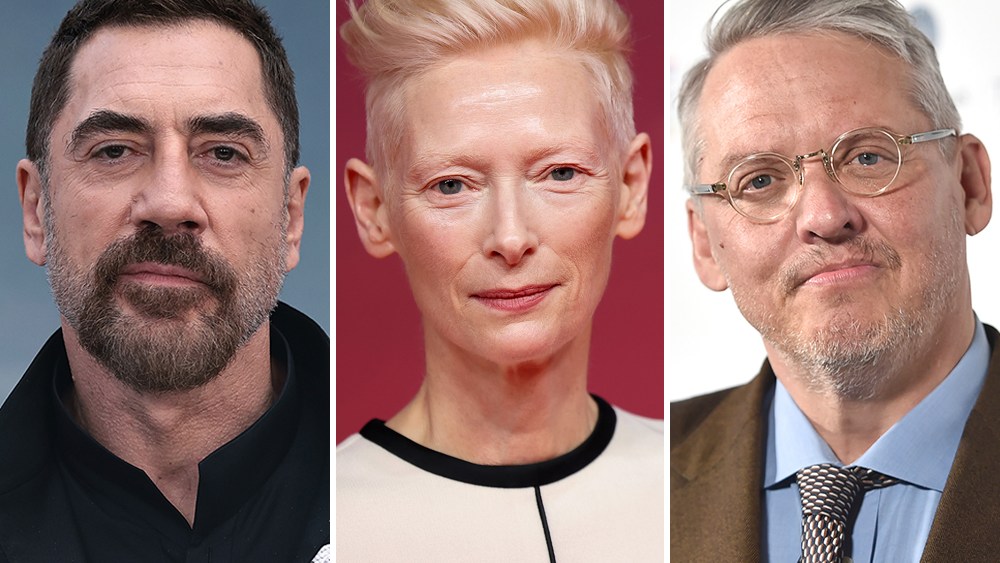
Actors Tilda Swinton, Javier Bardem, Angeliki Papoulia, Saleh Bakri, Tatiana Maslany, Peter Mullan, Tobias Menzies and directors Mike Leigh and Lucas Dong, Nan Goldin, Miguel Gomez, Adam McKay and Avi Mograbi are among the signatories of the letter, which says it “hopes that institutions in our industry will refuse to be complicit in this horrific violence.” It continues to be perpetrated against the Palestinians. ”
The letter sits in the middle of the 2026 edition of the Berlinale, where politics are a central theme, especially following comments from jury president Wim Wenders at the opening press conference. Asked about Gaza and the support shown to Israel by the German government, which provides much of the festival’s funding, he said, “I’d rather stay out of politics,” insisting that filmmaking is “the opposite of politics.” In response to the ensuing uproar, festival director Tricia Tuttle issued a statement saying, “Artists should not be expected to comment on all broader discussions about the festival’s previous or current practices that are beyond their control.”
In an open letter, the signatories say they “strongly disagree” with Wenders’ views on filmmaking and politics. “You cannot separate one from the other,” they said, citing the refusal of more than 5,000 film professionals, including some of Hollywood’s biggest names, to cooperate with “complicit Israeli film companies and entities,” adding that “the tide is changing across the international film industry.”
The letter notes that the Berlinale has made “unequivocal statements” in the past about the “atrocities” committed against the people of Iran and Ukraine.
“We call on the Berlinale to live up to its moral obligations, to make a clear statement against Israel’s genocide, crimes against humanity and war crimes against the Palestinian people, to completely disengage from defending Israel from criticism, and to demand accountability,” it concludes.
See the full letter and list of signatories below.
Open letter to the Berlinale — February 17, 2026
We write that we, as film professionals, and all Berlinale participants past and present, expect industry institutions to refuse to be complicit in the horrific violence that continues to be perpetrated against Palestinians. We deplore Berlinale’s involvement in censoring artists who oppose Israel’s ongoing genocide against Palestinians in the Gaza Strip and the German state’s key role in enabling it. As stated by the Palestinian Film Association, the festival “continues to cooperate with the federal police in their investigation and to police the filmmakers.”
Last year, filmmakers who spoke for the lives and freedom of Palestinians from the Berlinale stage reported being severely reprimanded by the festival’s senior programmers. A film director is reported to be under police investigation, with the Berlinale leadership falsely implying that the filmmaker’s moving speech rooted in international law and solidarity was “discriminatory”. Another filmmaker told Film Workers for Palestine about last year’s festival: “There was an atmosphere of paranoia, of being unprotected and persecuted, that I had never felt before at a festival.” We join our colleagues in rejecting this systemic oppression and anti-Palestinian racism.
We categorically disagree with the statement of Wim Wenders, Chairman of the Berlinale 2026 Jury, that filmmaking is the “opposite of politics”. One cannot be separated from the other. We are deeply concerned that the Berlinale, which is funded by the German government, is supporting the practice of what Irene Kahn, the UN special rapporteur on freedom of expression and opinion, recently denounced as the misuse of draconian laws to “limit advocacy for Palestinian rights, chill public participation, and curtail discourse in academia and the arts.” This is also what Ai Weiwei recently described as Germany “doing what it did in the 1930s” (agreeing with an interviewer who suggested to him, “It’s the same fascist impulse, just a different target”). All this comes as we learn horrifying new details about 2,842 Palestinians who were “vaporized” by Israeli forces using internationally banned US-made thermal and thermobaric weapons. Despite abundant evidence of Israel’s genocidal intentions, systematic atrocity crimes, and ethnic cleansing, Germany continues to supply Israel with weapons used to exterminate Palestinians in the Gaza Strip.
The tide is changing throughout the international film industry. Many international film festivals support the cultural boycott of apartheid Israel, including the world’s largest International Documentary Festival Amsterdam, the Black Star Film Festival in the United States, and the Ghent Film Festival, Belgium’s largest. More than 5,000 film professionals, including Hollywood and international celebrities, also announced their refusal to work with complicit Israeli film companies and entities.
However, the Berlinale has so far not even responded to the community’s demands to issue a statement affirming the right to life, dignity and freedom of Palestinians. We condemn the ongoing genocide of Palestinians by Israel. And we are committed to defending the right of artists to speak without restriction in support of human rights in Palestine. This is the least you can and should do.
As stated by the Palestinian Film Association, it is “appalled by the Berlinale’s systematic silence on the genocide of Palestinians and its unwillingness to defend the freedom of speech and expression of filmmakers.” Just as the festival has made clear statements in the past about the atrocities committed against the peoples of Iran and Ukraine, we call on the Berlinale to fulfill its moral obligations, to unequivocally stand against Israel’s genocide, crimes against humanity and war crimes against the Palestinian people, and to completely discontinue its involvement in defending Israel from criticism and demands for accountability.
signed
Adam McKay Adele Haenel Alan O’Gorman Alexandra Juhasz Alexandre Kobelidze Alia Shawkat Alison Oliver Alquis Papastathopoulos Ana Naomi de Souza Angeliki Papoulia Antigoni Lota Ariane Labed Artemis Anastasiadou Ashley McKenzie Avi Mograbi Bahilla Essouci Ben Russell Bingham Bryant Blake Williams Blanche Gardin Brett Storey Brian Cox Camilo Restrepo Carice Van Houten Charlie Shackleton Sherian Davis Christopher Young Dali Bensala David Osit Derag Campbell Dustin Defa Eleni Alexandrakis Herm Shekerifer Emily Deleuze Eyal Sivan Fernando Meirelles Phil Ieropoulos Jeff Arborn Hany Abu Asad Hind Medeb James Benning Javier Bardem Jon Grayson Jon Yost Khalid Abdalla Lia Borromeo Lucas Don’t Mahdi Fleifel Mai Masri Marika Zuhari-Worar Manuel Embarse Marina Gioti Marion Schmidt Melawi Gerima Miguel Gomez Mike Leigh Miranda Pennel Namil Abdel Messe Nan Goldin Narimane Mari Nina Menkes Pascal Ramonda Patricia Mazui Paul Laverty Pedro Pimenta Peter Mullan Phaedra Vokhari Robert Green Saeed Taj Farooqi Saleh Bakri Samahel Arkady Sara Friedland Sepideh Farsi Shirin Neshat Sumaro Papa Evangelou Sofia Georgovassili Tatiana Maslany Sodoris Dimitropoulos Tilda Swinton Tobias Menzies Tyler Taormina
