

McDonald’s, famous for serving burgers, fries and other fast food staples, is offering something different Thursday: history.
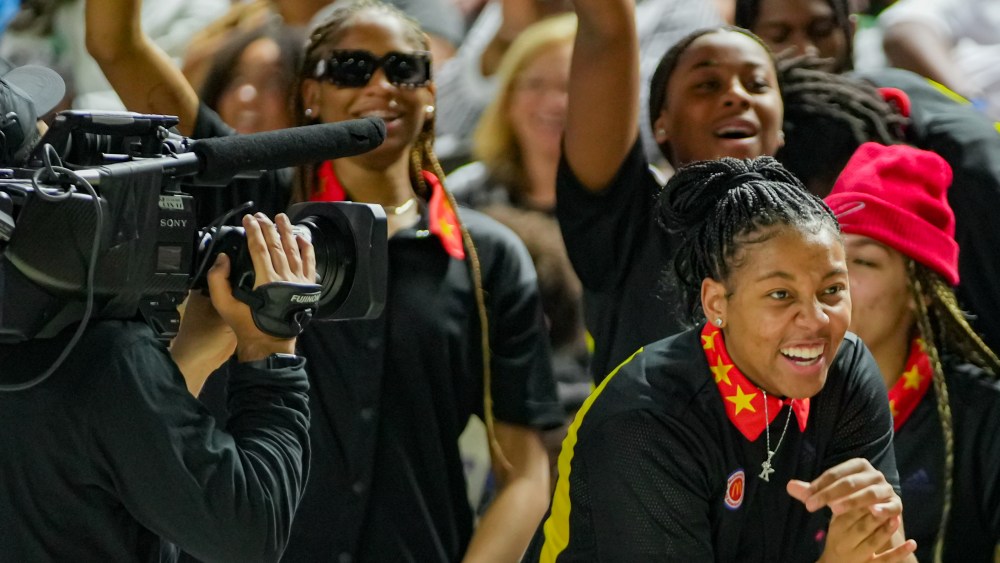
The chain, one of America’s most famous companies, will release “Meal Ticket,” a documentary on Amazon Prime Video on Thursday about the long-running All-American Game, a basketball game in which the top male and female high school graduates compete each year. Over its nearly 50-year tenure, the men’s game has featured players such as Magic Johnson, Kobe Bryant and Alonzo Mourning, while the women’s game, which has been around for about 25 years, has featured players such as Sabrina Ionescu and JuJu Watkins. The next event will be held on March 31st.
Although McDonald’s is not paying Amazon to run the film, the project still advances the company’s work with youth and charities. Interestingly, the inspiration for this project came from a marketing agency that specialized in developing new advertising methods.
“Hollywood has been turned upside down,” says Ross Martin, president of Known, an independent marketing agency that has worked with clients ranging from Nestlé and Ubisoft to Warner Bros. Discovery. Many advertisers are building production studios to create content that closely resembles television episodes and short films. But unknown, says Martin. “What we’re doing is looking for brands that want to tell a bigger story that can get noticed and earn a place in culture.” He added, “McDonald’s is not paying for this movie. They’re not buying time on Amazon Prime Video. It’s not premiering on the main page of Video. It’s there because this is a story that’s gaining a place in the culture. And you can’t buy it.”
Known is set to launch a documentary series on CNN later this year, hosted by comedian Fred Armisen. The as-yet-untitled series will give fans a weekly peek behind the scenes into the contents of Universal Music Group’s vaults. “Large companies that have been around for a long time can leverage their history and intellectual property to promote themselves,” Martin said. “Their brand promise is compelling enough to capture the public’s attention. And not all brands can do that.”
Many advertisers are looking to put their money into television rather than traditional TV commercials. Pepsi launched the Fox game show “Cherry’s Wild” in 2021. Earlier this week, Geico announced “Miles That Matter,” a three-part documentary series that explores the struggles of college basketball’s leading players, and will be available to stream on Paramount+.
Importantly, there is something more than advertisers at the heart of these projects. The projects Known is working on tap into marketers’ own archives to show viewers real histories that aren’t necessarily directly related to a company’s core business. “We have historians who actually keep game uniforms and basketballs,” explains Elizabeth Campbell, vice president of marketing for McDonald’s U.S. operations. ESPN, which broadcast the event, also has old tapes that may have been intercepted.
Campbell said that even before Known contacted him, the restaurant chain was gaining attention for the event itself and had received positive feedback on social media. She said “Meal Ticket” was seen as “a nod to the players” and “an authentic way to tell their stories about what it means to play this game,” and also notes the overall impact the game has had over half a century.
However, the documentary took several years to complete. Directors Carlton Gerard Subs and Corey Colvin were able to take a deep dive into the 2022 and 2023 National Games. “They had the opportunity to see exactly what the kids were going through, from the moment they checked in, to getting their room assignment, to receiving their jerseys and all of their practice gear for the week,” Colvin says. There, they discovered the stories of young up-and-comers and how the game can inspire them. But there was much more to do, including tracking down some of the pros who once played at McDonald’s events. Known partnered with Jay-Z’s production company Roc Nation and brought on Jalen Rose as producer. They helped establish contact with the players.
Directors still had to work hard to find the important parts of the story. Missing from McDonald’s archives was much of the footage of event founder Bob Gagan. “We found a few old photos in the McDonald’s archives and nothing more,” says Billy Burke, the film’s producer. The directors then tracked down an interview with Geighan in which he talked about how the All American Game was launched. This process seemed elusive early on.
McDonald’s is well known in media circles for its efforts to tightly control its image. However, the filmmakers say they didn’t experience any of the tension they expected. “Coming into this, we didn’t know what to expect. We didn’t know if McDonald’s wanted to kind of cleanse this story or cover up the stain. And that was definitely not the case,” Burke says. “I can’t think of any elements that we were asked to remove from this film to protect the image of this game.”
Known executives believe there is new room for other ambitious projects in an era of growing interest in stories told through podcasts and streaming video. “I think this is a turning point for brand-inspired content,” Martin says.
