

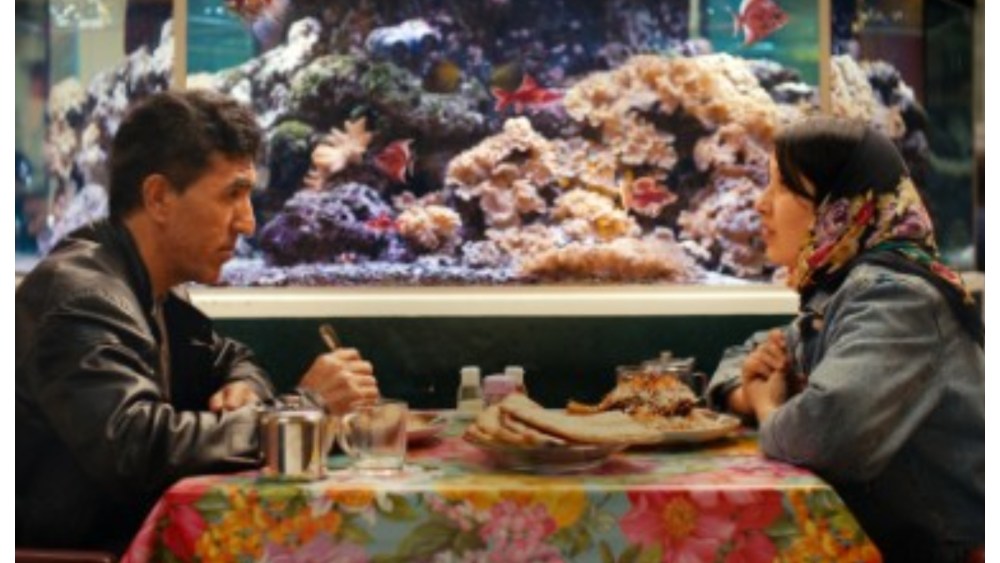
French sales company Lucky Number has boarded Afghan director Shahbanu Sadat’s “No Good Men,” which is set to open the upcoming Berlin Film Festival.
The Paris-based company will begin selling at next month’s European Film Market, where it will also release exclusive first-look images. “No Good Men” follows Sadat’s previous two films, “The Wolf and the Sheep” and “The Orphanage,” which premiered at Cannes Directors Fortnight in 2016 and 2019, respectively.
The project is also the third in a planned five-film cycle inspired by the autobiography of writer and actor Anwar Hashmi, who will appear in the film alongside Sadat himself in the lead role.
“No Good Men” is Sadat’s first Berlinale opening slot and continues her strong track record on the international festival circuit, where she has quickly established herself as one of the most distinctive voices to emerge from Afghan cinema in recent years.
Set in Kabul in 2021, just before the Taliban return to power, the film centers on Naru, the only camerawoman at Afghanistan’s main television station. Struggling to maintain custody of her three-year-old son after leaving her unfaithful husband, Naru is convinced that there are no good men in her country, but is forced to reconsider when Kodrat, the station’s most influential journalist, offers her a career opportunity. As the two crisscross the streets reporting on Afghanistan’s last days of freedom, a tentative romance develops, and Naru begins to question his assumptions in a hostile society.
Blending comedy, romance, and political urgency, No Good Men explores the fragile freedom women carve out for themselves in a patriarchal society. The film is believed to contain the first on-screen kissing scene in an Afghan feature film, a milestone that also highlights the project’s risks. Due to political reasons and the current situation, it had to be filmed completely outside of Afghanistan in Germany. However, the entire cast is Afghan.
“No Good Men tackles the issue of patriarchy, which I believe is the deepest and most enduring problem in Afghan society and beyond,” Sadat said. “Through Nal, an independent woman living in Kabul during the ‘democracy’ era, this film reveals how deep-rooted oppression existed long before 2021.”
She added that the film seeks to challenge the simplistic narratives often applied to Afghanistan’s recent history, arguing that the Taliban are not only a political force but also represent a long-standing social mindset, while also acknowledging the existence of Afghan men who resist and reject the regime.
The film was produced by German-Danish Admite Film (The Square), co-produced with France’s La Fabrica Nocturna Cinema, Norway’s Motleys, Germany’s America Film, Afghanistan’s Wolf Pictures, and Sweden’s Film i Vest. German public funding was provided by MOIN Filmförderung Hamburg Schleswig-Holstein, the German Federal Film Commission (FFA), the German-French Mini Treaty, the German Federal Film Fund (DFFF), Medienboard Berlin-Brandenburg, nordmedia, and MV Filmförderung Mecklenburg-Vorpommern.
Several major territories already have distributors on board, including Denmark (Camera Film), Norway (Norsk Filmdistribusjon), France (Condor Films) and Germany (Eksystent).
Lucky Number co-founders Olivier Barbier, Ola Biszuk and Renee Port called the film “bold and groundbreaking in countless ways” and praised Sadat’s resilience in completing the project “despite all adversity.”
Lucky Number’s lineup includes Felipe Barboza’s Leila et La Nuit (tentative title), starring Rochedi Zem and Marina Foyth, and Christophe Reveille’s documentary Che Guevera: The Last Companions, which commemorates the 60th anniversary of Che’s death. Both titles appear on the company’s Unifrance Rendez-Vous With French Cinema slate.
