

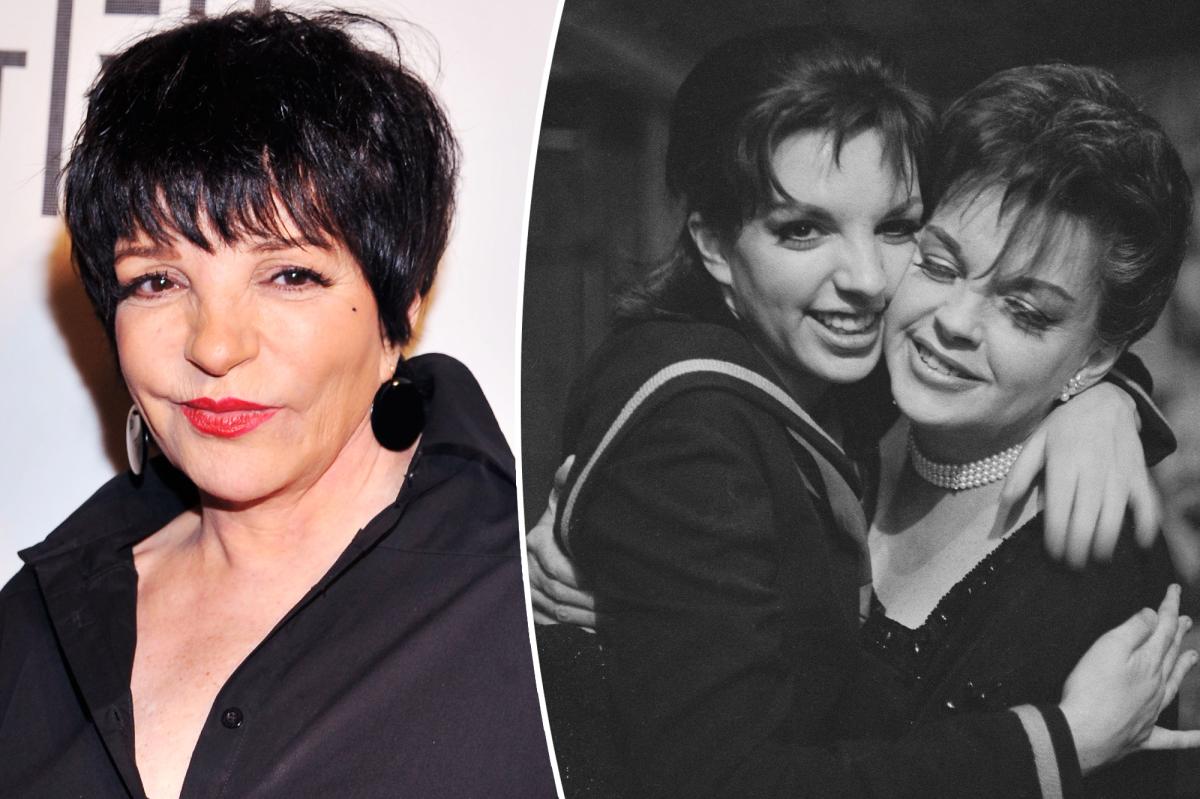
Liza Minnelli’s long-standing drug addiction was sparked by the sudden death of her mother, Judy Garland, at the age of 47.
She wrote in “Children, Wait Till You Hear This,” released on Tuesday, that she felt a “flood” of “panic, heartache and confusion” when she learned that Ms. Garland had died in London in June 1969.
Minnelli, who was in Southampton, New York at the time, said she was “devastated” and “overwhelmed” by the loss.
“At the same time, I realized that someone was now going to have to organize a complicated public funeral,” the now 79-year-old recalls. “And that person was me.”
Minnelli’s “motivation” came after her doctor prescribed Valium to help her deal with the “stress and tension” she felt at work.
“This was my first time taking a drug like this and I was amazed at how quickly the effects wore off,” the EGOT winner wrote, likening the experience to “lighting a fire with a match.”
“What started as a blessing for one day quickly became a habit, and a few years later a full-blown addiction,” she wrote.
Minnelli referenced Garland’s own substance abuse problems, calling her addiction “a last gift, a genetic legacy, that I couldn’t escape from my mama (her).”
The “Wizard of Oz” star died from a barbiturate overdose, and the tragedy was ultimately ruled an accident rather than a suicide.
Minnelli went to rehab multiple times starting in 1984 and got sober in 2015.
The “Cabaret” singer covered the conflict in the reveal, breaking down the complicated dynamic she had with Garland when the “A Star Is Born” star was alive.
“There were moments of great love from her, but there were also stinging criticisms that I came to fear,” Minnelli told readers. “A deep sense of inferiority. After all these years, I wonder if I ever fully got over it.”
She claimed that Garland once told producers to get Minnelli “off the fucking stage” when they performed together at the London Palladium in 1964.
“Her drive and competitiveness never let anyone get behind her. It didn’t matter that I was her daughter,” Minnelli said. “It took me years, even decades, to realize that her competition with me was a tribute to the performer I was becoming.”
If you or a loved one is affected by any of the issues raised in this article, please call SAMHSA’s national helpline at 1-800-662-HELP (4357).
