

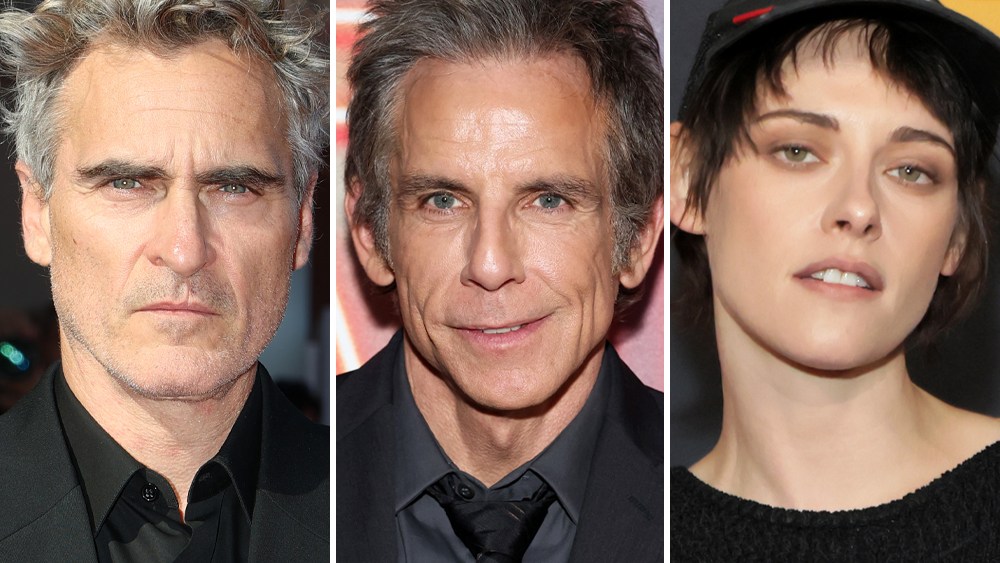
More than 1,000 film and television stars and creators, including Joaquin Phoenix, Ben Stiller and Kristen Stewart, released an open letter early Monday morning opposing Paramount Skydance’s pending acquisition of Warner Bros. Discovery.
“We are deeply concerned by the signs of support for this merger that prioritizes the interests of a few powerful stakeholders over the broader public interest,” said the letter, published by the New York Times and available on the website BlocktheMerger.com. “The integrity, independence, and diversity of our industry will be severely compromised. Competition is essential to a healthy economy and a healthy democracy. So is thoughtful regulation and enforcement.”
Paramount Skydance, run by CEO David Ellison, announced plans to buy David Zaslav’s Warner Bros. Discovery for $111 billion in late February after a battle with Netflix over assets.
Paramount released a lengthy statement late Monday in response to the letter.
We hear and understand the concerns raised by some in the creative community, and we respect their commitment to protecting and expanding creativity.
Importantly, as creators, we know first-hand that this is also a time when the industry is facing significant disruption. And we know that the need for strong, creative-first, well-capitalized companies that can continue to invest in storytelling has never been greater.
This transaction uniquely brings together complementary strengths to create a company that can greenlight more projects, champion bold ideas, support talent across multiple stages of their career, and deliver stories to audiences on a truly global scale, while strengthening competition by ensuring players of multiple sizes invest in creative talent.
We have made our commitment clear to do just that. That means increasing the number of high-quality feature films with full theatrical releases to at least 30 a year, continuing to license content, maintaining iconic brands with independent creative leadership, and ensuring creators have more rather than less means for their work.
We understand the concerns that have arisen as a result of the industry disruption caused by COVID-19, the entry of big tech, and changes in consumer behavior, but we are committed to this. Paramount remains deeply committed to our people, and this combination will enhance both consumer choice and competition, creating greater opportunity for creators, audiences and the communities in which they live and work.
The “Notable Signatories” section of the new open letter opposing the deal, signed by more than 1,034 people as of publication, included Adam McKay, Alan Cumming, Alyssa Milano, Boots Riley, Bryan Cranston, Cynthia Nixon, Damon Lindelof, David Fincher, Denis Villeneuve, Elliot Page, Glenn Close, Jane Fonda, J.J. Abrams, Jason Bateman, John Leguizamo, Lin-Manuel Miranda, Margaret Cho, Mark Ruffalo, Noah Wyle, Patti LuPone, Ramy Youssef, Rosario Dawson, Rosie O’Donnell, Ted Danson, Tiffany Haddish, Tig Notaro, Yorgos Lanthimos, Yvette Nicole Brown, and more.
Representatives for Warner Bros. Discovery did not respond to requests for comment Monday.
Watchmen creator Lindelof, who currently has an overall deal with Warner Bros. Discovery’s HBO, explained why he signed the letter in an Instagram post on Monday, saying he “knew my (potential) new boss, David Ellison, to some extent,” calling him a “smart, ambitious and passionate” executive who “loved movies and believed in the people he made them with.”
Lindelof said he chose to sign the open letter opposing the merger primarily in support of Hollywood’s “blue-collar town” structure, despite his impressions of Paramount’s CEO and his concerns that he and his peers could face retaliation in the industry.
“Thousands of grips and gaffers, drivers and decorators,” Lindelof wrote. “The builders and the boom operators. The camera teams and the caterers. And they’re all about to get screwed. Hollywood mergers mean fewer movies, fewer TV shows, and that means fewer jobs. When two-story backlots are owned by the same company, the result is intuitive. One becomes a ghost town. I’m scared. But I’m not a ghost. And the battle is already lost if I don’t fight it. So I signed on. I understand why many of my colleagues don’t believe me, I’m more of a spitter than a stormer, but these boats are heading for the beach whether we like it or not.”
Read the full text of the open letter below.
As filmmakers, documentarians, and film and television industry professionals, we write to express our unequivocal opposition to the proposed merger between Paramount and Warner Bros. Discovery.
This deal will further consolidate an already concentrated media landscape and reduce competition in our industry, and the audiences we serve, at a time when they can least afford it. The result is fewer opportunities for creators in the U.S. and around the world, fewer jobs, higher costs, and fewer choices for viewers across the production ecosystem. Remarkably, this merger would reduce the number of major U.S. film studios to just four.
Our industry is already under severe strain, primarily due to previous waves of consolidation. We’ve seen a sharp decline in the number of films made and released, and with it the types of stories that are financed and distributed. A small number of powerful organizations increasingly decide what gets produced and under what terms, leaving fewer viable paths for creators and independent businesses to keep their jobs.
Media consolidation has accelerated the disappearance of mid-budget films, the decline of independent distribution, the collapse of international sales markets, the elimination of meaningful profit participation, and the weakening of film credibility.
When these factors come together, they threaten the sustainability of the entire creative community. This includes jeopardizing the professional lives of tens of thousands of workers who are embedded in local economies and communities across the country, primarily small and independent businesses, and who help make up those communities.
We are deeply concerned by the signs of support for this merger, which prioritizes the interests of a few powerful stakeholders over the broader public interest. The integrity, independence and diversity of our industry will be seriously compromised.
Competition is essential to a healthy economy and a healthy democracy. So is thoughtful regulation and enforcement. Media consolidation is already weakening one of America’s most important global industries, which have long shaped culture and connected people around the world.
Luckily, someone is doing something about all of this. California Attorney General Rob Bonta and colleagues in other states are reportedly scrutinizing the merger and considering legal action to block it. We are grateful for their leadership and stand ready to support any efforts to maintain competition, protect jobs, and ensure a vibrant future for our industry, American culture, and most important exports.
