

As the industry begins its latest round of union contract talks on Monday, Hollywood is fighting wars on many fronts.
The health plans that cover most of the creative community are under water as costs soar, at the same time that the expansion of generative AI tools in content creation is creating vexing issues around copyright protection and creative consent. And then there’s the wave of consolidation among studios and the sharp downtown in TV and film production jobs in the U.S., let alone Southern California.
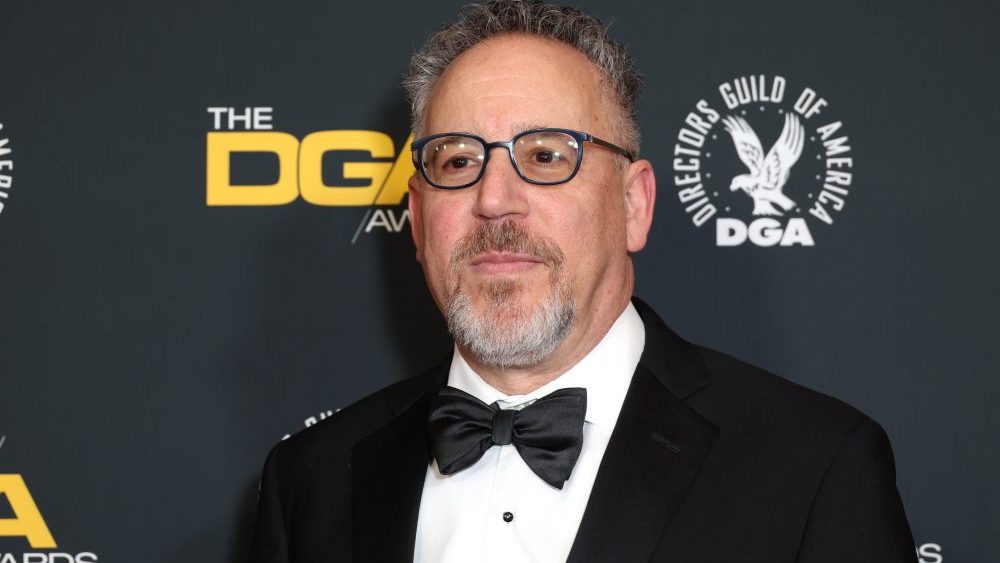
Russ Hollander, national executive director of the Directors Guild of America, sat down for a wide-ranging interview with Variety‘s “Strictly Business” podcast as SAG-AFTRA prepares to kick off the collective bargaining cycle with the Alliance of Motion Picture and Television Producers.
For a change, the DGA will not be the first up at the table with the major studios and streamers. Here, Hollander explains that decision, and weighs on all the major issues swirling around the guild that he has led since 2017.
The DGA has a very long-established reputation of really going in early, talking to the AMPTP, getting the key issues on the table, and very often coming to an agreement well before there’s any time pressure. This time around, unusually in recent memory, the DGA is not going to be the first to sit with the AMPTP. That will be SAG-AFTRA. From a purely logistics and strategic standpoint, how do you think that will affect the deal that the DGA winds up with?
I read a lot of stuff about our negotiations and our approach to negotiations. So I’d like to take the opportunity to clarify when we make decisions and how we make the decision when to go. But first I want to start with that. It’s actually not true that we’re always the first union to go. I’ve been with the Guild since 2001. We’ve had eight rounds of negotiations leading up to this one. The DGA only went first three times in those eight rounds.
Listen to the full podcast:
I stand corrected.
We do have a philosophy of looking to try to maximize our leverage in negotiations. And so we do an assessment over the value of doing an early negotiation versus negotiating closer to the deadline of the contract, where the studios are willing to provide a premium for the benefit of getting an early agreement in labor stability.
It makes sense to go first because it helps us achieve things that we might not otherwise be able to achieve due to that premium. When that premium is not there, we go later in the cycle. We also coordinate with (other union groups), which is something people forget about, but we’re constantly in coordination and speaking to our sister guilds. We talk to SAG-AFTRA, we talk to the Writers Guild. We invite them in early on to have a discussion over the order and timing of negotiations. And all this is done in that vein, and we also talk to the producers. We talk to the AMPTP president, in this case, Greg Hessinger, but we also talk to other people at the companies, and then we make an assessment about what is best to go with respect for our sister guilds and unions.
And so this round, it turns out that SAG is going first. they start on Monday. I’ve spoke to Duncan (Crabtree-Ireland) yesterday. We’re here to support them and wish them the best they can do in their negotiations. It’s very important for us to see them and the writers succeed in negotiations will be there to support them. I’ll be there in the first day, and when the Writers Guild comes up, we’ll do that then. But in the end, I think the order of negotiations is based upon strategic decisions and what my focus is going to be to negotiate the best agreement that I can. And I’m extremely confident that at the end of the day, we’re going to walk out of that room with the AMPTP with a contract that the negotiating committee, the board, the membership are proud of.
In your discussions this year with the sibling guilds, was that a negotiation?
It’s more of sharing information with each other when we each make our independent decisions, and the way it worked out this year was going early or first. I don’t know if you’d consider this early, but… the writers are in what I would consider that traditional window and us being later in the cycle.
READ MORE: SAG-AFTRA Mulls a Studio Tax on Performers as Contract Talks Begin
Obviously, 2023 was extremely difficult. The town was on strike for almost seven months. There was no doubt there was strain between the WGA and SAG-AFTRA which did go out for many months, and the DGA, which did not. How are the relations right now between the three guilds?
We have always worked closely with them and coordinated with them. It was a very tumultuous period, the last negotiation, but I’m proud of what we achieved. We went in to that negotiation in 2023 dealing with some very specific issues, and when I look back at that, what we negotiated, we got the largest wage increase that any entertainment union had seen in decades. We achieved what was one of our primary goals in dealing with the foreign residual for programs made for SVOD. By increasing that residual by 76%, I mean, just stop and think about what a 76% increase in anything is.
We dealt with AI, which had come up, as we were negotiating, and we were the first union not only in the entertainment industry, but any union anywhere, to get to negotiate a provisions that dealt with AI and respected and protected our jobs, and importantly, for our creative rights negotiations. We did a tremendous job in improving the director’s participation in post-production and getting them more involved creatively in the finished product, among other things. And so I look back at that, and that was something that I think was a great achievement, something that we’re proud of, something we intend to build on. And throughout all of this, our goal is to get the best agreement we can to support our sister guilds and unions in getting the best agreements that they can get, and they do the same for us. And that’s what we expect to happen this round.
As you prepare to sit down with the AMPTP in May, what are the top priorities for you this time around?
We have a pretty clear focus this time. No. 1 priority is jobs. I might say the No. 1, 2 and 3, priorities are jobs. but I’ll just say jobs, jobs, jobs is the No. 1 priority. Health care is a big priority; building upon what we did last time with AI is a significant priority. And we always have a number of residual issues that we’re going to have to address. So that’s in terms of the big topics, what we’re focusing on.
What are you hearing from your members about the jobs picture going into 2026 versus what it was in the end of 2022 going into 2023 when you were last having those negotiations?
The jobs picture is very, very troubling. I was trying to think of other words, but whatever it is, it’s a real problem. As you know, we track and have enormous amounts of data. Our research department is extremely busy. We buy a lot of data. And what we’re seeing is, and I’ll start with 2024, there was a worldwide drop in the production of television shows by about 35% to 40%. From 2022 feature films were down about 8% to 12%. The preliminary data we have for 2025 is that the television data is even worse than 2024. Features have recovered a little bit. That is one of the things and why I said jobs, jobs, jobs. We need to address that. And it’s not just a collective bargaining issue. It’s also a legislative issue. One of the things that we’re focusing on is international production. And to be clear, when we’re talking about international production, we’re talking about U.S.-based projects that shoot outside the United States to take advantage of tax incentives from foreign countries.
Everybody’s on a plane to London, Australia, somewhere in Europe.
But this isn’t a new problem. You know, that’s one of the things I think that that’s getting mistaken is, we were dealing with this at the turn of the century. We were lobbying in Congress, and I think you’re probably aware of it. We were in lobbying in Congress for federal tax incentives. It resulted in Section 181, which provided some help, but not nearly the help that we needed in the industry. And we’ve been watching this go on for the past 20 years.
Our data is (showing) that production is down throughout the world. It’s just down more in the United States. But given the reduction in the United States, every job that we lose takes on more significance. So we’ve been working at the state and federal level to try to address the issue there. We had a great victory in California, working together with all of the other unions, largely led by Rebecca Rhine, who is associate national executive director here (at the DGA) and serves as the president of the Entertainment Union Coalition, (who) worked in partnerships with SAG-AFTRA, with the Writers Guild, the Teamsters, laborers, musicians and managed to increase the incentive in California to $750 million a year.
Similarly, in New York, Neil Dudich, who’s also an associate national executive director (at the DGA), worked with a coalition of unions there to improve the New York State incentive. And we’re working in the same coalition of unions on a federal basis. This started before the election to try to get a federal tax incentive passed, because we realized that with what’s going on outside the United States, that if we could get a federal tax incentive that’s stackable on state incentives, then the U.S. becomes far more competitive and a lot of that work comes home.
And you think that would really change the margins in terms of the volume of activity that is going outside of the U.S.?
I think it would be a complete game changer. (Producers are) chasing incentives. The companies, I think, mostly would rather shoot here. They just need to level the playing field. And we’re also fighting not just on the incentive. We have currency exchange, exchange rate differences and other things, but it would make a huge difference to get that federal incentive passed.
In the process of getting California’s sweetened package last year, you must have had conversations with (California Gov.) Gavin Newsom about the crux of the issue. Do you think that Gavin Newsom and Sacramento understand the nuance and the urgency right now?
I think they do.
Adam Schiff, the California senator, has legislation right now pending in the Senate for a federal tax incentive. Given this Congress, I don’t think a lot of people are holding their breath. What do you think are the purely political hurdles to getting that, to have any kind of traction in the next year or two?
Well, one, it has to be a bipartisan effort. We have to be able to convince the Republicans that this is an important industry, and they need to support that industry as much as the Democrats. In the past it was sometimes we would find more support in the Republican side than the Democratic side just because of the views of tax incentives. But I think things are complicated now with what’s going on in the country. But we need to get a bipartisan bill. We’re going to have to get people who have the president’s ear to tell him this is an important thing to sign. I don’t expect it to happen overnight. Don’t realistically think it happens this session, but we have to keep pushing on it and eventually this will become a reality.
Have you ever communicated with Trump directly on this issue?
No, I have not.
Have you talked with Jon Voight and the group that was put together? You know, pretty soon after Trump took office, he appointed some people to say, we need to look at that. For all the noise that surrounds Washington right now, there were a lot of people in Hollywood that said, “Hey, at least somebody’s saying this is really important and we need to look at it.”
The last point you made in that question is really important. Take a step back. When was the last time that we were having a federal government-level, a true discussion over whether or not to support film and television production? And having an incentive that this is being discussed at that level is in itself a victory. Now we have to use that, and we have to build momentum to get something passed that helps the industry. And just going back to the beginning of your question, yes, we met we met extensively with Jon Voight and his team. We have open dialogue with them. Some of the things they have presented were things that we have talked to them at length about. Some things they suggested we weren’t so lukewarm on, but that’s a back-and-forth. But we have a very open dialogue with them and communicate regularly with him and his people.
Do you have any idea where that stands? Is there any real movement there?
Every time that we hear there’s movement, we end up getting some sort of social media post from the president about tariffs. So I think we got a ways to go. But we’re not going to stop fighting.
I can hear the urgency. The DGA really does invest in a lot of great industry data. We all know there was a peak TV boom, call it 10 years, 12 years, where there was just an incredible amount of investment in content as companies were trying to build new streaming platforms. If you look at the long-term data, if you go back 15 years, is the volume still significantly down? I know that’s hard to answer in a context of so many more platforms have emerged.
We were seeing a gradual build-up in our measurement. I should stop and say that the way we measure production is by the episodes of television, because that’s the measure of employment.
And what a difference that we had with some of the other data that was being put out on peak television. Because if you look at the number of series that were being made that peaked after the number of episodes peaked, and what we saw was a build up through 2016, and in 2016 was when the largest number of television episodes were being made, and we were seeing a very, very slight decline, like small single digits year over year until the pandemic. It dropped in the pandemic, and then it shot right back up to where it would have been on that slow decline after the pandemic until the strikes. And we haven’t seen a recovery after the strikes. That’s where we’ve seen the big drop.
What can be done through collective bargaining? Are there elements to the contract that can be put in there to incentivize and keep more production in the U.S., if not Los Angeles?
There are a number of things that we’re going to be looking at in collective bargaining. Some of those, I think we should wait so that we can give them to the AMPTP first. But there are things that we can do in collective bargaining that will definitely impact jobs for our members. And we’re looking at different creative ways to do that.
In the big picture, going into the 2023 negotiations, it was difficult. Still recovering from COVID. Now, three years later, you’ve got two major studios, there’s a lot of M&A. Consolidation is underway. At times when the industry is just an incredible flux, I would imagine that really complicates labor contract negotiations.
I don’t think they’re as connected as you’re making them sound. We’re very concerned about media consolidation and what potentially will happen with Warner Bros. Discovery. And that is something that we’ve been talking to Netflix about. We’ve also been talking to Paramount Skydance. We’ve had lots of conversations with regulators and our representatives in Congress on the appropriate committees, and we’re doing a lot of due diligence there. … When you lose a buyer, that’s bad. When two companies combine, it almost always results in less employment. So we start from a premise that we would prefer not to see media consolidation. But then you have to get more pragmatic and you have to look at the company that’s being purchased. And what happens to that company as a stand-alone company. And there are a lot of people who talk about whether or not Warner Bros. Discovery can survive on its own. That has to be a factor in any discussion. And then you have to look at who’s purchasing it and what commitments they’re willing to make, what assurances they’re doing, and analyze that with respect to employment. That’s the process we’re going through. And that will guide a lot of our decision-making.
I think the biggest impact of it on collective bargaining is you have people from all of those companies in the room, right? And they don’t necessarily know who they’re going to report to shortly after the negotiations. And I think that creates a dynamic, because not all companies have the same point of view. They come into the room much like we do, where we have a number of different groups, all of whom want certain things in our negotiation. They have those things, and one of the things that we have to do on our side is distill them down to a common set of proposals. It’s something that Greg (Hessinger of the AMPTP) has to do with the companies. but I think they’re essentially separate processes. We know this is going on, and it will mean that if jobs are shrinking, there are other things that become important that we have to pay attention to, and we can look for things to impact how many jobs we’re going to have. But I think they really do participate largely on separate tracks.
Does the DGA have a point of view on who would be a better shepherd for Warner Bros. — Netflix versus Paramount Skydance?
We are still going through our process there, and we’re speaking to the companies and asking them very specific questions about their plans. After we have that in position, after we have that information, we’ll analyze it, assess it, and then we’ll be in a position. But right now we’re not taking a position yet.
Let’s talk about AI, because it’s definitely a very hot topic of conversation these days. The AI protections that you achieved in 2023, how do you think those have played out in an environment where the AI tools and the capabilities are just galloping forward almost every month? Any insight you can give us into what you think are important to achieve this time around?
I’m going to start by going back to (director) Tommy Schlamme quoting Wayne Gretzky. When Tommy was chairing negotiations (in 2023), he said, “We want to skate to where” — he quoted Gretzky — “we want to skate to where the puck is going, not where it is in 2023.” And there was a lot of discussion about AI, but it really wasn’t being utilized in film and television production. It wasn’t ready to be utilized. So we were looking at what are we doing to future-proof ourselves as this comes. And that focus was really about job guarantees. Our contracts, and I don’t know if you’ve looked through them, but our contracts lay out the enumerated duties of directors, unit production managers, assistant directors, associate directors, stage managers in detail.
In 20-minute increments.
(Laughs.) The books may be a little thick. So what was important to us was making sure that we also expanded not just the enumerated responsibilities, but the other job functions that historically were traditionally performed by members would continue to be performed by people, and that AI was not a person. That was a tremendous gain for us, right? And so what was important to us was making sure that we also expanded that not just the enumerated responsibilities, but the other job functions that historically were traditionally performed by members would continue to be performed by people, and that AI was not a person. That was a tremendous gain for us.
It sounds simple, but to your point, that was an achievement.
Exactly. And we have to renew that. The side letter expires, so we have to renew that side letter. The other things that we gained in that were having ongoing conversations and dialogues with the companies, so we could learn more about what their plans are with AI and how they intend to roll that out. And so we’ve been doing that for the past two and a half years. So now we have a much better sense of where the companies are, as well as talking to some of the AI platforms and getting demonstrations on what can and cannot be done. So now we’re looking at how AI is now being implemented, and we’re looking at it as: How do we build upon the job protections to protect the role of the directors and the directorial team members creatively, in addition to protecting their jobs when these tools are being used. And so we’re focusing a lot on that right now.
We’re also looking at what we built into the agreement, the notion that we would we’d have to have further discussions on consent and compensation. Disney just entered into a deal with (OpenAI’s video platform} Sora, licensed characters to Sora. From our point of view, the fact that the AI companies are licensing material is to us good. It shows they can license material. And then the question is how we get compensated when the studios license it to the AI companies. So we’re going to need to address those issues. And then two further things on a creative-rights issue is what we’re seeing happening with using AI on library (titles), on old films and TV shows, where they’re using AI to change or enhance, change, mutilate, you can choose different words. And they’re all different tools depending… upon what they’re doing. And making sure that the directors (are) involved in those decisions. So we have a full plate in the area, and some of it will be done through negotiations and some of it will be addressed by continuing these conversations and others we may have to look at in legislation or in litigation.
Let me ask you for specific on consent and using the Disney-Sora deal as an example. That was all about animated characters, characters that are not associated with the visage of an actor or something. But if there is a piece of material that is available for use in the Sora licensing agreement that Disney set with OpenAI and it’s five seconds that is clearly from a movie that was directed by a DGA member — are you saying that for the use of that, for the people putting that on TikTok and wanting to make something else out of that, that Disney should pay some sort of compensation to the director that directed that sequence that is now being adapted through generative AI?
I would break it down more broadly than that. I think we have to have conversations both about training and output. And, you know, I don’t want to prejudge those conversations, but I think we have to look at both angles.
Did Disney give you any kind of heads up? Did they have a conversation with you before they announced the that big licensing agreement?
We were given advance notice.
Have there been any incidents or occasions in the last three years since you had the AI protections now baked into the contract where the guild has gone to a studio and said, “You are violating these terms.”
It hasn’t come up so much under the (master film and TV) basic agreement. We had an issue with the commercial agreement, on a project that was produced entirely (with) AI… and coverage of that, and we were able to prevail in that dispute. We have some things floating out there, but I think those are things that we need to talk to them directly about and wouldn’t be appropriate to get into it here first.
Of course, generative AI is so new and so evolving right now. But DGA members have had experience with AI in post-production, in visual effects. Is there anything that that your members have learned or experienced that has been helpful in guiding what kind of parameters should be put on generative AI tools?
I’m so glad you asked that question, because it allows me an opportunity for something I should have said earlier. This industry has evolved many, many times from starting out with silent films to talkies to the creation of the VCR. Each one of those technologies seemed extremely frightening when they came in. And each one of those things turned out to be (when they were) put in the hands of creative people, they were able to take those technological changes, adapt and move the industry forward. The real question that comes up with AI is really who’s going to be controlling its use, and if it’s being used as a tool of the creative people to enhance filmmaking. That is a positive thing. If it is being used by bean-counters to cut jobs and cut costs, that’s a negative thing. And so a lot of this is going to play out over time and how AI is utilized in filmmaking. But if it’s viewed as a technology to help, that’s something that should be looked at positively. If it’s used as a way to control and cut jobs, then it’s a negative, and that’s really going to be what plays out over the next few years.
Let’s talk about (DGA president) Christopher Nolan. He’s a new element to the AMPTP conversation this year as president of the DGA. He’s the biggest director brand-name, or certainly one of them, that we have out there. Does his stature have an impact in the negotiating room?
I mean, when you go through when you talk about past presidents Billy Wilder, George Sidney, Frank Capra. This union has been led by working directors and directors who were at the top of the field.
Including (immediate past DGA president) Lesli Linka Glatter, a terrific television director.
Yes. if you look at the last three presidents, they were incredible television directors. And, Lesli, you know, she was working the entire time. She did two miniseries while she was president of the DGA. Same for Paris Barclay, Tommy Schlamme. It’s part of the DNA of the Guild. And it’s having the top directors who are the most involved, most sought-after directors, speaking on behalf of their fellow directors and directorial team members. So much of our guild is the associate directors and stage managers. They’re critically important. Having Chris at the helm, both literally and figuratively, is fantastic. He’s completely engaged, has a tremendous story of what’s going on in the industry and with the Guild. It’s a pleasure to work with him. And he certainly helps us, in very important ways.
Let me ask you about the health plan because it’s well understood that all three guilds are in difficult shape with health plans that are losing money. For the DGA, how do you hope to address that?
Well, we’re going to address it through negotiations primarily. But let me start by talking about what’s going on, because this isn’t something that’s unique to the DGA. It’s not unique to the entertainment unions. Our country is in the midst of a national healthcare crisis. We had just witnessed the longest shutdown in government’s history, principally over funding healthcare benefits. Our plan is in relative shape, in very good shape. We still have many months of reserves. We are the best-funded plan in the industry. We provide among the best benefits, if not the best benefits, in the industry. Those things are really important to us. It’s important to our members. But we’re not immune to what’s going on in the nation. And the healthcare crisis is impacting us. We’re seeing raging healthcare inflation. We’re seeing a growing retiree population. And we’re seeing changes from employment patterns that are putting further stress on the plan.
The fewer episodes also does not help, right?
Yeah. Our health plan, it’s a Robin Hood plan. The high earners are subsidizing the low earners as those high earners are working fewer episodes. Some of them fall into being subsidized as opposed to the subsidized. So those would create issues for us. The trustees of the plan, because the health plan is a separately run entity with the board of trustees, half are appointed by the DGA, half are appointed by the AMPTP. We approved some modest changes in benefits. We did that because we’ve always tried to take care of and do what is responsible. But at this point, we think it’s the employer’s responsibility to step up. One of the things that I believe is getting lost in this conversation is that when you’re dealing with a multi-employer plan, that is very different from a single-employer health plan. And a single-employer health plan, if health care costs go up, the employer’s costs go up. Now maybe they pass some of them on to the employees, but their health care costs go up. In a multi-employer plan like ours, the employers are funding the plan based upon a percent of income. That percent has been relatively flat for the past decade.
Let’s talk about Greg Hessinger. This would be the first time in some years, about 15 years, that there’s a new president for the AMPTP at the table following Carol Lombardini, who was with the organization for a long time. Hessinger was a former executive director of SAG and of AFTRA before they merged. How do you think that’s going to impact the discussions?
I think the person’s less important than the entity. I mean, we’re negotiating against the AMPTP. We have individuals from every studio they’re reporting in their structure. Greg’s working for them. Greg has a lot of experience, and he has a different personality certainly, than Carol. He’s worked both on the union side and the employer side. Then he had his own law firm, worked for other firms representing management. He’s a skilled negotiator, and at least from my experience with Greg, I think he’s going to come with a very businesslike attitude. He’s going to try to be a problem-solver, but ultimately he’s doing a job that he was hired to do, which is to negotiate the best agreement that he can get. For the DGA’s negotiating committee, chaired by Jon Avnet and vice chaired by Karen Gaviola, their job is to negotiate the best agreement that we can for our members. And we’re going to approach it professionally. They’ll approach it professionally. And I think that the tone and the personality will change because of the people who were sitting at the table. But the ultimate negotiations are largely the same in 2023.
One of the one of the many things that was unusual and different about 2023 is it really did break the long run of pattern bargaining, setting a template that would be adapted for each individual guild. Do you think that there will be less similarity in the terms and the issues that the AMPTP is really willing to give on? Or do you think it might skew back toward more like sort of pattern bargaining of old?
There are common issues that the unions share. And in those common issues, one negotiation impacts the next negotiation. And even in 2023, if you look at what our contract was and you compare essential elements in those areas, it’s very similar across the line to what happened with other unions. But there are lots of issues that are not common. SAG-AFTRA has a large number of issues that would never even come close to anything that we would ever address. Same with the Writers Guild. And so it’s a combination of focusing and negotiating on what I would call industry issues and issues that are unique to your own union. The industry issues clearly have an impact on each other. Sometimes that’s good, sometimes that’s bad. And that’s where the conversation between us and SAG-AFTRA and the Writers Guild is so important to see if we have a common approach and common priorities on those issues, but we all have very unique issues ourselves. So it all depends on the negotiation. Every negotiation cycle has its own personality, every negotiation has its own personality. And sometimes there are issues that are dominated by industry issues. Sometimes they’re dominated by union-specific issues. And that just plays out differently from negotiation to negotiation.
Is there anything super-specific to directors and maybe even the unit production managers or associate directors that you’re targeting this time? We’ve talked about the big picture issues, but is there anything small but meaningful to an important constituency that you’re hoping to achieve?
If you look at our last negotiation, I think if you looked at the director’s role in post-production, it’s a perfect example of having the TV directors getting that second edit where they could collaborate with the executive producers on the show and really be involved more creatively in the final product. (That) was tremendous, and that was a uniquely director driven issue. We also had an issue in the last negotiation that affected our (unit production managers) and associate directors, where they were working on reduced rates in the first and second season of a series. That provision went into contract many years ago to try to discourage work from going to Canada, that if you got breaks on your first and second year, you would start these series and you would make it up in the third, fourth, fifth seasons and so on. That worked in the network model, but that was being applied to streaming shows, which were only having one or two years, and it made no sense. So we eliminated that, for our ADs and UPMs, again, very, very important to them, a significant monetary gain, but very unique to unit production managers and assistant directors. Of course, we have many of those for this negotiation also.
In addition to the labor talks starting on Monday, the DGA is about to give out some of its coveted medallions. You’re hosting the DGA Awards on Saturday. Producing that show must be an all-hands-on-deck thing for the guild?
It’s more work than you could possibly imagine. And for some odd reason, historically we do that mostly in-house. So it’s our communications department and our operations department that’s really leading this. And it’s a fantastic night. We need a night to escape and celebrate the wonderful work that’s being done by the creative community to entertain people all over the world.
“Strictly Business” is Variety’s weekly podcast featuring conversations with industry leaders about the business of media and entertainment. (Please click here to subscribe to our free newsletter.) New episodes debut every Wednesday and can be downloaded at Apple Podcasts, Amazon Music, Spotify, Google Play, SoundCloud and more.
