

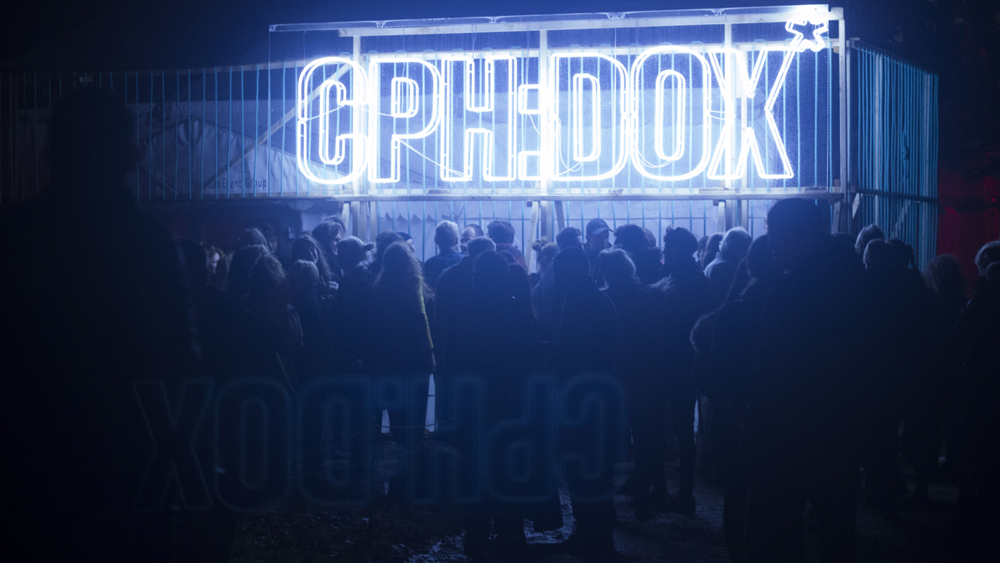
The industry division of Copenhagen’s documentary festival CPH:DOX has announced the program for its summit and conference, which will be held from March 16th to 19th. Featured speakers include American filmmaker John Wilson, three-time Emmy nominee for “How to with John Wilson,” and American filmmaker Sara Dosa, nominated for an Oscar for “Fire of Love.”
Other speakers include “Patrice Poh Si Teng, a Malaysian-born director and producer who won an Emmy Award for “The Movie” and whose “American Doctor” was shown at Sundance this year; O’Shea, American editor and writer Joe Bini, who won an Emmy for Roman Polanski: Desire, and American filmmaker Adam Kalil, whose Ojibwa film Aanikoobijigan won the Audience Award at this year’s Sundance.
Mara Gordo Mercado, head of industry and training at CPH:DOX, said she saw the conference and summit program as “an opportunity to come together and reflect on the big changes and challenges that we need to tackle head-on as an industry.”
She said the program will “serve as a hub for bold conversations about challenging the power of conglomerates over content, ensuring a ‘safe haven’ for independent voices, viewing AI as a tool, and redefining our relationship with it.”
She added: “Through practical discussions and insights from industry leaders, this program promises to generate fresh ideas and provide filmmakers with tactical tools to circumvent algorithms and resist censorship.”
CPH:DOX Summit (March 16)
“Media Sovereignty: Rethinking, Envisioning, Redefining.”
This “strategic response to Europe’s democratic recession” aims to “redefine media sovereignty in the era of US platform dependence.” By bridging the gap between investigative reporting and film, these discussions offer documentary professionals “concrete lessons about adaptability and solidarity from a media ecosystem operating under tremendous pressure.”
The summit will be supervised by producer Mark Edwards, Think Film Impact Productions founder and CEO Daniel Turkoff Wilson, researcher Samir Padania, and hosted by producer Beedie Finzi. Delivered in collaboration with ARTE.
The program began with a keynote address from Bruno Patino, Chairman of ARTE France, “confronting a public interest media infrastructure that is virtually dissolving.”
The first session, “How to Build: New Infrastructures for a Besieged Information Ecosystem,” examines “how the power of concentrated platforms, opaque algorithms, and information warfare are driving the need for new digital, financial, and physical infrastructures that documentary and media producers can protect and rebuild.”
Next up: To be seen or not to be seen, that’s the question: Strategies needed to connect, engage and inspire citizens in 2030. This is a forward-looking strategy session on how independent creatives and distributors can work together to “ensure that the stories that matter continue to reach citizens in 2030, despite limited access and increased misinformation.”
The summit concludes with “Stories from the Front Lines” featuring Joanna Kracik (Journalist, Correctiv.Europe), Irma Dimitradze (Journalist, Georgia) and Bee Wangondu (Journalist/Director of “Kikuyu Land”). These practitioners will share tactical approaches to resisting censorship and harnessing grassroots innovation from AI-powered fact-checking. Cross-border partnerships – to restore trust and protect regional democracies.
Conference Day 1 (March 17)
Day 1 of the conference begins with “Morning with Po Shiten,” moderated by Tom Powers (“Pure Nonfiction”), who examines the ethics of directing in a conflict zone through her debut film “American Doctor.”
Afterwards, the program will explore the making of Time and Water in a conversation with Sarah Dosa (director), Shane Boris (producer), and Carolyn Bernstein (Executive Vice President of Documentary Films, National Geographic), hosted by Anthony Kaufman (journalist).
Moving from the visual to the intuitive, The Art of Listening, featuring filmmakers Hira Navi (director of They Don’t Remember Anymore), Onyeka Igwe (director of Penkermes) and Anne Gri Frith Christensen, and moderated by Luke W. Moody (chairman of the BFI Doctors’ Association Foundation), explores “how sound film can evoke radical empathy.”
In the afternoon session, “What is Truth?”, Joe Bini (author, editor, filmmaker) and Sophie Vitved (head of media at the Copenhagen Future Institute) confront real structural crises, and moderated by Tabitha Jackson (director of the New York Film Forum).
The day continues with “From Prompts to Protocols: Creating DoxAI.” The workshop, hosted by the Atmospheric Intelligence Initiative and the Physicians Association and moderated by Diego Galafassi (Director of Climate Story Lab Nordic), invites the physician community to “a speculative design exercise for AI systems based on shared values.”
The program has since expanded into new storytelling formats with ‘Multisensory Storytelling’, chaired by Mandy Rose (Professor at the University of Bristol), with Ali Ajorlu (Associate Professor at Aalborg University) exploring immersive formats that utilize smell, touch and location awareness to ‘move documentaries beyond the screen’.
Conference Day 2 (March 18th)
Day two begins with “A Morning With: Sinéad O’Shea,” which moves on to challenge the status quo of film language.
In the “Creating Your Own Cinematic Language” session, the “Haripeo” team of directors Efrain Mojica and Rebecca Zweig will talk about creating a queer, hybrid aesthetic in a rural setting, and will be moderated by the film’s co-producer Elena Fortes.
This is followed by “Rekindling the Machine – A Documentary in the Age of AI.” This panel will explore how filmmakers can move from being “users” to “architects” of human-centered storytelling. This panel is facilitated by Doctor Society and the Atmospheric Intelligence Initiative, along with Mark Silver (director of “Molly vs. the Machine”).
Broadening the lens from individual craft to collective narrative responsibility, we ask: “We are all doomed – can hope survive eternal crisis?” and “Can we tell dystopian stories that promote solidarity instead of despair?” Brian Yazel (Associate Professor at the University of Southern Denmark), Pierre-Christophe Gam (Artist and Architectural Designer), and Maisha Wester (Professor of American Cultural Studies, Black Diaspora Studies, Film Studies, and Gothic Literature) will lead this discussion on how we face the future together, and Jamie Perera (Composer, Sound Artist, Producer) will moderate.
Following this, ‘What’s next? Future perspectives on the changing ecosystem of creative documentary’ looks at the recent end of the golden age of creative documentary. In this conversation, Barbara Trueen (Executive Producer, EPIC Docs) and Chris White (Executive Producer, American POV), John Cesley Gough (Ford Foundation Program Officer), and Andreas Mohr Dalsgaard (CEO of Elk Film) will “aim to identify and unravel the various dynamics at play, with the aim of understanding what the future holds for the financing, financing, and distribution of independent nonfiction film production.”
The day ends on a dynamic note, with Keith Wilson (producer, artist, director) presenting Plane of Losers, a live documentary performance that “questions the award-industrial complex, prioritizes community over competition, and offers a new perspective on success.”
Conference Day 3 (March 19th)
Day three of the conference begins with a talk from HBO cult icon John Wilson, known for his stream-of-consciousness style on “How to With John Wilson.” In conversation with Tom Powers, Wilson discusses his dry wit and eclectic approach to his latest novel, The History of Concrete.
The focus then turns to “Current Thoughts on Contemporary Palestinian Documentary Filmmaking,” with Palestinian delegation members Ashtar Mualem, Dalia Al-Kuri, and Kinda Kurdi discussing “how diverse cinematic approaches to historical Palestine can heal trauma and function as cultural resistance to erasure.”
In the afternoon, we explore the future of Indigenous-led nonfiction, following “Free Image-Making: New Perspectives on Sovereignty and the Future in Indigenous-led Nonfiction Film.”
Moderated by Emile Hertling Perronard (producer), speakers Tracy Rector (executive producer of Deena Die), Johannes Ujo Müller (“Our Flag”), and Adam Kalil (filmmaker and artist) presented “Indigenous Communities”. “How people decide their cultural expression on screen”, while Mr. Inunguaq Petrusen (CEO of the Greenland Film Institute) will give a presentation on the newly established and highly anticipated Greenland Film Institute and the current Greenland Film Institute. He explained the situation in Greenland and emphasized the “importance of narrative sovereignty.”
Finally, in “Position, Privilege and the Epistemic Power of the Gaze: Towards Narrative Positionality,” Leonard will examine the ethics of narrative positionality with Nathan Grossman (director of Amazonia), Tess-Sophie Skadegard Thorsen (consultant, media/tech ethics expert), and Kiyoko McCrae (program director of Chicken & Egg). Cortana (Inclusion and Partnerships Manager, EURODOC). This session challenges filmmakers to consider how their proximity and distance to their subjects, and their relationships with the people photographed, shape the stories they tell and the representation of people on screen.
