

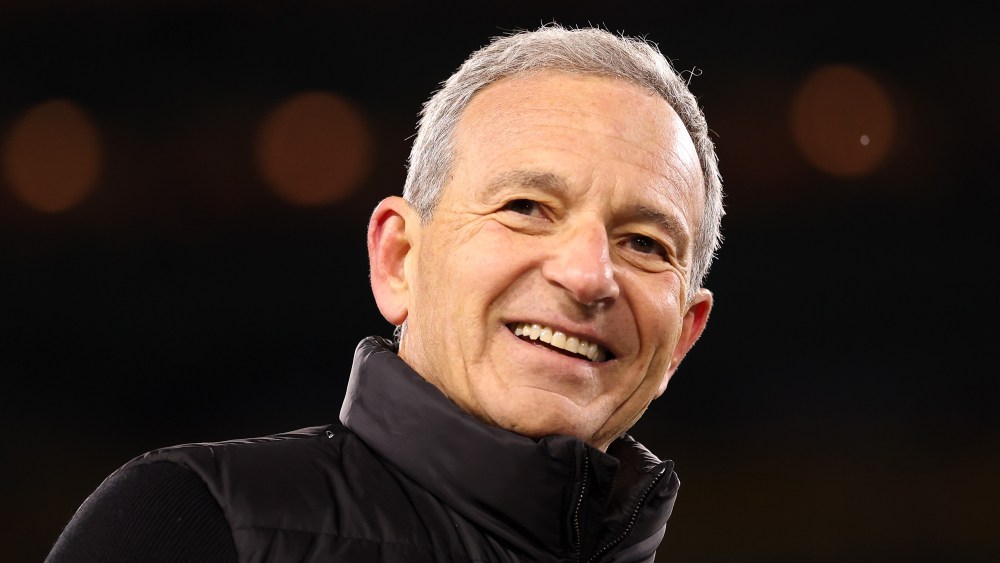
Disney CEO Bob Iger hasn’t left the building yet, and on Monday’s earnings call he said he didn’t want to get too “nostalgic” about his 20 years at the company.
Disney’s board of directors is expected to select a replacement for Iger by the middle of this week. As he prepares to step down as CEO of the Mouse House, Iger noted the turnaround in Disney’s theme park business since he first took the top job in 2005. Parks rivals and even leads film and television as the largest contributor to growth and profits.
“We have a healthy competition going on right now as to which business is essentially going to win as the biggest driver of profitability for the company,” Iger said on the earnings call. “But I’m confident that we both have that ability. I mean, given all the investments we’ve made and the trajectory we’re on, both have the ability to grow well into the future.”
During the last three months of 2025, the parks business performed best. Disney’s theme parks and products business reached a record $10 billion in sales in the year-end quarter, an increase of 6%, and operating income rose 6% to $3.3 billion. Disney’s entertainment revenue increased 11% to $11.6 billion, but operating income fell 35% to $1.1 billion due to higher content, production and marketing expenses.
Iger reportedly plans to step down before his contract officially expires at the end of 2026 and take over day-to-day management duties. According to Bloomberg, the board is “coordinating” to select Josh D’Amaro, chairman of Disney Experience.
“It would be a mistake to try to maintain the status quo,” Iger said on a conference call regarding the agenda of Disney’s next CEO.
“In a world that is changing so much… it would be a mistake to try to maintain the status quo, and I am confident that my successor will not do that,” he told analysts. “So I think[the new CEO]will be given a good hand in terms of the strength of the company, a lot of opportunities to grow, and a recommendation that in a changing world we have to continue to change and evolve ourselves.”
At the beginning of the phone conversation, Iger didn’t seem ready to go yet. “I really don’t want to get too nostalgic or spend too much time on the possibility of transition,” he said, quickly adding, “Or maybe on the possibility of transition.” The good news is that “the company is in a much better place now than it was three years ago,” he said.
Iger will retire at the end of 2021 after serving as Disney’s CEO for 15 years, and will be replaced by then-CEO Bob Chapek. However, in November 2022, the board fired Mr. Capek and reinstated Mr. Iger as chief executive officer.
Iger was asked about Disney’s theme park flip by Citi analyst Jason Bazinet. When the executive was named CEO, investors labeled the company the “worst business in their portfolio.”
Mr. Iger replied: “If you go back to 2005, when I became CEO, the return on invested capital in the parks and resorts business was not impressive, not really acceptable. We also didn’t have a lot of construction going on. So we didn’t have a lot of expansion, and that’s probably for good reason, because the return on invested capital was very low.”
He continued, “As we added to our stable of IPs, such as Pixar in 2006, Marvel in 2009, Lucasfilm Star Wars in 2012, and ultimately 20th Century Fox, we gained access to intellectual property with real value in parks and resorts, and the popularity of that IP gave us confidence in increasing our return on invested capital, allowing us to rely on more capital investment.”
“And when you look at our business footprint today, there is nothing more expansive and diverse than this, and the projects we have underway will only extend that reach even further,” Iger said. “So, looking to the future, I’m actually very bullish on the business and its ability to grow for all the reasons I just listed.”
At the same time, Mr. Iger touted the reversal of Disney+ and Hulu’s streaming businesses and the Disney film studio, which until a few years ago was losing more than $1 billion a quarter. “Looking back just a few years, our movie business was impacted by COVID-19 and our streaming business was clearly not in an acceptable situation. It’s clear that the future of both of these businesses, or our entertainment business, is bright and growing,” he said.
