

If you believe what you see on TV, the mysterious technological power of AI is nothing without the help of humans.
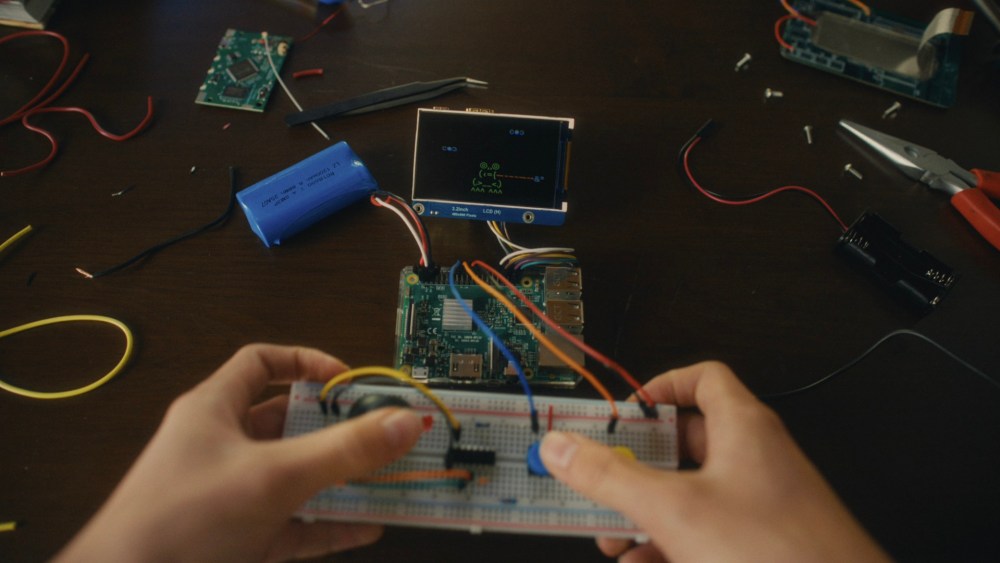
In a 60-second ad scheduled to air Sunday during NBC’s Super Bowl LX telecast, Open AI displays a series of photos of people using their hands to read, sketch, design, ask questions, and guide a robotic arm. The last few seconds flash the words “You Can Just Build Things” on the screen, followed by a prompt asking you to consider Codex, an app that allows you to develop software according to your instructions.
“We shot an ad on film that shows real people using our tools. The core message is that people are the real protagonists. This is technology that expands people’s potential,” Kate Rouch, chief marketing officer at Open AI, said in a recent interview. The message is quickly heard again in a local ad airing during the Super Bowl telecast in New York. Los Angeles, San Francisco, Chicago, Philadelphia, Boston, Las Vegas, Dallas.
Ruesch knows something about how to turn heads at the Super Bowl. In his previous role, he served as Coinbase’s Chief Marketing Officer. Coinbase is the cryptocurrency platform that wowed Super Bowl viewers in 2022 with a bare-bones spot featuring only a color-changing QR code. The response was immediate and overwhelming, according to company comments at the time.
But in 2026, OpenAI will be just one of several AI companies taking to the Super Bowl to convey a message about a technology that has more questions than answers. This new science solves problems and moves forward quickly, but it raises fears that as it continues to evolve it will erase important parts of human activities and processes. In addition to Open AI, Anthropic, Google, Amazon, Meta, and two lesser-known companies, Genspark and Base44, all plan to push AI chatbots or technologies into the big game.
It’s not hard to see that the Super Bowl, a bastion of traditional media, is also appealing to even the most innovative technologies. All of these companies need to inform a broader audience about their work, but few media assets appeal to a broader audience attuned to the classic gridiron. Consumer research from Anthropic, the company behind the AI interface known as Claude, shows that the average consumer is “not set in stone” when it comes to their favorite AI provider, said Andrew Stirk, the company’s head of brand marketing. Consumers are “enjoying exploring what this technology can do,” he says, but “they’re just as open to switching.”
Anthropic plans to use its Super Bowl berth to attack AI companies that want to make advertising part of the experience. “Advertising is coming to AI,” says the message at the end of the spot. “But not for Claude.” It will also air a 60-second spot on NBC’s pregame broadcast before airing a 30-second ad during the Super Bowl itself. Smart viewers will understand that this spot criticizes Open AI’s recent decision to open up an ad-supported tier of service.
Amazon’s new ad will nod to some of the concerns about AI’s increasing presence in human daily life. Actor Chris Hemsworth imagines the company’s new Alexa+ AI assistant planning his death using an automatic garage door and a simple fireplace (while INXS’s “The Devil Inside” plays in the background).
Genspark has hired actor Matthew Broderick. Google shows a woman and a young child using the company’s Gemini AI interface to imagine what the inside of their new home will look like, and Randy Newman’s “Feels Like Home” highlights the action.
Open AI is moving away from a “negative future,” Ruesch says. “We fundamentally believe that the people who have these tools are actually going to be able to do incredible things and are already doing it at scale. And that’s the conversation we want to have.”
She hopes the company’s commercials will set it apart from other products and provide a point of differentiation for Open AI. Some ads from the AI player sound like they’re “talking to people” or playing very simple functions like remembering your child’s birthday or setting a timer. Ruesch believes there will be more opportunities by focusing on how people can use this new technology to improve their lives, tackling tasks such as completing paperwork for complex health situations or learning a new language.
“AI is at a tipping point. It’s going from being something that asks and answers questions to something that can act on your behalf and do things in the world,” she says.
